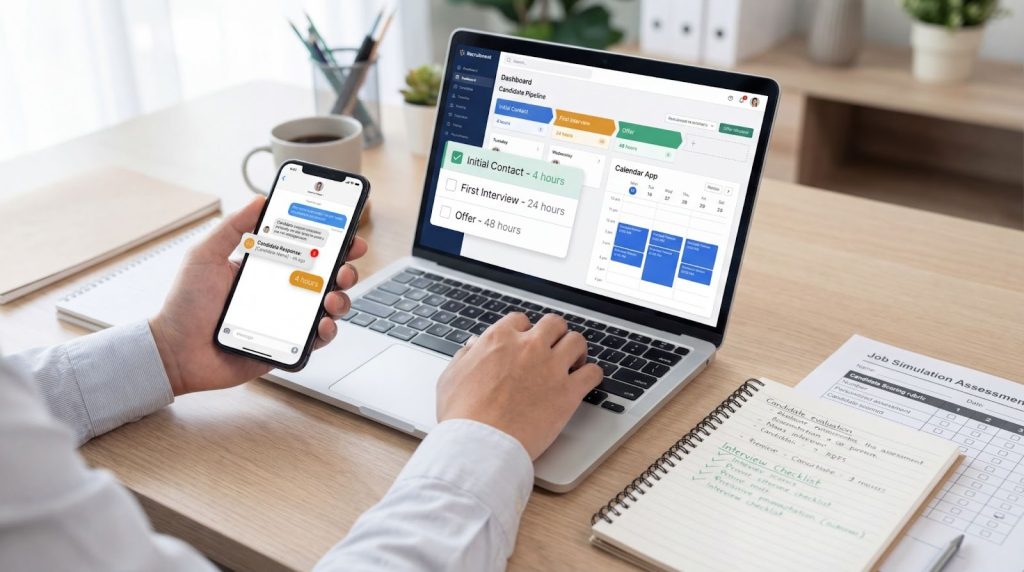
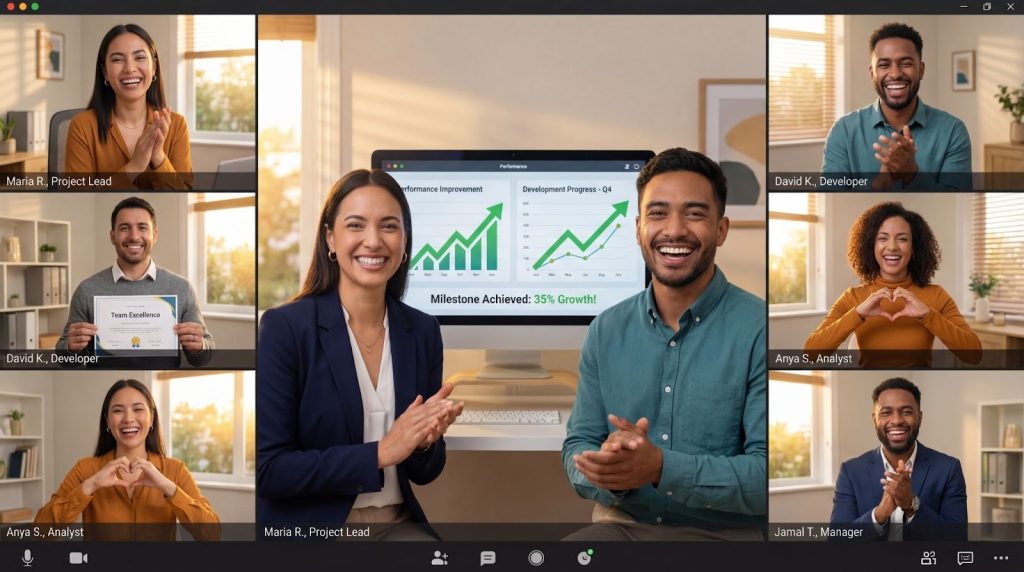
Retention Strategies for Offshore Teams: How Coaching Reduces Virtual Assistant Turnover by 40%

Offshore talent retention remains one of the most persistent challenges facing businesses that leverage global teams. While offshore staffing offers compelling cost advantages and access to specialized skills, turnover rates in remote centers average 25-30% annually—and climb as high as 45-50% for outsourced operations. The hidden costs compound quickly: recruitment expenses, knowledge loss, client service disruption, and the productivity drain of constant onboarding cycles. Yet businesses that implement structured coaching infrastructure see dramatically different outcomes, with turnover reductions of 40% or more and measurable performance improvements that transform offshore teams from transactional placements into strategic assets.

The difference isn't accidental. It's architectural.

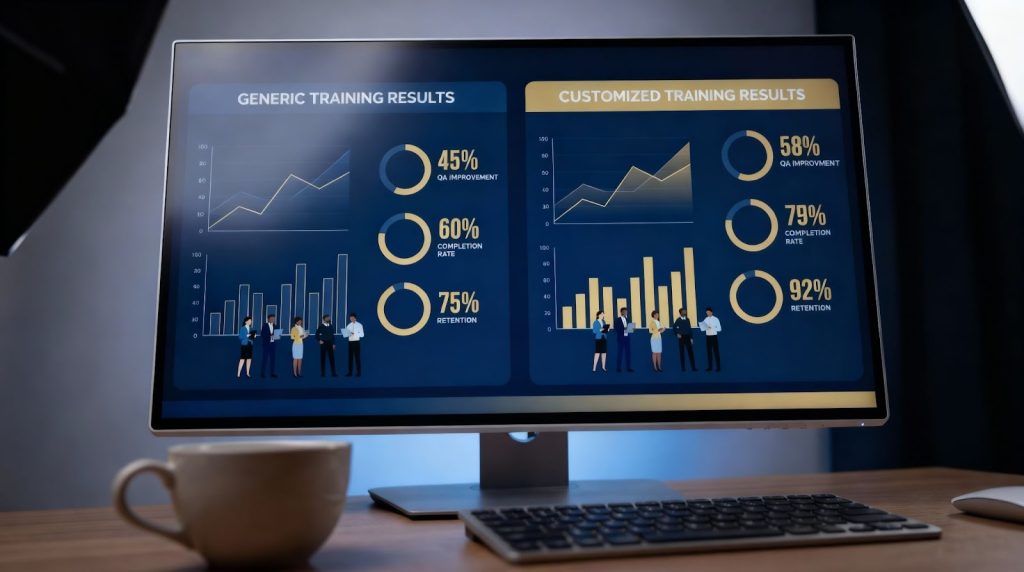
When organizations treat offshore talent retention as a post-placement priority rather than an afterthought, they unlock performance gains that transcend basic task completion. Structured coaching programs drive 58% increases in quality assurance scores, reduce first-year attrition by more than half, and create the cultural integration that turns offshore coordinators into indispensable team members. The question isn't whether your business can afford to invest in coaching-driven retention strategies. It's whether you can afford not to.

Key Takeaways

– Implement biweekly 1:1 coaching sessions to address skill gaps, reinforce performance standards, and create accountability mechanisms that reduce virtual assistant turnover by up to 40%

– Build personalized development plans during onboarding that identify individual capability gaps—prioritization, communication, strategic thinking—and structure training around those specific needs

– Measure retention impact through tracking metrics: quality assurance score progression, task completion rates, client satisfaction indicators, and tenure milestones that demonstrate ROI

– Create cultural integration frameworks that bridge offshore teams into company values, communication norms, and service expectations rather than treating them as isolated contractors

– Address the root causes of offshore employee turnover: lack of growth opportunities, inadequate feedback mechanisms, cultural disconnection, and unclear performance expectations

– Leverage remote employee coaching technology—video platforms, shared development dashboards, progress tracking tools—to deliver consistent support regardless of geographic distance

The True Cost of Virtual Assistant Turnover

Most businesses calculate turnover costs using recruitment and onboarding expenses alone. That's a costly mistake.

When a virtual assistant leaves after six months, you lose the institutional knowledge they've accumulated, the client relationships they've built, and the workflow optimizations they've developed. You pay to recruit a replacement, invest weeks training them on your systems, and absorb the productivity gap while they reach competency. For a typical offshore coordinator earning $15-20 per hour, the true replacement cost reaches $10,000-15,000 when you factor in these hidden expenses.

But the damage extends further. High turnover creates instability that clients notice—delayed responses, inconsistent service quality, repeated explanations of preferences and processes. Your internal team experiences coordination friction as they constantly adapt to new offshore team members. Project momentum stalls. Morale suffers when team members view offshore placements as temporary rather than invested partners.

Quantifying the Retention ROI

Organizations that reduce offshore talent turnover from 40% to 15% through coaching infrastructure see measurable financial returns. Consider a business with 10 offshore team members at $18/hour average rate:

Without Coaching Infrastructure (40% Annual Turnover):
Four replacements annually at $12,500 per replacement equals $50,000 in direct turnover costs. Add productivity losses during transition periods—estimated at 20% capacity reduction for 60 days per replacement—and you lose another $23,000 in equivalent labor value. Total annual impact: $73,000 for a 10-person team.

With Coaching Infrastructure (15% Annual Turnover):
One to two replacements annually equals $12,500-25,000 in turnover costs. Productivity losses drop to $6,000-12,000. Total annual impact: $18,500-37,000. The coaching program investment—approximately $200-300 per employee monthly for structured development—costs $24,000-36,000 annually.

Net result: Even with the coaching investment, you save $12,000-27,000 annually while gaining significantly higher performance quality from tenured team members who continuously develop rather than churning out.

Beyond Cost: The Performance Multiplier Effect

Retention creates a compounding advantage that cost calculations miss. Offshore team members in their second and third years outperform newcomers dramatically. They anticipate needs before requests arrive, suggest process improvements from deep familiarity with workflows, and handle complex situations that would require escalation from newer hires.

One property management company tracked this progression quantitatively. First-quarter offshore coordinators completed 75% of assigned tasks within SLA. By month six with biweekly coaching, that rate reached 89%. By month twelve, it hit 94%—with task complexity increasing throughout. More importantly, client satisfaction scores rose from 7.2 to 8.9 as tenured coordinators built relationships and understanding.

This is why offshore talent retention strategies deserve the same strategic attention as initial hiring quality. You're not just reducing turnover costs. You're building a performance asset that appreciates over time.

Why Traditional Offshore Staffing Models Fail at Retention

The offshore staffing industry created this turnover crisis through its own structural negligence. Here's the uncomfortable truth most agencies won't acknowledge.

The Commodity Model

Most offshore recruitment operates on a transactional commodity model. Agencies source candidates quickly, conduct minimal vetting beyond resume screening and basic interviews, then place them with clients and move on to the next placement. There's no infrastructure for ongoing development, no coaching to strengthen capability gaps, and no cultural integration to create belonging.

The talent feels it immediately. They're contractors, not team members. Dispensable. When a better opportunity appears—even marginally better—they take it because there's no compelling reason to stay. You haven't invested in them, so they don't invest in you.

This model prioritizes agency efficiency over client retention outcomes. Fast placements generate revenue. Long-term talent development requires infrastructure investment that doesn't scale profitably in a commodity business model. So agencies optimize for volume and speed, and clients inherit the retention consequences.

Generic Training That Doesn't Transfer

When offshore staffing agencies do provide training, it's typically generic orientation covering their own processes, not yours. The virtual assistant learns the agency's communication protocols and timekeeping systems but receives minimal customization for your specific workflows, technology stack, industry requirements, or cultural expectations.

This creates a painful reality gap. The offshore team member technically knows "how to be a virtual assistant" but doesn't know how to be your virtual assistant operating in your systems, speaking your language, understanding your priorities. It takes them three to four months of trial-and-error to develop that contextual competency—if they stay that long. Many don't.

Generic training fails because it ignores the fundamental principle of adult learning: people develop skills most effectively when training directly applies to their immediate work context. Teach someone project management theory in abstract and they'll forget it within weeks. Teach them how to manage your specific project workflow in your specific tools while they're actively doing the work, and they internalize it permanently.

The Feedback Vacuum

Most offshore relationships operate in a feedback vacuum. Clients assume that if they don't complain, the virtual assistant knows they're performing well. Offshore team members assume that if they don't receive correction, they're meeting expectations. Both assumptions are wrong.

Without structured feedback mechanisms, small performance gaps become entrenched habits. The offshore coordinator develops a workflow that's 80% effective but nobody tells them about the 20% that needs adjustment. Clients grow increasingly frustrated with that 20%, while the coordinator believes they're succeeding. Eventually, the client replaces them—often without the coordinator ever understanding why.

This feedback vacuum particularly affects offshore talent who may come from cultures where direct feedback is less common or where hierarchy creates hesitation to ask clarifying questions. They need proactive, structured communication that makes expectations explicit and provides regular calibration.

When coaching infrastructure fills that vacuum with biweekly 1:1 sessions, performance gaps surface and resolve before they calcify. That's why remote employee coaching isn't optional for offshore talent retention—it's foundational.

No Career Path, No Loyalty

Offshore team members with a transactional agency have no career path. They're stuck in the same role, doing the same tasks, with no advancement opportunity. Ambitious professionals don't accept that indefinitely. They leave for organizations that invest in their growth, even if the immediate compensation difference is minimal.

This creates a cruel irony. The offshore talent you most want to retain—the high-performers with growth potential—are the ones most likely to leave in a model that offers no development trajectory. You keep the adequate performers who lack alternatives while losing your stars.

Coaching-driven offshore employee retention strategies break this pattern. When you create visible development plans, track skill progression, provide ongoing training, and recognize growth milestones, you signal that this isn't a dead-end role. It's a career with a future. That changes the retention calculus dramatically.
image

The Coaching Infrastructure Framework That Reduces Turnover 40%

After analyzing offshore talent retention programs across dozens of businesses and industries, a clear pattern emerges. Organizations that achieve 40%+ turnover reduction share a common infrastructure that separates them from competitors. It's not magic. It's method.

Biweekly 1:1 Coaching Architecture

The cornerstone of high-retention offshore teams is non-negotiable: structured biweekly 1:1 coaching sessions. Not monthly check-ins. Not quarterly reviews. Biweekly.

Here's why the cadence matters. Monthly sessions allow too much drift between touchpoints. Issues compound, misalignments deepen, and by the time you address them, they require major correction rather than minor course adjustment. Weekly sessions, while theoretically ideal, become logistically difficult to sustain and risk creating meeting fatigue that reduces effectiveness.

Biweekly strikes the optimal balance. It's frequent enough to catch issues early, provide consistent accountability, and maintain relationship continuity. It's sustainable enough that managers can maintain the discipline long-term without it overwhelming their calendars.

What These Sessions Should Cover:

Performance calibration against specific metrics. Review task completion rates, quality scores, client feedback, and SLA adherence. Celebrate wins explicitly—offshore team members often assume silence means adequacy rather than excellence. When someone delivers exceptional work, say so clearly and explain why it mattered.

Skill development progress on identified growth areas. If onboarding revealed that the coordinator needs stronger prioritization skills, every biweekly session should include concrete discussion of how they're applying prioritization frameworks, what's working, what's challenging, and what adjustment would accelerate progress.

Obstacle identification and problem-solving. Create psychological safety for the offshore team member to surface challenges—technical issues, communication confusion, task ambiguity, workload concerns. Many won't volunteer problems unless explicitly invited. Ask directly: "What's blocking your effectiveness right now? What could I change to help you succeed?"

Connection and belonging reinforcement. Offshore team members often feel isolated from company culture and team dynamics. Use coaching time to share company updates, explain why certain priorities shifted, introduce them to new team members, and include them in the narrative of "we" rather than positioning them as external "they."

Personalized Development Plans Built from Assessment

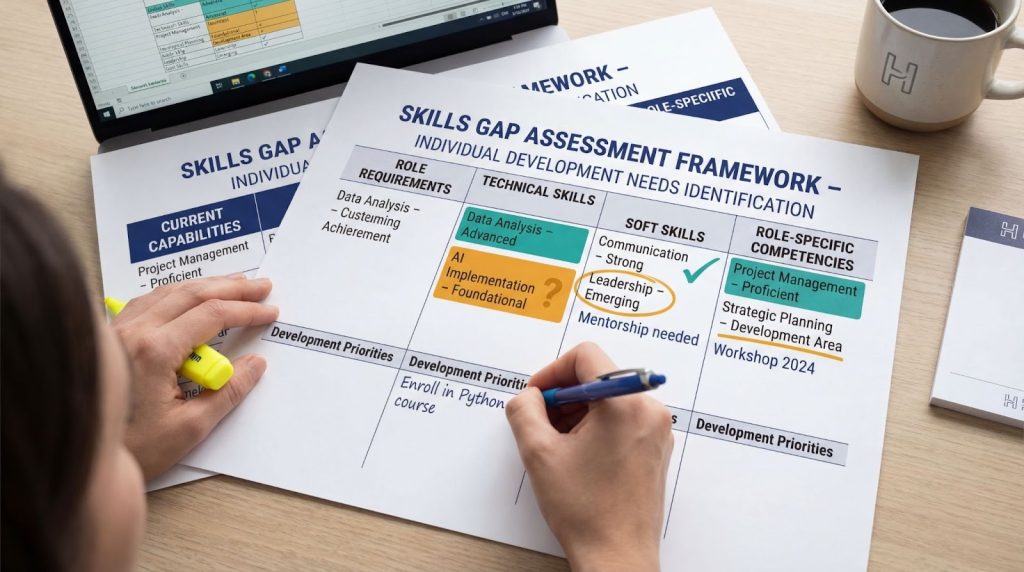
Generic training templates fail because every offshore team member arrives with different strength-and-gap profiles. Effective coaching begins with accurate assessment of where each individual needs development.

This assessment happens during the first two weeks through structured observation and direct evaluation. Watch how they organize information. Do they naturally create systems or do they need structure provided? Observe how they communicate. Are they precise and proactive or vague and reactive? Evaluate their strategic thinking. Do they see patterns and anticipate needs or do they wait for explicit direction for each task?

From this assessment, build a personalized development plan that focuses on the two to three highest-impact capability gaps. Trying to develop everything simultaneously dilutes effectiveness. Prioritize the skills that will most dramatically improve their performance and job satisfaction.

Example Development Plan Structure:

Priority Development Area One: Strategic Prioritization. Current state: Tends to approach tasks sequentially without evaluating urgency and impact. Development approach: Introduce Eisenhower Matrix framework, require daily priority ranking of task list with justification, review prioritization decisions in biweekly coaching, provide real-time feedback when priorities miss the mark.

Priority Development Area Two: Proactive Communication. Current state: Waits for questions rather than providing status updates, doesn't flag potential issues early. Development approach: Establish communication protocols (daily summary email, immediate notification of blockers, weekly progress reports), model proactive communication patterns, reinforce when they surface issues before they become problems.

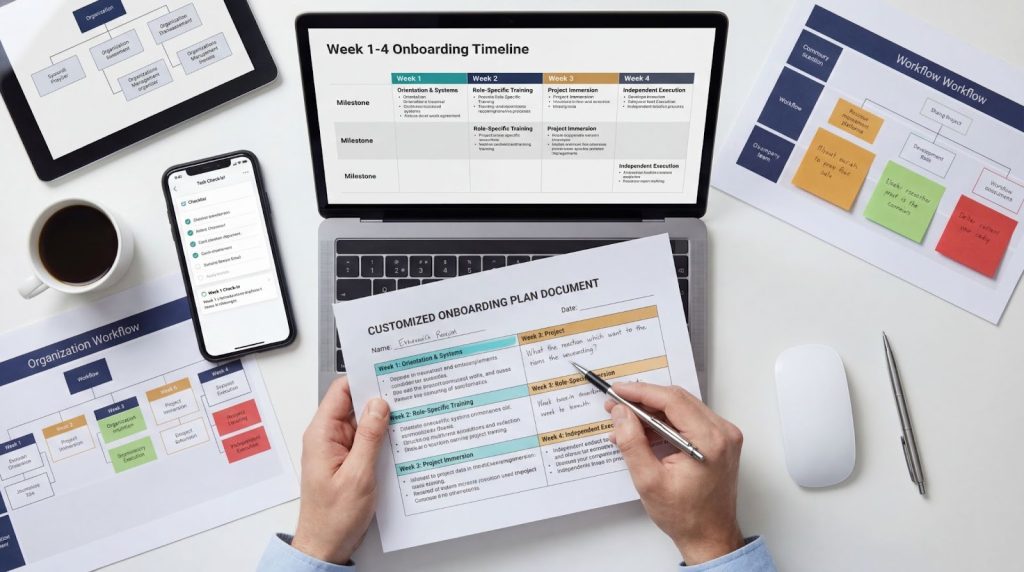
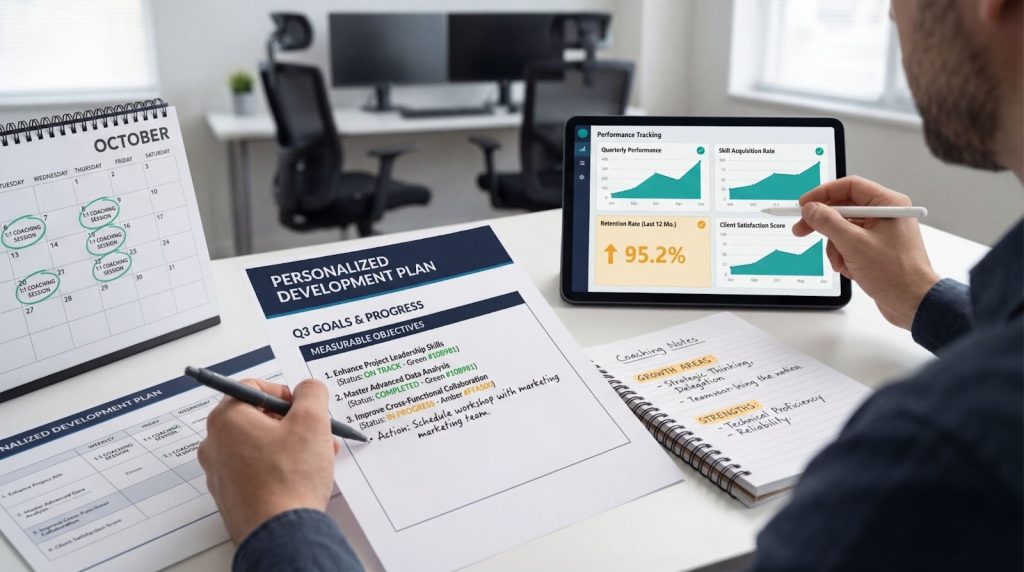
Track progression explicitly. After 30 days, assess whether the coordinator now applies prioritization frameworks consistently. After 60 days, evaluate whether their communication has become genuinely proactive. Make progress visible through before-and-after comparisons that help them see their own growth. That visibility creates motivation and demonstrates your investment in their success.

Cultural Integration Protocols

Offshore team members who feel culturally disconnected leave, even when they're technically capable and adequately compensated. Cultural integration requires intentional design, not passive hope.

Start with values clarification during onboarding. Don't just list your company values as abstract words—explain what they mean in daily behavior. If "client-first service" is a core value, share specific examples of what that looked like in recent situations. If "ownership mindset" matters to your culture, describe what ownership looks like versus task-completion mentality.

Create connection rituals that include offshore team members. If your domestic team has weekly huddles, include offshore coordinators via video. If you celebrate wins in Slack channels, tag offshore team members when their work contributed. If you share company updates or personal news, include everyone regardless of geography.

Use coaching sessions to reinforce cultural norms explicitly. When an offshore coordinator demonstrates a behavior that aligns with your culture, name it specifically: "The way you anticipated that client need and solved it before they asked—that's exactly the proactive ownership we value here." When behaviors miss cultural expectations, explain the gap without assuming they should have intuited it: "In our culture, when you encounter ambiguity, we expect you to make your best judgment and then communicate your decision rather than waiting for perfect clarity. Let's talk about how to handle that next time."

Some offshore team members will adapt quickly to your culture; others need more scaffolding. Personalize the integration approach based on the individual rather than assuming one-size-fits-all. The goal is helping each person find authentic alignment between who they are and how your culture operates.

Performance Metrics and Feedback Loops

What gets measured gets managed. Reducing virtual assistant turnover requires tracking the metrics that predict retention risk and performance success.

Leading Indicators to Monitor:

Task completion velocity: Are they finishing assigned work within expected timeframes? Declining velocity often signals disengagement, confusion, or workload imbalance.

Quality assurance scores: For roles where QA measurement is feasible, track error rates, revision frequency, or client satisfaction metrics. Improving QA scores indicate effective development; declining scores require coaching intervention.

Communication responsiveness: Measure response times to messages, participation in team communications, and proactive status updates. Offshore team members who become less communicative are often mentally checking out.

Coaching session engagement: Do they come prepared? Do they ask questions? Do they implement discussed action items between sessions? Passive participation in coaching predicts turnover risk.

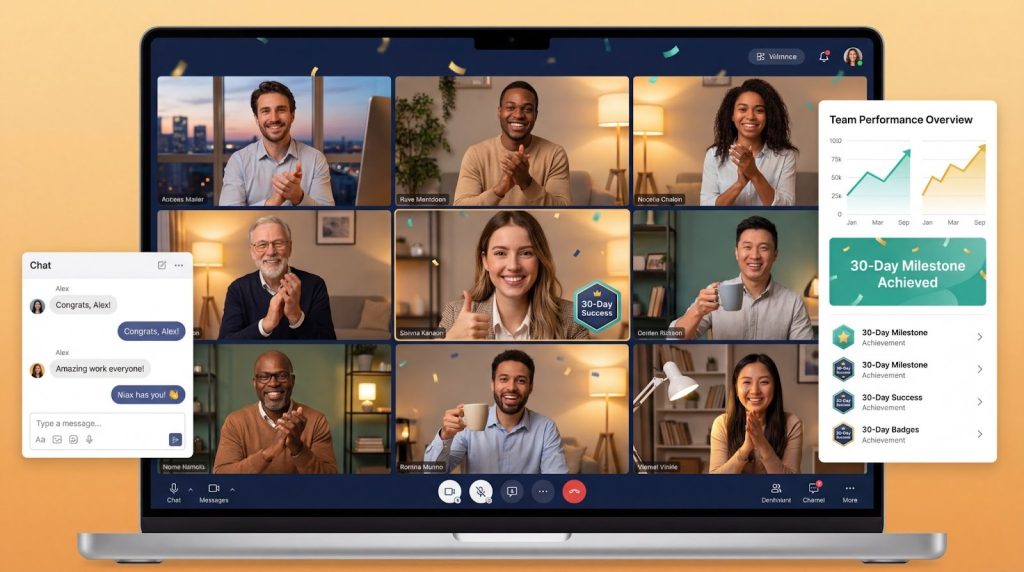
Tenure milestones and recognition: Celebrate three-month, six-month, and annual anniversaries explicitly. Recognition costs nothing and creates psychological investment.

Create feedback loops that flow both directions. You provide performance feedback to offshore team members in coaching sessions. They provide feedback to you about what's working and what's not in the working relationship. Ask directly every quarter: "What would make you more effective in this role? What would make you more likely to be here a year from now?"

The businesses that achieve 40% turnover reduction through coaching don't treat retention as a mystery. They measure it, discuss it openly, and adjust their approach based on what the data reveals.

Implementing Remote Employee Coaching at Scale

Understanding the coaching framework is one thing. Actually implementing it across multiple offshore team members without overwhelming your management capacity is another. Here's how to scale offshore talent retention strategies effectively.

Building Your Coaching Calendar

The most common implementation failure is inconsistency. Leaders start strong with biweekly coaching, then let sessions slip as other priorities compete for time. Three months later, they've abandoned the structure and wonder why retention hasn't improved.

Prevent this by treating coaching sessions as non-negotiable calendar blocks, not flexible appointments that move when something "more urgent" appears. Block your coaching time for the entire quarter in advance. If you manage five offshore team members, that's five 30-minute sessions every two weeks—five hours of calendar commitment.

Schedule sessions at the same day and time each cycle. Humans thrive on routine. When coaching happens "every other Tuesday at 2 PM your time" rather than randomly whenever you find time, both parties prepare more effectively and the habit becomes automatic.

Use calendar technology strategically. Set recurring meetings with video conferencing links pre-populated. Create automated reminders 24 hours before each session prompting both parties to review performance data and prepare discussion topics. Build coaching prep into your own workflow so you're not scrambling to remember what you discussed last time.

Coaching Technology Stack

Remote employee coaching requires more intentional technology infrastructure than in-person management. The right tools make consistency and documentation dramatically easier.

Core Technology Components:

Video conferencing with reliable connection and screen-sharing capability. Audio-only calls lose the relationship-building value of face-to-face interaction. Choose platforms that work reliably in your offshore team member's location—test thoroughly before assuming your preferred tool will function smoothly on their internet infrastructure.

Shared development dashboards where both parties can view task completion metrics, quality scores, and development plan progress. Google Sheets, Airtable, or dedicated performance management platforms work. The key is single-source-of-truth visibility rather than emailing reports back and forth.

Coaching notes documentation system. Create a simple template that captures what was discussed, what commitments were made, what support was requested, and what to follow up on next session. Store these where both parties can access them. This documentation proves invaluable when you need to understand performance patterns over time or when the offshore team member wants to see their progression.

Asynchronous communication channels for quick questions and feedback between coaching sessions. Slack, Microsoft Teams, or similar platforms allow you to provide real-time course correction without waiting for the next formal session.

Progress tracking and goal visualization tools that make development visible. When offshore team members can see their quality scores trending upward or their skill assessments improving, it creates motivation and tangible evidence that coaching works.

Training Your Management Team to Coach Effectively

If you're scaling beyond personally coaching every offshore team member, you need to train other managers to deliver effective coaching. Not everyone does this naturally.

Focus your coaching training on three core competencies:

Active Listening Over Talking: Many managers treat coaching sessions as one-way communication—they tell the offshore team member what to improve and consider the session complete. Effective coaching invests more time listening than talking. Train managers to ask open-ended questions ("What challenges did you face this week? How did you decide to handle that situation?") and genuinely process the responses before jumping to solutions.

Specific Feedback Over General Observations: Vague feedback doesn't drive behavior change. "You need to communicate better" leaves the offshore team member confused about what specifically to change. "When the client asked for the report yesterday and you didn't respond for four hours, that damaged their confidence in our responsiveness—next time, send an immediate acknowledgment even if you can't deliver the full report yet" gives clear actionable direction.

Development Mindset Over Fixed Assessment: Managers accustomed to performance evaluation often approach coaching sessions as judgment opportunities—assessing whether the offshore team member is "good enough." That creates defensiveness and fear. Effective coaching operates from a development mindset: everyone has capability gaps, coaching exists to systematically close those gaps, and improvement is expected with proper support. Train managers to frame coaching as partnership in growth, not evaluation of adequacy.

Provide coaching templates and session structures so managers don't have to improvate. Create a standard agenda: performance review (10 minutes), development area focus (10 minutes), obstacle removal (5 minutes), connection and recognition (5 minutes). Consistency across coaches creates predictability for offshore team members and ensures core elements aren't skipped.

image

Measuring Coaching Program Effectiveness

You can't manage what you don't measure. Track these metrics quarterly to assess whether your offshore talent retention coaching infrastructure delivers results:

Turnover rate comparison pre- and post-coaching implementation: Calculate quarterly turnover before coaching program launch and compare to turnover 6-12 months after implementation. Look for 30-50% reduction as programs mature.

Average tenure progression: Beyond binary turnover rates, measure whether average team member tenure is extending. Moving average tenure from 8 months to 14 months represents massive retention improvement even if turnover rate calculates similarly due to cohort timing.

Quality assurance score trends: If you track QA metrics, analyze whether coached offshore team members show performance improvement over time. Look for patterns like "average QA score increases 58% between month two and month eight" that demonstrate coaching impact.

Coaching session consistency: Track what percentage of scheduled coaching sessions actually occur. If you're only completing 60% of planned sessions, you haven't actually implemented a coaching program—you've implemented good intentions that compete with other priorities.

Offshore team member satisfaction: Survey team members quarterly on whether they find coaching valuable, whether they feel supported in development, and whether they see career growth opportunity. Declining satisfaction predicts retention risk before turnover occurs.

Manager confidence and skill: Survey the managers delivering coaching about their confidence, the time burden, and what obstacles they face. If managers struggle with coaching, they'll unconsciously sabotage the program through inconsistency.

Adjust your approach based on what the data reveals. If turnover reduction plateaus at 25% improvement when you targeted 40%, investigate why. If QA scores aren't improving despite coaching consistency, examine whether you're focusing on the right development areas. Treat retention strategy as an iterative system that improves through measurement and refinement.

Advanced Offshore Employee Retention Strategies

Once you've established foundational coaching infrastructure, these advanced strategies compound retention impact.

Career Pathing for Offshore Talent

High-performing offshore team members need a visible future beyond their current role. Create explicit career progression frameworks that show how they advance.

This doesn't mean you must promote everyone to management. Career pathing can include lateral skill expansion (moving from administrative support to project coordination), specialization depth (becoming the subject matter expert in property management workflows), or leadership opportunity (mentoring newer offshore team members).

Document these paths explicitly. Show what capabilities are required to progress to the next level. Explain what compensation changes accompany advancement. Make the progression criteria objective rather than subjective so offshore talent knows exactly what they're working toward.

When you promote an offshore coordinator or expand their responsibilities, announce it to the team. Recognition creates aspiration for others and demonstrates that growth opportunity is real, not theoretical.

Peer Learning Communities

Isolation drives turnover. Offshore team members who only interact with their direct manager miss the peer support and collaborative learning that builds belonging.

Create peer learning structures where offshore team members connect with each other. Monthly virtual roundtables where coordinators share challenges and solutions. Slack channels where they can ask each other questions. Buddy systems pairing experienced team members with newer ones.

These communities serve multiple functions simultaneously. They provide emotional support and reduce isolation. They accelerate learning through peer knowledge transfer. They create accountability through social proof. And they build a sense of identity and belonging to something larger than individual client relationships.

Facilitate these communities initially, then let them self-organize as they mature. The most powerful retention driver is when offshore team members choose to engage because the community provides genuine value, not because management mandates participation.

Recognition Systems Beyond Compensation

Compensation matters for retention—no question. But once you're paying competitively for your market, incremental pay increases deliver diminishing retention returns. Recognition systems provide high retention impact at low cost.

Design recognition that acknowledges specific contributions with public visibility. "Offshore Team Member of the Month" based on client feedback, quality scores, or peer nominations. Feature stories in company newsletters highlighting how an offshore coordinator solved a challenging problem. Thank-you videos from clients whose experience they elevated.

The key is specificity and authenticity. Generic recognition ("great job this month") feels obligatory and hollow. Specific recognition ("the way you handled that client emergency at 11 PM when nobody else was available saved that relationship—here's what they said about you") feels genuine and meaningful.

Recognition also creates narrative. When you tell stories about exceptional offshore talent performance, you're not just acknowledging the individual—you're signaling to everyone else what excellence looks like and that it will be seen and valued.

Retention Risk Early Warning Systems

The most cost-effective retention strategy is preventing departure before resignation happens. Build early warning systems that identify retention risk while you can still intervene.

Behavioral Warning Signs:

Declining communication frequency and responsiveness. Engagement drops before departure.

Reduced coaching session participation. Mentally-checked-out team members show up to sessions but don't engage actively.

Increased task completion issues or quality declines. Disengagement manifests as performance degradation.

Withdrawal from voluntary activities or peer communities. Departing team members stop investing discretionary effort.

Changes in scheduling requests or availability. Someone suddenly requesting different hours or reduced workload may be exploring other opportunities.

When you notice these patterns, address them directly in coaching. Don't pretend the behavioral shift isn't happening. Say clearly: "I've noticed your communication has become less frequent over the past few weeks, and you've seemed less engaged in our coaching sessions. What's going on? Are you satisfied in this role? What would make this work better for you?"

Often, retention issues stem from fixable problems—workload imbalance, unclear expectations, personality conflicts, lack of growth opportunity, or life circumstances that require temporary accommodation. If you discover these issues after resignation, it's too late. If you surface them proactively, you can often resolve them.

The conversation might also reveal that the team member has genuinely outgrown the role or decided to pursue a different career direction. That's valuable information too. Better to know in advance and plan for transition than to be surprised by sudden departure.

Industry-Specific Offshore Talent Retention Considerations

While coaching infrastructure principles apply universally, certain industries face unique offshore team management challenges that require specialized approaches.

Property Management Offshore Retention

Property management offshore coordinators handle high-urgency situations—maintenance emergencies, resident complaints, leasing deadlines—that create stress spikes. Turnover risk increases when team members feel constantly reactive without control or predictability.

Retention strategies should emphasize stress management and boundaries. Build coaching conversations around sustainable pacing. Recognize when coordinators handle difficult situations effectively. Create escalation protocols so they're not facing impossible problems alone. Celebrate the "save" when they resolve an urgent issue that could have become a crisis.

Property management also benefits from specialization. Offshore coordinators who develop deep expertise in specific property types (multifamily versus senior living versus HOA) or specific functions (leasing coordination versus maintenance versus accounting) find more satisfaction and career identity than generalists who handle everything superficially.

Healthcare Offshore Retention

Healthcare offshore talent operates in high-stakes environments where patient wellbeing and HIPAA compliance create constant pressure. Burnout drives turnover as quickly as compensation issues.

Retention coaching should incorporate wellbeing check-ins and boundary reinforcement. Healthcare coordinators often feel they can't take breaks because "patients need help." Normalize taking time off. Model healthy boundaries. Provide mental health resources.

Recognition in healthcare should emphasize patient impact. Share positive patient feedback directly with offshore coordinators who contributed to that experience. Help them see the connection between their scheduling coordination or insurance verification work and the actual patient outcomes they enabled. Purpose-driven work creates retention when the purpose is visible and reinforced.

Healthcare offshore teams also need exceptionally clear protocols and decision trees. Ambiguity in healthcare can have serious consequences, so offshore coordinators understandably hesitate when they lack clear guidance. Invest coaching time in building their confidence through extensive scenario practice and protocol reinforcement.

Tech Startup Offshore Retention

Tech startups move fast, pivot frequently, and often lack established processes. Offshore team members who thrive in structured environments struggle with startup ambiguity and chaos.

Retention in startup contexts requires selecting for adaptability during hiring and then coaching for ambiguity tolerance. Acknowledge the chaos directly: "Things will change frequently here, and sometimes you'll receive incomplete direction—that's normal for startups, not a reflection of your performance." Help offshore coordinators build comfort with iterative refinement rather than expecting perfect clarity before action.

Startup offshore retention also benefits from emphasizing the learning opportunity. Coordinators who work for startups gain exposure to multiple functions, fast decision-making, and strategic thinking they wouldn't develop in larger organizations. Position this as career acceleration rather than organizational immaturity.

Startups should also involve offshore team members in growth milestones. When you hit fundraising goals, product launches, or customer acquisition targets, share that success with offshore coordinators who contributed. They're part of building something, not just completing tasks for something already built. That narrative creates belonging and retention.

Creative Agency Offshore Retention

Creative agencies face project-based workflow unpredictability. Workload swings from overwhelming during major campaigns to quiet between projects. Offshore coordinators struggle with the inconsistency.

Retention coaching should focus on managing ambiguity and building resilience through workflow fluctuations. Help offshore talent understand that variability is intrinsic to agency models, not a reflection of their value. During slow periods, redirect time toward skill development, process optimization, or proactive preparation for the next busy cycle.

Creative agencies should also leverage offshore coordinators' creative input when appropriate. Project coordination doesn't mean they have no perspective on creative decisions. When they suggest workflow improvements, client communication approaches, or project management innovations, recognize and implement good ideas. Creative cultures that only value "creative roles" miss opportunities to engage operational talent more deeply.

Frequently Asked Questions About Offshore Talent Retention

How long does it take to see measurable reduction in virtual assistant turnover after implementing coaching programs?

Most organizations observe initial retention improvements within 90-120 days of launching structured coaching infrastructure. Early indicators appear faster—improved engagement in coaching sessions, higher quality assurance scores, more proactive communication—but actual turnover rate reduction requires sufficient time for the cohort at risk of departure to experience coaching intervention. By month six, you should see 20-30% turnover reduction compared to pre-coaching baseline. By month twelve, well-executed programs achieve 35-50% improvement. The timeline varies based on coaching consistency, development plan quality, and how severe your retention problem was initially.

What if we don't have management bandwidth to deliver biweekly coaching for all offshore team members?

Start with your highest-value or highest-risk offshore talent rather than attempting to coach everyone simultaneously. Prove the concept with a pilot group of three to five team members, measure the retention and performance impact, then expand as you build management capability. You can also train senior offshore team members to deliver peer coaching for newer coordinators, creating a scalable model that doesn't rely entirely on domestic management bandwidth. Some organizations engage external coaching resources specifically for offshore talent development—this works when the external coach understands your business context and coordinates closely with internal managers. The worst approach is inconsistent coaching across everyone, which creates resentment and wastes time.

How do you balance standardized coaching frameworks with personalization for individual offshore team members?

Use standardized frameworks for structure—consistent meeting cadence, core session agenda, development plan templates, performance metrics tracking—while personalizing the content and focus areas for each individual. The framework ensures nothing critical gets skipped and creates comparable data across team members. The personalization ensures you're developing the specific capabilities each person needs rather than forcing everyone through identical training. Think of it like strength training: the framework is "work out consistently three times per week with progressive overload," but the specific exercises vary based on individual goals, starting strength, and injury history. Same coaching infrastructure, customized application.

Can offshore talent retention strategies work when you use contractors rather than employees?

Yes, though the implementation requires adjustment. Contractors typically have less organizational loyalty because they correctly perceive themselves as temporary or project-based. However, the principles still apply: provide development opportunities, deliver regular feedback, create cultural inclusion, recognize contributions, and build relationship beyond transactional task completion. Many contractors become de facto long-term team members when they find the working relationship valuable. The key is treating retention as intentional rather than assuming contractors will naturally leave. Some businesses convert high-performing contractors to employee status after demonstrating mutual fit—the retention investment during contract period makes that conversion decision easier.

What's the biggest mistake businesses make when trying to reduce offshore employee turnover?

Treating retention as a hiring problem rather than a management problem. They assume if they just find "better" offshore talent, turnover will resolve itself. Then they cycle through multiple staffing agencies seeking the magical candidates who won't leave, without examining why people are leaving. Retention is 80% about what happens after placement—how you onboard, develop, communicate with, recognize, and include offshore team members—and only 20% about initial hiring quality. Fix your retention infrastructure first, then hire good people into a system designed to keep them. Attempting the reverse wastes time and money while producing mediocre results.

Building Offshore Teams That Stay and Perform

Offshore talent retention isn't about luck or finding the mythical candidates who never leave. It's about building systematic infrastructure that makes talented professionals choose to stay because the working relationship accelerates their career, recognizes their contributions, and creates genuine belonging.

The businesses achieving 40% turnover reduction through coaching-driven strategies share common characteristics. They treat coaching sessions as non-negotiable rather than optional. They build personalized development plans based on actual capability assessment rather than generic templates. They create cultural integration rituals that include offshore team members in the "we" rather than isolating them as external contractors. They measure retention metrics rigorously and adjust approaches based on data rather than assumptions.

Most importantly, they recognize that offshore employee retention strategies deliver compound returns over time. The offshore coordinator in year two outperforms the replacement in month two by orders of magnitude. The institutional knowledge, client relationships, and workflow optimizations that tenured team members develop transform them from task-completers into strategic assets who anticipate needs, solve problems independently, and elevate everyone around them.

The investment in coaching infrastructure—biweekly 1:1 sessions, development planning, feedback systems, recognition programs—costs less than the turnover it prevents while simultaneously driving performance improvements that expand capacity and client satisfaction. When offshore team members receive 58% quality assurance score increases through structured development, that's not just retention success. That's operational excellence that compounds your competitive advantage.

Your competitors will continue treating offshore teams as replaceable commodities, optimizing for placement speed and cost minimization while ignoring retention infrastructure. That creates opportunity for you. Build coaching systems that develop offshore talent systematically, reduce turnover by 40%, and transform your offshore teams from cost centers into growth engines.

The question isn't whether this approach works. The case studies, metrics, and business outcomes prove it does. The question is whether you'll implement it before your competitors do—and whether you can afford the turnover costs of waiting any longer.

Ready to build offshore teams that stay, perform, and grow with your business? The retention strategies that transform virtual assistant turnover from inevitable friction into competitive advantage start with systematic coaching infrastructure. Discover how structured development programs create lasting offshore talent retention and measurable performance gains at Pathfinder Talent Solutions.
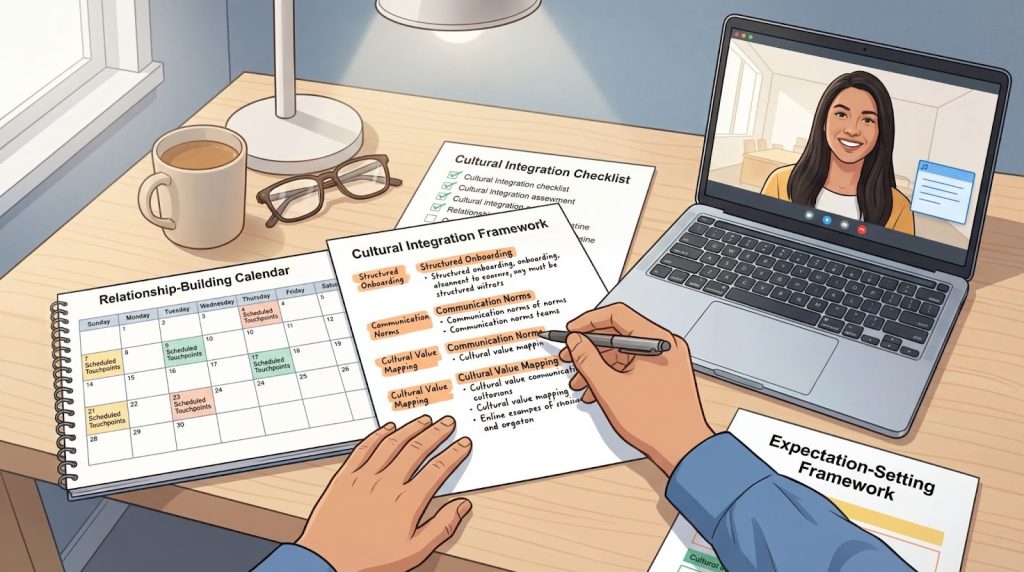
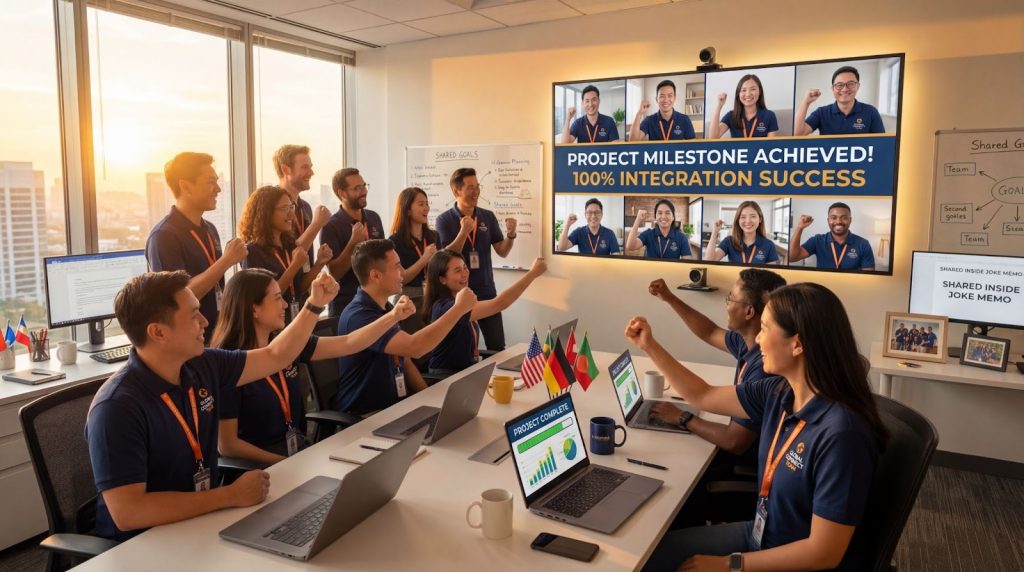
Cultural Integration for Offshore Employees: A Step-by-Step Guide

Hiring offshore talent solves the capacity problem, but integration challenges often sabotage performance before the ROI materializes. The best offshore employees don't just execute tasks—they understand your culture, anticipate needs, and operate like core team members. That transformation doesn't happen by accident.

Cultural integration determines whether offshore hiring delivers game-changing leverage or becomes a management burden that drains more time than it saves. Companies that crack this code turn offshore team members into cultural stars who drive performance metrics, strengthen team cohesion, and create measurable business impact. Those who ignore integration watch talented hires plateau, miscommunicate, and eventually churn—wasting recruitment investment and leadership bandwidth.

This guide provides a practical, step-by-step framework for integrating offshore employees into your team culture. You'll discover proven strategies for establishing communication norms, translating cultural values, setting clear expectations, building authentic relationships, and coaching offshore team members to become indispensable contributors. Whether you're making your first offshore hire or optimizing an existing global team, these integration tactics will help you transform geographical distance into strategic advantage.

The difference between offshore hiring that fails and offshore hiring that delivers 25% of your time back, improves quality scores by 58%, and extends operational capacity comes down to how well you integrate people into your culture, not just your org chart.

Key Takeaways

– Establish communication norms in the first week that define response times, meeting protocols, and feedback channels to prevent misalignment

– Translate your cultural values into observable behaviors so offshore employees understand how values show up in daily work, not just mission statements

– Create structured touchpoints during the first 90 days with weekly 1:1s, biweekly team integration sessions, and monthly performance calibrations

– Build relationship capital through informal interactions that go beyond task management—virtual coffee chats, team celebrations, and peer mentoring

– Implement ongoing coaching cycles that address skill development and cultural fluency simultaneously, turning capable hires into strategic partners

– Address cultural friction immediately when it appears rather than hoping misunderstandings resolve themselves—small gaps become chasms without intervention

Understanding Offshore Employee Cultural Integration

Cultural integration for offshore employees means more than teaching someone your tools or processes. It's about helping team members understand the unwritten rules that govern how your organization operates—the values that drive decisions, the communication styles that build trust, and the behaviors that earn respect and advancement.

Most companies confuse cultural integration with orientation. They introduce offshore hires to the team on a Zoom call, share the employee handbook, and expect osmosis to handle the rest. But cultural learning doesn't happen through documentation. It happens through observation, repetition, feedback, and coaching over time.

Here's the truth: offshore employees face integration challenges their domestic counterparts never encounter. They can't overhear hallway conversations that reveal strategic priorities. They miss the body language cues that signal urgency or frustration. They don't grab lunch with colleagues who explain "how things really work around here." Without intentional integration frameworks, offshore team members operate with incomplete cultural information, making decisions and communicating in ways that feel misaligned even when their technical work is flawless.

The companies that excel at offshore integration treat cultural onboarding as seriously as skills training. They recognize that an offshore coordinator who understands your service standards, communication preferences, and problem-solving approach delivers exponentially more value than someone who simply follows task lists. Cultural fluency transforms offshore employees from order-takers into strategic thinkers who anticipate needs, suggest improvements, and operate with the autonomy that creates real leverage.

When integration succeeds, offshore team members don't feel like outsiders working from a different continent. They feel like core team members who happen to work remotely, contributing to culture and performance in ways that make their location irrelevant.

Why Cultural Integration Makes or Breaks Offshore Success

The ROI of offshore hiring lives or dies in the integration phase. You can recruit the most qualified candidate with flawless credentials and impressive work samples, but if that person never understands your culture, they'll underperform, miscommunicate, and eventually leave. The cost isn't just turnover—it's the months of diminished productivity, the leadership time spent managing friction, and the strategic opportunities missed while your team addresses preventable problems.

The Hidden Cost of Poor Integration

Organizations that skip structured cultural integration pay a predictable price. Offshore employees make well-intentioned decisions that violate unspoken norms. They miss context that changes task priorities. They communicate in ways that feel too formal or too casual for your environment. These micro-misalignments accumulate, eroding trust between onshore and offshore team members.

Before long, onshore staff start routing around offshore colleagues rather than collaborating with them. Offshore employees feel isolated and underutilized, leading to disengagement. Managers spend increasing time clarifying expectations and fixing miscommunications. The efficiency gains offshore hiring promised evaporate as coordination costs skyrocket.

Poor integration doesn't just hurt performance—it creates cultural division. Onshore teams develop an "us vs. them" mentality where offshore staff are seen as helpers rather than teammates. This perception becomes self-fulfilling: offshore employees get assigned lower-value work, limiting their learning and contribution potential. Talent that could have evolved into strategic partners instead stays trapped in transactional roles.

image

The Competitive Advantage of Exceptional Integration

Companies that invest in cultural integration unlock extraordinary outcomes. Offshore employees who deeply understand organizational culture don't just complete assignments—they improve processes, identify blind spots, and take ownership of results. They communicate proactively, anticipate problems, and align their work to strategic priorities without constant supervision.

Consider the measurable impact: offshore coordinators who receive structured cultural integration reclaim 25% of leadership time by operating autonomously. They improve quality scores by 58% because they understand not just what to do, but why it matters. They drive revenue outcomes like 450K pipeline growth because they think strategically, not just tactically. They increase customer satisfaction by 20% because they've internalized service standards and apply them independently.

These outcomes aren't luck—they're the direct result of intentional cultural integration that helps offshore employees think like core team members. When offshore staff understand your values, communication norms, and decision-making frameworks, they become force multipliers who extend your leadership capacity rather than consuming it.

Exceptional integration also drives retention. Offshore employees who feel culturally connected stay longer, reducing turnover costs and preserving institutional knowledge. They become culture carriers who onboard new offshore hires, creating compounding returns on your integration investment.

The companies dominating offshore hiring in 2025 recognize that cultural integration isn't a nice-to-have soft skill initiative. It's a hard business driver that determines whether offshore talent delivers marginal value or transformational impact.

Step 1: Establish Clear Communication Norms From Day One

Communication breakdowns kill offshore relationships faster than skill gaps. Before your offshore employee completes their first assignment, you need crystal-clear agreements about how, when, and why your team communicates.

Define Response Time Expectations

Start by establishing response time standards for different communication channels. If Slack messages require responses within 2 hours during working hours, say so explicitly. If emails can wait 24 hours but project management tool comments need same-day replies, document those expectations. What feels obvious to your existing team needs to be stated clearly for offshore members who can't gauge urgency from office dynamics.

Don't assume your offshore hire will intuit when something is urgent. Create a shared language for priority levels—maybe P1 means "respond immediately," P2 means "by end of your workday," and P3 means "when you have capacity." These frameworks eliminate the anxiety offshore employees feel about whether they're responsive enough while preventing the resentment onshore staff feel when messages go unanswered longer than expected.

Clarify Meeting Protocols and Participation Standards

Spell out how your team runs meetings and what active participation looks like. Should offshore employees have cameras on during team calls? Are they expected to contribute ideas during brainstorming sessions, or observe first and engage later? How should they signal they want to speak—raise hand feature, verbal interruption, or wait for prompting?

These details matter because cultural norms around meeting behavior vary dramatically. In some cultures, jumping into conversations shows engagement; in others, it signals disrespect. In some environments, pushing back on ideas demonstrates critical thinking; in others, it undermines hierarchy. Your offshore employee shouldn't have to guess which norms apply in your culture.

Schedule recurring 1:1 check-ins during the first month at minimum weekly, ideally twice weekly. These dedicated sessions create safe space for offshore employees to ask questions, surface confusion, and get real-time feedback without the pressure of group settings.

Create Feedback Channels That Actually Work

Build multiple pathways for offshore employees to ask questions and raise concerns. A weekly 1:1 with their direct manager provides formal structure. A peer mentor from the existing team offers informal guidance. An open-door policy with leadership creates escalation options for bigger issues.

Make it explicitly safe to say "I don't understand" or "I need more context." Many offshore employees hesitate to ask clarifying questions, fearing they'll appear incompetent. You need to actively reward question-asking in the early weeks, praising offshore team members who surface confusion rather than making assumptions.

Communication norms aren't static—revisit them at 30, 60, and 90 days. Ask your offshore employee what's working and what needs adjustment. The goal isn't perfect communication from day one; it's continuous improvement based on honest feedback and shared commitment to clarity.

Step 2: Translate Cultural Values Into Observable Behaviors

Your company probably has cultural values posted somewhere—integrity, innovation, customer obsession, teamwork. But values stated abstractly mean nothing to offshore employees trying to figure out how to operate in your environment. Cultural integration requires translating values into specific, observable behaviors that demonstrate what those values look like in daily work.

Move Beyond Value Statements to Behavioral Examples

Take the value "customer-first mindset." For your organization, that might mean: responding to customer emails within 4 hours, proactively flagging potential service disruptions before customers notice them, or spending extra time to ensure deliverables exceed expectations rather than just meeting specs.

Share real examples from your team's recent work. Walk through a scenario where someone exemplified your cultural values and explain specifically what they did and why it mattered. These stories create mental models offshore employees can reference when making their own decisions.

Create a "culture guide" that pairs each core value with 3-5 concrete behaviors, both dos and don'ts. If "collaborative" is a value, spell out what collaboration looks like: tagging relevant team members in project updates, asking for input before finalizing deliverables, offering help when colleagues are overloaded. Just as importantly, clarify what collaboration doesn't mean: waiting for permission to make routine decisions, copying 15 people on every email, or scheduling unnecessary meetings.

Teach Decision-Making Frameworks

Cultural values become real when they guide decisions. Help your offshore employee understand how your team weighs trade-offs when values seem to conflict. If both "speed" and "quality" are values, which takes priority when they're in tension? The answer probably depends on context—but that context needs to be explained.

Walk through recent decisions your team faced and narrate the cultural reasoning. "We chose to delay the launch by two days because our value of customer trust meant we couldn't ship something with known bugs, even though speed is usually a priority." These explanations teach offshore employees how to think like your team, not just follow instructions.

Identify Your Unwritten Rules

Every organization has unwritten rules—the informal norms that govern behavior but never appear in documentation. These are the cultural landmines offshore employees stumble over. Surface them explicitly.

Maybe in your culture, people cc their managers on important emails, or they don't. Perhaps your team values casual communication, or professionalism matters. Some teams appreciate proactive problem-solving; others want consultation before action. None of these preferences are wrong, but they're invisible to outsiders until someone violates them.

Sit down with longtime team members and ask: "What does someone need to know to succeed here that we never tell them?" Compile that tribal knowledge and share it with offshore hires during onboarding.

Step 3: Create Structured Integration Touchpoints for the First 90 Days

The first three months determine whether offshore employees become integrated team members or remain perpetual outsiders. Structured touchpoints during this critical window provide the repetition, feedback, and relationship-building required for cultural fluency.

Week 1: Intensive Cultural Immersion

The first week should be communication-heavy, not task-heavy. Schedule your offshore employee for multiple short meetings with different team members—15 to 30-minute sessions where each person shares what they do, how they work, and what they wish they'd known when they started.

Create a "culture buddy" pairing with an existing team member who can answer daily questions, provide real-time feedback, and offer insider perspective on how things really work. This person becomes the offshore employee's first call when they're uncertain.

Conduct a detailed walkthrough of your team's communication tools, explaining not just how they work but how your team uses them. Show recent project threads that exemplify good communication. Point out examples of unclear requests and how to clarify them.

End week one with a structured feedback session: What's clear so far? What's still confusing? What additional information would help?

Weeks 2-4: Increasing Autonomy With Guardrails

During the first month, gradually increase task complexity while maintaining frequent check-ins. Start with clearly scoped assignments that have explicit success criteria. Review completed work together, praising what went well and coaching on improvements—focusing as much on process and communication as on technical output.

Schedule weekly 1:1s (minimum 30 minutes) dedicated to integration topics, not just task management. Ask questions like:

– What cultural norms have you observed that are different from previous work environments?

– What decisions this week were you uncertain about, and how did you navigate them?

– Who on the team have you connected with, and who do you need more interaction with?

These conversations surface integration challenges before they become problems.

Weeks 5-8: Expanding Relationships and Responsibility

By the second month, your offshore employee should be contributing meaningfully to projects. Now the focus shifts to relationship-building across the broader team and developing cultural fluency in nuanced situations.

Introduce biweekly team integration sessions—maybe virtual coffee chats, team retrospectives, or collaborative problem-solving meetings where offshore employees participate as equals, not observers. These informal settings build rapport and allow cultural learning through authentic interaction.

Begin delegating work that requires judgment, not just execution. These assignments test whether your offshore team member has internalized your cultural values and decision-making frameworks. Debrief these projects thoroughly: What went well? What would you do differently next time? How did you decide on your approach?

Weeks 9-12: Cultural Fluency Assessment

At the 90-day mark, conduct a comprehensive integration review. Assess not just performance on tasks, but cultural alignment: Does this person communicate in ways that build trust with the team? Do they demonstrate understanding of organizational values through their decisions? Have they built relationships across the team, or remain siloed?

Use this milestone to adjust ongoing support. Some offshore employees will have achieved strong cultural integration by day 90 and need less intensive coaching. Others will need continued structure and feedback. The goal isn't to declare integration "complete"—it's an ongoing process—but to calibrate support to individual needs.

Step 4: Build Authentic Relationships Beyond Task Management

Cultural integration fails when relationships stay transactional. Offshore employees who only interact with teammates about work deliverables never develop the trust, rapport, and mutual understanding that makes collaboration effortless.

Create Space for Informal Interaction

Intentionally design opportunities for non-work conversation. Start team meetings with personal check-ins where people share weekend plans, recent wins, or something they're learning. Create Slack channels for hobbies, local news, or shared interests where conversation happens without project pressure.

Schedule virtual coffee chats—15-minute casual conversations between offshore employees and different team members with no agenda except getting to know each other. These interactions build social capital that makes work collaboration smoother.

Don't let time zones become an excuse for exclusion. Rotate meeting times occasionally so the burden of odd hours doesn't always fall on offshore team members. Recording key meetings and sharing summaries helps, but nothing replaces live participation in team moments.

Celebrate Wins Together

Include offshore employees in team celebrations—project completions, company milestones, work anniversaries. When someone hits a goal, recognize them publicly in team channels. When the company celebrates, find ways to extend that celebration across geographies, even if that means sending gift cards for offshore team members to treat themselves.

Recognition builds belonging. When offshore employees see their contributions acknowledged alongside onshore teammates, they internalize that they're part of one team, not a separate offshore unit.

Implement Peer Mentoring Programs

Pair offshore employees with onshore mentors who can provide cultural guidance, career development advice, and friendship. These relationships work best when they're formalized with light structure: monthly check-ins, clear expectations that the mentor is available for questions, and recognition for mentors who invest in integration.

Peer mentoring creates advocates for offshore team members within the broader organization. Mentors help translate cultural nuances, troubleshoot challenges, and ensure offshore voices get heard in discussions. Over time, these relationships evolve into genuine partnerships that strengthen the entire team.

Embrace Cultural Exchange

Integration doesn't mean offshore employees abandon their own cultural backgrounds to adopt yours. The best global teams create space for cultural exchange where everyone learns from each other.

Invite offshore team members to share perspectives from their cultural context. How do teams in their region approach problem-solving? What communication styles are valued? What holidays and traditions are important? These conversations build mutual respect and often surface insights that improve how your entire team operates.

Cultural integration should feel like building bridges, not demanding assimilation.

Step 5: Implement Ongoing Coaching That Develops Cultural Fluency

Cultural integration isn't a one-time onboarding event—it's an ongoing development process that requires consistent coaching. The offshore employees who become top performers receive regular feedback that develops both technical skills and cultural fluency simultaneously.

Establish Biweekly Coaching Rhythms

Schedule recurring 1:1 coaching sessions every two weeks minimum. These aren't task status meetings—they're development conversations focused on growth, challenges, and alignment. Create a coaching agenda that includes:

Performance feedback on recent work, with specific examples of what went well and what needs improvement. Focus on the "why" behind feedback: "The client loved this deliverable because you anticipated their follow-up questions" helps offshore employees internalize what excellent looks like.

Cultural observations: "I noticed you waited to share your perspective in yesterday's meeting until directly asked. In our culture, we value proactive input, so feel free to jump in when you have ideas." These micro-corrections shape behavior over time.

Development goals: What skills or cultural competencies is the offshore employee working to strengthen? Create a development plan with clear milestones and check progress regularly.

Use Real Situations as Teaching Moments

The most powerful coaching happens in context. When miscommunications occur, use them as learning opportunities rather than just fixing the immediate problem. Walk through what happened, why it created confusion, and how to approach similar situations differently next time.

If an offshore employee sends an email that comes across as too abrupt or too deferential for your culture, show them what effective communication looks like in your environment. Provide templates and examples they can model. Cultural fluency develops through repetition and adjustment.

Create Personalized Development Plans

Every offshore employee has unique strengths and growth areas. Some might have exceptional technical skills but need support developing strategic thinking. Others might have great ideas but need coaching on how to communicate them persuasively in your cultural context.

Customize your coaching to individual development needs. If someone needs stronger prioritization skills, teach your team's prioritization framework explicitly. If they're working on building executive presence, create opportunities to present to leadership with coaching before and after.

The offshore employees who become indispensable aren't necessarily the ones who start with perfect skills—they're the ones who receive consistent coaching that accelerates their growth.

Measure Progress Beyond Task Completion

Evaluate offshore employee success using cultural integration metrics alongside performance metrics. Are they building relationships across the team? Do they communicate proactively when problems arise? Are they contributing ideas and improvements, not just executing assignments? Do they demonstrate understanding of company values through their decisions?

These qualitative indicators reveal whether integration is succeeding. An offshore employee who hits all their task deadlines but remains culturally disconnected hasn't achieved the integration that creates leverage and retention.

Addressing Cultural Friction Before It Becomes Crisis

Even with excellent integration frameworks, cultural friction will emerge. The difference between teams that thrive and teams that fracture comes down to how quickly and effectively they address tension when it appears.

Recognize Early Warning Signs

Cultural misalignment shows up in patterns before it explodes into obvious problems. Watch for signals: offshore employees becoming quieter in meetings, onshore staff starting to exclude offshore colleagues from discussions, communication becoming more formal and guarded, or offshore team members asking fewer questions over time.

These indicators suggest that trust is eroding or confusion is accumulating. Address them immediately through direct but compassionate conversation. "I've noticed you've been less engaged in team meetings lately. What's going on?" often surfaces concerns before they calcify into resentment.

Create Safe Channels for Surfacing Friction

Cultural issues rarely get raised directly because people fear creating conflict or appearing difficult. Build explicit mechanisms for surfacing friction without blame.

Regular pulse checks asking "What's working well with our offshore integration? What needs improvement?" signal that feedback is wanted. Anonymous surveys can help initially, but the goal is building trust where people feel safe raising concerns directly.

When friction emerges, approach it as a systems problem, not a people problem. "We're seeing miscommunication between onshore and offshore team members" invites collaborative problem-solving. "Offshore employees aren't communicating well" creates defensiveness and blame.

Facilitate Direct Resolution With Cultural Coaching

When conflict arises between onshore and offshore team members, resist the temptation to step in as translator or mediator immediately. Instead, coach both parties on how to resolve the tension directly, providing cultural context that helps each person understand the other's perspective.

An onshore manager frustrated that an offshore employee isn't "taking initiative" might need coaching that in the offshore employee's cultural background, waiting for clear direction shows respect, not passivity. The offshore employee might need coaching that in this organizational culture, proactive problem-solving is valued over waiting for explicit instructions.

Direct resolution with cultural framing builds stronger relationships than manager-mediated conflict resolution. It teaches both parties how to navigate cultural differences independently.

Adjust Integration Approaches Based on What You Learn

Every instance of cultural friction provides data about what your integration process is missing. If multiple offshore employees struggle with the same cultural norm, that's a sign you need to make that norm more explicit in onboarding. If a particular communication style consistently creates confusion, that's feedback to clarify expectations earlier.

Cultural integration should be a learning system that improves over time, not a static checklist. The companies that excel at offshore integration treat every challenge as an opportunity to strengthen their frameworks.

Frequently Asked Questions About Offshore Employee Cultural Integration

How long does offshore employee cultural integration typically take?

Basic cultural integration—where an offshore employee understands core values, communication norms, and team dynamics well enough to operate effectively—usually takes 60 to 90 days with structured support. However, deep cultural fluency, where offshore team members anticipate needs, navigate nuanced situations independently, and contribute to culture development, often requires 6 to 12 months. The timeline depends heavily on the complexity of your organizational culture, the individual's prior experience with your industry, and the quality of integration support you provide. Companies that invest in biweekly coaching, structured touchpoints, and relationship-building see faster integration than those who rely on passive osmosis.

What's the biggest mistake companies make with offshore cultural integration?

Assuming integration happens automatically without intentional structure. Most organizations spend significant time recruiting offshore talent, then invest almost nothing in helping those employees understand organizational culture. They introduce the offshore hire on a team call, share the employee handbook, and expect cultural alignment to develop naturally. Without explicit teaching of cultural norms, communication expectations, and unwritten rules, offshore employees operate with incomplete information that leads to misalignment, miscommunication, and underperformance. The fix is treating cultural onboarding as seriously as technical training with dedicated time, structured frameworks, and ongoing coaching.

How do I handle cultural differences that conflict with our company values?

Start by distinguishing between cultural differences and value misalignment. Not all cultural differences represent value conflicts. An offshore employee who communicates more formally than your casual culture isn't violating values—they're operating from different communication norms. Coach them on your communication style expectations. However, if cultural backgrounds lead to behaviors that genuinely conflict with core values, like a hierarchical culture clashing with your flat structure that requires challenging ideas openly, address it directly. Explain why the value matters in your context, provide specific behavioral expectations, and coach extensively. If someone cannot or will not adapt on genuine value issues after coaching, they may not be the right cultural fit regardless of technical skills.

Should offshore employees adapt completely to our culture or should we adapt to theirs?

Effective integration is a bridge, not a one-way street. Offshore employees need to understand and operate within your organizational culture, that's non-negotiable for integration success. But the best global teams also adapt by incorporating valuable perspectives and practices from offshore team members' cultural backgrounds. You might discover that communication approaches from your offshore employees' regions actually improve clarity. Or that their cultural approaches to relationship-building strengthen team cohesion. The goal is creating a unified team culture that honors the organization's core values while embracing diverse perspectives. Offshore employees should feel they're joining a culture, not erasing their identity to conform.

How do I measure whether cultural integration is succeeding?

Look beyond task completion to relationship and behavioral indicators. Successful integration shows up when offshore employees proactively communicate about problems rather than waiting to be asked, contribute ideas and improvements unprompted, build relationships across the team not just with their direct manager, navigate ambiguous situations using sound judgment aligned with company values, and receive peer recognition from onshore teammates. Quantitative signals include retention rates, performance improvement trajectories, time-to-autonomy metrics, and satisfaction scores from both offshore employees and their onshore collaborators. Schedule structured integration reviews at 30, 60, and 90 days to assess these dimensions explicitly rather than assuming integration succeeded because no obvious problems surfaced.

image

Conclusion

Cultural integration separates offshore hiring that delivers transformational business impact from offshore hiring that becomes an expensive management burden. The technical skills that looked impressive during recruitment mean nothing if offshore employees never understand how to operate within your culture, communicate in ways that build trust, or make decisions aligned with your values.

Companies winning with offshore talent in 2025 recognize that integration isn't a soft-skill nice-to-have—it's the hard business driver that determines whether offshore employees reclaim 25% of your time or consume more bandwidth than they create. It's what separates the offshore coordinators who improve quality scores by 58% from those who plateau at mediocre performance. It's the difference between offshore team members who drive 450K in pipeline growth and those who only execute task lists.

The step-by-step framework outlined here—establishing communication norms from day one, translating values into observable behaviors, creating structured 90-day touchpoints, building authentic relationships, and implementing ongoing coaching—provides the infrastructure cultural integration requires. These aren't theoretical concepts; they're proven strategies that turn geographical distance into strategic advantage.

Start implementing these integration practices with your next offshore hire, or use them to strengthen relationships with existing offshore team members who haven't reached their full potential. The investment you make in cultural integration during the first 90 days will compound for years through improved performance, stronger retention, and offshore employees who become indistinguishable from your core team.

Ready to build offshore teams that integrate seamlessly and perform exceptionally? Pathfinder Talent Solutions combines rigorous, science-based hiring with hospitality-driven cultural integration and ongoing coaching infrastructure that turns offshore employees into strategic partners. Our structured approach addresses the integration challenges most staffing agencies ignore—because we know placement is just the beginning. Explore how our methodology creates offshore teams that elevate your culture and drive measurable results at Pathfinder Talent Solutions.

Cultural integration isn't complicated, but it is intentional. The teams that commit to structured integration frameworks will dominate offshore hiring while their competitors struggle with turnover, miscommunication, and unrealized potential. Your offshore employees have the talent—give them the cultural foundation to unleash it.

The First 30 Days: How Customized Onboarding Drives Remote Employee Success

You've finally found the perfect remote employee. The interviews went well, the skills aligned, and the offer was accepted. But here's where most companies stumble: the first 30 days. Generic onboarding kills retention before it starts. Remote employees who receive customized onboarding are 70% more likely to remain with an organization beyond three years, yet most companies still use one-size-fits-all templates designed for in-office teams.

The difference between a thriving remote employee and one who quietly disengages comes down to those critical first weeks. When you customize remote employee onboarding to individual workflows, culture, and development needs, you're not just filling a position. You're building a foundation for measurable performance, faster productivity, and genuine team integration.

This guide reveals what effective remote employee onboarding actually looks like when done right. You'll discover the frameworks that separate successful remote placements from the ones that fail within 90 days, and learn how to structure those crucial first 30 days to drive real results.

Key Takeaways

– Customize onboarding around individual development gaps, not generic checklists, to accelerate time-to-productivity by 40%

– Structure the first 30 days in three distinct phases: Foundation (Days 1-10), Integration (Days 11-20), and Autonomy (Days 21-30)

– Implement role-specific simulations during Week 2 to identify skill gaps before they become performance issues

– Schedule milestone check-ins at Days 7, 14, 21, and 30 to catch misalignments early when they're easiest to correct

– Pair offshore employees with timezone-compatible buddies to prevent isolation and maintain cultural connection

– Track leading indicators like response time, question quality, and proactive communication, not just task completion

Why Generic Remote Employee Onboarding Fails

The standard approach to remote employee onboarding looks something like this: send login credentials, schedule a welcome call, share the employee handbook, and hope for the best. It's efficient, scalable, and almost guaranteed to underperform.

Here's the problem. Remote employees don't fail because they lack technical skills. They struggle because they don't understand your workflows, can't read your culture through a screen, and have no idea what "good" looks like in your organization. Generic onboarding assumes all employees need the same information in the same sequence. That's rarely true.

The Hidden Costs of One-Size-Fits-All Training

When you use generic training for remote hires, you're essentially asking them to figure out your company on their own. Some will succeed despite your process, not because of it. Most won't.

The real cost shows up around Day 45. That's when you realize your new hire still doesn't know which communication tool to use for what purpose, keeps missing unwritten expectations, and needs constant clarification on tasks that should be routine by now. You've spent weeks training someone who still isn't productive.

Remote employees need context that in-office workers absorb through proximity. They don't overhear how decisions get made, can't observe how colleagues handle challenges, and miss the thousand small cues that communicate your culture. Generic onboarding ignores this reality.

What Remote Teams Actually Need

Remote employee onboarding works when it's built around three elements: clarity, connection, and customization. Clarity means explicit documentation of workflows, communication norms, and decision-making processes that in-office teams take for granted. Connection requires intentional relationship-building that doesn't happen naturally through Slack messages. Customization means identifying each person's specific development needs and making those the focus.

If your new hire has strong strategic thinking but struggles with prioritization, that becomes your onboarding focus. If they excel at execution but need help understanding your cultural values, you structure early experiences around culture immersion. This level of personalization takes more upfront effort. It also cuts time-to-productivity nearly in half.

The Three Phases of Successful Remote Onboarding

The first 30 days break into three distinct phases, each with different goals and success metrics. Treating all four weeks the same creates confusion about what matters when.

Phase 1: Foundation (Days 1-10)

The first ten days establish the basics: systems access, role clarity, and initial confidence. Your new remote employee should finish this phase knowing how to do their job technically, even if they're not yet doing it at full speed.

Start with systems setup on Day 1. That means not just login credentials, but guided walkthroughs of each tool, recorded for reference. Your new hire should complete at least five practice tasks in your actual systems during Week 1, not hypothetical exercises.

Role clarity comes through detailed documentation plus conversation. Written expectations matter, but so does the discussion that brings those expectations to life. Schedule a 90-minute session during Days 2-3 specifically to walk through responsibilities, success metrics, and what done-well looks like for their role.

Phase 2: Integration (Days 11-20)

By Week 2, your remote employee should start doing real work while building relationships across the team. This phase balances independent execution with guided practice.

Introduce complexity gradually. Week 2 tasks should require your new hire to interact with multiple team members, use several systems in combination, and make minor judgment calls. You're testing whether they can apply what they learned in Phase 1 to realistic scenarios.

Here's where job simulations prove invaluable. Around Day 12-14, present a realistic scenario they'll face regularly: a customer request, a project coordination challenge, a data analysis task. Don't just observe whether they complete it. Watch how they approach it. Do they ask clarifying questions? Do they identify the right resources? That reveals gaps your generic training can't uncover.

Phase 3: Autonomy (Days 21-30)

The final ten days transition your remote employee from guided practice to self-directed contribution. They should be handling real responsibilities with decreasing oversight, demonstrating they've internalized your expectations.

Assign projects they own completely during this phase. The goal isn't perfection, it's appropriate independence. Can they identify what they don't know and ask the right questions? Do they recognize when something is urgent versus routine? Are they starting to anticipate needs instead of just responding?

By Day 30, your new hire should be operating at 60-70% productivity, not 100%. That's the realistic benchmark. Full productivity comes by Day 60-90, but Month 1 should prove they're on track to get there.

Customizing Onboarding to Individual Development Needs

The difference between adequate and exceptional remote employee onboarding lies in personalization. You can't customize what you haven't assessed.

Identifying Individual Capability Gaps

Assessment starts during hiring, not after. When you use structured interviews and job simulations during recruitment, you learn exactly where each candidate excels and where they'll need support. Maybe they demonstrated excellent problem-solving but weaker communication clarity. Perhaps they showed strong technical skills but less developed emotional intelligence.

Those insights become your onboarding roadmap. If a candidate displays strategic thinking but needs sharper organizational skills, structure their first 30 days around priority-setting frameworks, time-blocking techniques, and decision matrices. Give them tools and coaching specifically for the gaps you identified.

Don't wait for performance issues to surface. Address development needs proactively during onboarding when the relationship is new and the employee expects learning. It's easier to shape strong habits early than correct weak ones later.

Building Personalized Training Paths

Customized onboarding doesn't mean creating entirely unique experiences for every hire. It means having modular training components you assemble based on individual needs.

Build a library of focused training modules addressing common development areas: communication protocols, priority management, cultural values, technical workflows, industry-specific knowledge. When you assess a new hire's gaps, you select the relevant modules instead of forcing them through irrelevant content.

For example, if you're onboarding a virtual assistant for property management who has strong admin skills but limited real estate knowledge, you'd emphasize modules covering lease terminology, maintenance workflows, and resident communication best practices. You'd skip generic administrative training they don't need.

This approach respects their existing expertise while filling actual gaps. It also accelerates productivity because you're teaching what matters, not everything.

Building Cultural Connection Across Time Zones

Remote employees, especially offshore team members, face a unique challenge: understanding your company culture through limited, asynchronous interaction. Culture doesn't transfer through employee handbooks.

Creating Belonging from Day One

Cultural integration starts with intentional welcome experiences. Before Day 1, send a personalized video from the team, explaining who everyone is and how the new hire will interact with them. Include personality, not just job titles. "This is Sarah, our operations lead. She's obsessed with efficiency and usually has the best restaurant recommendations" tells your new hire how to connect, not just who to report to.

Assign a peer buddy separate from their direct manager. This person answers the "dumb questions" your new hire feels embarrassed asking their boss. Where do people actually take lunch breaks in a remote environment? How quickly are you expected to respond to messages? What's the real dress code for video calls? These unwritten rules determine comfort and belonging.

Schedule informal team interactions during Weeks 1 and 3. Not more meetings, but virtual coffee chats or brief "get to know you" sessions with different team members. Fifteen minutes of casual conversation builds more connection than ten training documents.

Navigating Offshore Employee Onboarding Challenges

Offshore employees need additional cultural context because they're navigating not just your company culture, but cross-cultural communication differences. Be explicit about communication norms that domestic employees might intuit.

Explain your communication hierarchy clearly: When do you expect email versus Slack versus scheduled calls? What's the expected response time for each channel? How do you signal urgency appropriately? These aren't universal, they're organizational, and offshore team members can't guess them.

Address time zone realities upfront. If your offshore employee works outside your core business hours, establish overlap expectations clearly. When do they need to be available synchronously? When can they work async? Who do they contact if they're blocked and you're offline?

Create documentation that assumes zero context. Your domestic employees might understand industry jargon, local business customs, or implied references. Your offshore team doesn't have that background. Write onboarding materials that explain context explicitly, not just procedures.

image

Measuring Success: Onboarding Metrics That Actually Matter

You can't improve what you don't measure, but most companies track the wrong onboarding metrics. Completion rates for training modules tell you almost nothing about effectiveness.

Leading Indicators of Onboarding Success

Track these metrics during the first 30 days to gauge whether your remote employee onboarding is working:

Response time consistency. Are they responding to messages and requests within the expected timeframe? This reveals whether they understand priority and urgency norms. A new hire who consistently responds quickly to low-priority items but slowly to urgent ones hasn't grasped your culture yet.

Question quality. Count the questions your new hire asks in Weeks 2-4. The number should decrease, but the sophistication should increase. Early questions should be clarifying ("Where do I find X?"). By Week 3, questions should be strategic ("Should we prioritize A or B given constraint C?"). That progression shows they're moving from information-gathering to judgment development.

Proactive communication. Note when your new hire volunteers information without being asked. By Day 20, they should start flagging potential issues before they become problems, suggesting process improvements, or offering help to teammates. That's integration, not just task completion.

The 30-Day Milestone Check-In

Conduct a structured review at Day 30 that goes beyond "how's it going?" Use a framework that assesses four dimensions:

Technical proficiency: Can they complete core responsibilities without constant guidance? Are they 60-70% productive?

Cultural alignment: Do they understand and demonstrate your values? Are they communicating in ways that fit your culture?

Relationship integration: Have they built working relationships with key stakeholders? Do teammates view them as part of the team?

Development trajectory: Are the gaps you identified during hiring narrowing? What evidence shows progress?

This review should produce a specific development plan for Days 31-90, not just a pass/fail evaluation. What does this employee need to reach full productivity? What support will accelerate their growth?

image

The Pathfinder Talent Solutions Approach: Coaching-Driven Onboarding

At Pathfinder Talent Solutions, remote employee onboarding doesn't end at Day 30. It's where our coaching infrastructure begins to create measurable impact.

We start by using structured hiring methodologies that identify each candidate's specific development needs before placement. Our process combines cognitive assessments, job simulations, and emotional intelligence evaluations to understand not just what someone can do, but where they'll need support to excel in your environment.

That assessment becomes the foundation for customized onboarding. If we place a virtual assistant who shows strong strategic thinking but needs sharper prioritization skills, we make that the training focus. We don't waste their time or yours covering material they've already mastered.

Beyond Placement: The Coaching Engine

Our biweekly one-on-one coaching sessions start during onboarding and continue throughout the placement. These aren't generic check-ins. They're structured development conversations focused on the specific capabilities that drive long-term performance: communication clarity, priority management, critical thinking, ownership mindset.

We track performance indicators in real-time, catching misalignments early when they're easiest to correct. If we notice a new hire struggling with your communication tools, we address it in Week 2, not Month 3. If they're exceeding expectations in one area, we help them leverage that strength across their role.

This approach has produced documented outcomes: 58% increases in quality assurance scores, 79% training completion rates, and 25% of manager time reclaimed through stronger execution and accountability. These aren't testimonials. They're measured results from treating onboarding as the beginning of development, not the end of hiring.

Common Remote Onboarding Mistakes to Avoid

Even with strong intentions, companies make predictable mistakes that undermine remote employee onboarding success.

Mistake 1: Information Overload in Week One

Don't dump your entire knowledge base on new hires during their first week. They can't retain it, and the overwhelm creates anxiety instead of confidence. Introduce information progressively based on when they'll actually need it.

Give them everything required to complete Week 1 tasks. Everything else can wait. Your 47-page employee handbook? Send sections as they become relevant. That complex project management system? Introduce it Week 3 when they're ready to use it.

Mistake 2: Assuming Digital Natives Don't Need Tech Training

Just because someone is comfortable with technology generally doesn't mean they know your specific tools and workflows. Every organization uses Slack differently. Your project management setup is unique to you. Your file organization system isn't intuitive to outsiders.

Walk through your tech stack explicitly, showing not just how tools work, but how you use them. Record these walkthroughs so new hires can reference them later without asking you to repeat yourself.

Mistake 3: Treating Onboarding as One-Way Information Transfer

Onboarding should be a conversation, not a lecture series. Build in regular checkpoints where your new hire shares what they're learning, what's confusing, and what questions they have. Their confusion often reveals gaps in your documentation or processes, not their capabilities.

Ask explicitly: "What's one thing that surprised you about how we work?" and "What's one thing you wish you'd known on Day 1?" Those questions surface insights that improve your onboarding for the next hire.

Frequently Asked Questions About Remote Employee Onboarding

How long should remote employee onboarding take?

Structured onboarding should last 30 days for foundational integration, with continued development support through Day 90. The first month establishes workflows, culture, and initial productivity. Months 2-3 build toward full contribution. Most remote employees reach 60-70% productivity by Day 30 and full productivity by Day 60-90, assuming effective onboarding.

What's different about offshore employee onboarding compared to domestic remote workers?

Offshore employee onboarding requires additional cultural context and explicit communication norms. You can't assume shared understanding of business customs, industry terminology, or implied expectations. Provide more detailed documentation, explain context that seems obvious, and clarify time zone expectations upfront. Assign timezone-compatible peer buddies and schedule overlap hours for synchronous support during the first two weeks.

How do you measure whether remote onboarding is working?

Track leading indicators, not just completion metrics. Monitor response time consistency (are they learning urgency norms?), question quality evolution (are questions becoming more strategic?), and proactive communication (are they volunteering information by Week 3?). Conduct structured check-ins at Days 7, 14, 21, and 30 to catch misalignments early. By Day 30, new hires should demonstrate 60-70% productivity with appropriate independence.

Should onboarding be different for virtual assistants versus other remote roles?

Virtual assistant onboarding best practices emphasize workflow integration and service orientation more heavily than technical roles might. VAs need deep understanding of your communication preferences, priority frameworks, and decision-making authority boundaries. Use real scenarios during Week 2 to test judgment calls: "If X happens and I'm unavailable, what do you do?" Their responses reveal whether they've internalized your expectations.

What's the biggest mistake companies make with remote team onboarding plans?

The biggest mistake is treating onboarding as information delivery instead of skill development. Sending documents and hoping employees figure it out doesn't work remotely. Effective onboarding identifies individual development gaps during hiring, then builds personalized training around those specific needs. It's the difference between generic orientation and strategic capability building. Companies that customize onboarding see 40% faster time-to-productivity and significantly better retention.

Conclusion

The first 30 days determine whether your remote hire becomes a high-performing team contributor or another disappointing placement. Generic onboarding treats all employees the same, ignoring the reality that each person brings different strengths and different development needs. That approach wastes time and undermines retention before the relationship even starts.

Customized remote employee onboarding works because it respects what your new hire already knows while addressing specific gaps. When you structure those critical first weeks around individual development needs, workflow integration, and cultural connection, you accelerate productivity and build genuine team alignment. The companies that invest in onboarding customization see measurable returns: faster ramp-up, stronger performance, and retention that extends years, not months.

Ready to transform how your organization approaches remote employee onboarding? Pathfinder Talent Solutions combines science-based hiring with coaching-driven development to ensure every placement succeeds. Our customized onboarding framework identifies individual capability gaps during assessment, then structures those crucial first 30 days around the specific support each person needs. The result? Remote employees who integrate faster, perform stronger, and stay longer.

Discover how our hospitality-born, coaching-focused approach drives measurable outcomes across property management, healthcare, tech startups, and beyond. Visit Pathfinder Talent Solutions to explore a partnership built on proven methodology, not empty promises.

Property Management Coordinator vs. Virtual Assistant: Which Role Do You Actually Need?

You're drowning in maintenance requests, resident emails pile up faster than you can answer them, and vendor coordination somehow takes up half your week. Property managers across the country face the same challenge: too many operational tasks and not enough hours. The natural response? Hire help. But here's where it gets tricky—do you need a property management coordinator or a virtual assistant?

The distinction matters more than you think. Hire the wrong role, and you'll end up with expensive overhead that doesn't move the needle. Choose strategically, and you'll reclaim 10-15 hours weekly while improving resident satisfaction and operational efficiency. As of December 2025, the property management industry is experiencing a staffing evolution, with offshore virtual assistants and specialized coordinators both proving valuable—but in very different scenarios.

This guide breaks down exactly what each role delivers, when each makes financial sense, and how to structure your decision around your actual operational needs rather than industry assumptions. Drawing from documented case studies showing 20% repeat booking increases and 40% faster vendor response times, you'll see how smart property managers are solving the coordination problem without breaking their budgets.

Key Takeaways

Clarify role scope first - Property management coordinators handle specialized on-site functions like resident relations and property tours, while VAs excel at remote administrative workflows including maintenance scheduling and vendor coordination

Calculate your true costs - Coordinators typically cost $40,000-$55,000 annually plus benefits versus offshore VAs at $1,500-$2,500 monthly, but ROI depends on task alignment not just hourly rates

Match tasks to location requirements - Resident-facing, property-specific work demands local presence; documentation, communication, and coordination work thrives remotely with proper systems

Leverage hybrid models strategically - The highest-performing property management teams combine on-site coordinators for resident experience with offshore VAs handling backend operations, optimizing both cost and service quality

Prioritize training infrastructure - Generic VA placement fails 60% of the time; customized onboarding to your property management software and service standards drives measurable retention and performance gains

Don't ignore post-placement support - Ongoing coaching for remote team members reduces turnover by up to 40% and accelerates time-to-full-productivity from 90 days to under 30

What Property Management Coordinators Actually Do

Property management coordinators function as operational anchors for multifamily communities, senior living facilities, and HOA management companies. They're the face of your properties, handling everything from resident move-ins to vendor oversight when you're managing multiple locations.

The role typically encompasses resident relations management, coordinating move-in and move-out processes, conducting property tours for prospective tenants, and serving as the first point of contact for on-site issues. Coordinators also manage vendor relationships for maintenance and repairs, oversee lease renewals, coordinate community events, and ensure compliance with property regulations and safety standards.

Here's what makes coordinators valuable: physical presence. When a resident needs to show a maintenance issue, when a prospective tenant wants to tour units, or when an inspector arrives unexpectedly, coordinators provide immediate on-site response. For multifamily properties with high resident interaction needs, this face-to-face capability directly impacts retention and satisfaction scores.

Where Coordinators Excel

Coordinators deliver the most value in high-touch, resident-facing scenarios. Properties with frequent showings benefit from coordinators who can conduct tours professionally while answering detailed property-specific questions that remote staff cannot address.

Communities with complex vendor ecosystems—where you're juggling landscaping, HVAC, plumbing, electrical, and janitorial services across multiple buildings—benefit from coordinators who can physically walk properties, identify issues proactively, and coordinate repairs in real-time. Senior living and luxury properties where service expectations demand immediate in-person responsiveness see the highest ROI from coordinator positions.

Coordinators also shine during resident onboarding, where walking new tenants through amenities, explaining community rules, and troubleshooting move-in issues creates positive first impressions that impact retention.

The Financial Reality of Coordinators

Full-time property management coordinators typically command $40,000-$55,000 annually depending on market and experience level, plus benefits adding 20-30% to total compensation cost. For a single property, that represents significant overhead. For portfolio managers overseeing 5+ properties, the per-property cost becomes more justifiable.

But here's the hidden cost: underutilization. If your coordinator spends 40% of their time on administrative tasks—data entry, scheduling, email management, document processing—you're paying $20,000+ annually for work that doesn't require physical presence. This is where the coordinator-versus-VA decision gets strategic rather than obvious.

Virtual Assistants in Property Management: The Remote Operations Model

Virtual assistants for property management represent a fundamentally different staffing approach—remote professionals handling administrative, coordination, and communication workflows that don't require physical property access.

Modern property management VAs handle maintenance request intake and vendor scheduling, resident communication via email and phone, lease administration and renewal coordination, financial tasks including rent collection follow-up, listing management and marketing support, and data entry for property management software. The best VAs function as offshore operations associates, managing workflows that keep properties running smoothly without requiring on-site presence.

The Offshore Advantage

Offshore virtual assistants—primarily based in the Philippines or Latin America—offer compelling economics: $1,500-$2,500 monthly for full-time, dedicated support. That's roughly one-fifth the cost of a domestic coordinator, which sounds too good to be true until you understand the task-location fit.

Property management generates massive administrative volume. Maintenance requests need logging and vendor assignment. Residents send emails requiring responses. Lease renewals need tracking and follow-up. Vendors need scheduling coordination. These workflows are system-based, not location-dependent.

A properly trained VA working in your property management software can handle maintenance coordination faster than an on-site coordinator because they're not interrupted by walk-ins, property tours, or physical inspections. One documented case study showed a property management VA improving vendor response times by 40% simply through systematic follow-up and communication protocols that an overwhelmed on-site coordinator couldn't maintain.

Where VAs Transform Operations

Virtual assistants excel in workflow-intensive, communication-heavy property management functions. Maintenance coordination is a prime example—logging requests, assigning vendors, following up on completion, and updating residents requires system access and communication discipline, not physical presence.

Leasing pipeline management represents another high-value VA application. Responding to prospect inquiries, pre-qualifying applicants, scheduling tours, following up after showings, and moving prospects through your leasing funnel are largely digital workflows. VAs can handle 80% of the leasing coordination, freeing property managers or coordinators to focus exclusively on the in-person tour and closing.

Resident communication and customer service work beautifully with VAs trained in hospitality-focused service standards. Answering routine questions, updating residents on maintenance status, coordinating amenity reservations, and managing community announcements don't require office presence—they require responsiveness and empathy.

The Training and Management Reality

Here's what the offshore staffing agencies won't tell you upfront: VA success depends entirely on onboarding quality and ongoing management. Generic virtual assistant training fails spectacularly in property management because the industry has specific software platforms, compliance requirements, communication standards, and workflow nuances.

The VAs who deliver measurable results receive customized onboarding on your specific property management software, training in your service standards and communication tone, clear workflow documentation and process maps, and ongoing coaching to strengthen skills like prioritization and proactive problem-solving. One property management company documented a 20% increase in repeat bookings after implementing structured VA training that emphasized the "Peak Moments" service philosophy—small acts of care that create memorable resident experiences.

The companies that struggle with offshore VAs typically skip this investment, expecting plug-and-play productivity. Property management is too operationally complex for that approach to work.

Coordinator vs. VA: The Task-Responsibility Matrix

Understanding which tasks belong to coordinators versus VAs requires breaking down property management operations by location-dependency and complexity.

Coordinator-Only Territory

Certain functions simply cannot be delegated remotely, regardless of how skilled your VA is. In-person property tours and showings require physical presence and the ability to answer on-the-spot questions about specific units, amenities, and neighborhood context.

Physical property inspections—walking grounds to identify maintenance needs, safety hazards, or curb appeal issues—demand on-site presence. Vendor oversight for complex on-site work like HVAC repairs or major renovations benefits from coordinator supervision to ensure quality and address issues immediately.

Resident conflict resolution, particularly when emotions run high or situations require immediate de-escalation, works best with in-person interaction. Emergency response coordination for issues like water leaks, lockouts, or security concerns needs someone who can physically assess situations and make real-time decisions.

VA-Optimized Functions

Virtual assistants own the digital workflow layer of property management. Maintenance request intake, categorization, and initial vendor assignment work perfectly remotely—VAs can log requests, determine urgency, assign appropriate vendors, and schedule appointments entirely through your property management system.

Resident communication for non-emergency inquiries—answering questions about lease terms, amenity reservations, package notifications, community updates—performs excellently with well-trained VAs who respond faster than overwhelmed on-site staff.

Vendor coordination and follow-up represents high-value VA work. Confirming appointments, checking completion status, updating residents, processing invoices, and maintaining vendor databases require systematic attention that VAs excel at providing.

Leasing administration including application processing, background check coordination, lease document preparation, and move-in paperwork are document-intensive workflows that don't require property presence.

Financial administration like rent collection follow-up, late notice generation, payment processing support, and basic bookkeeping tasks leverage VA efficiency at a fraction of coordinator cost.

Hybrid-Opportunity Zone

Some functions work with either coordinators or VAs depending on your operational model and technology infrastructure. Move-in and move-out coordination can be split—VAs handle scheduling, documentation, and communication while coordinators conduct physical walkthroughs.

Prospective resident follow-up works well with VAs handling initial inquiry responses and qualification, with coordinators taking over for tour scheduling and in-person conversion. Community event coordination benefits from VAs managing invitations, RSVPs, vendor scheduling, and logistics while coordinators handle on-site execution.

image

When to Hire a Coordinator vs. When to Hire a VA

The coordinator-versus-VA decision isn't about which role is "better"—it's about operational fit, budget constraints, and growth strategy.

You Need a Coordinator If...

Your property management model prioritizes high-touch resident experience where immediate in-person response drives retention and satisfaction. Luxury apartments, senior living communities, and boutique multifamily properties often fall into this category.

You're managing properties where frequent showings and tours represent your primary growth driver, requiring someone who can conduct professional property tours multiple times daily without scheduling constraints.

Your vendor ecosystem is complex and requires regular on-site oversight—multiple service categories, frequent repairs, or properties with unique maintenance needs benefit from coordinator presence.

You operate in markets where resident expectations include immediate in-person service for requests and issues, or where community-building through events and face-to-face interaction drives retention.

You Need a VA If...

Your operational bottleneck is administrative volume—maintenance logging, resident communication, scheduling, and documentation—rather than physical property presence. Most property managers discover that 60-70% of their time goes to workflows that don't require being on-site.

You're managing multiple properties remotely and need centralized coordination for maintenance requests, vendor scheduling, and resident communication across your portfolio. VAs can provide portfolio-wide coverage that single-property coordinators cannot.

Your budget prioritizes operational efficiency over on-site presence, or you're in growth mode where adding coordinator overhead for each property isn't financially viable.

You have solid property management software infrastructure and digital communication systems that enable remote workflow management effectively.

You Need Both (The Hybrid Model)

The highest-performing property management operations increasingly adopt hybrid models—combining on-site coordinators for resident-facing functions with offshore VAs handling backend operations.

This structure optimizes both service quality and cost efficiency. Coordinators focus exclusively on high-value, resident-facing work like tours, move-ins, and relationship building, while VAs handle the operational workflows that consume coordinator time but don't require physical presence.

One property management company implemented this model with measurable results: their on-site coordinator reclaimed 25% of their time for resident relations and strategic work, while their offshore VA improved maintenance response times and vendor coordination, leading to higher resident satisfaction scores and improved retention.

The hybrid approach works particularly well for growing property management companies where adding full coordinator overhead for each new property isn't financially sustainable, but maintaining service quality is non-negotiable.

Cost-Benefit Analysis: Making the Financial Case

Let's break down the real numbers behind coordinator versus VA hiring to quantify your ROI potential.

Traditional Coordinator Economics

A full-time property management coordinator costs approximately $40,000-$55,000 annually in salary, plus 20-30% for benefits (health insurance, paid time off, payroll taxes), totaling $48,000-$71,500 in full compensation. Add recruitment costs (estimated $3,000-$5,000) and training time (4-6 weeks to full productivity), and your first-year investment reaches $55,000-$80,000.

For a single property generating $500,000 in annual revenue, coordinator overhead represents 11-16% of revenue—sustainable only if the role directly drives retention and occupancy improvements that offset the cost. For portfolio managers, the per-property allocation becomes more favorable: a coordinator supporting three properties represents roughly 3-5% of combined revenue.

Virtual Assistant Economics

An offshore VA typically costs $1,500-$2,500 monthly for full-time, dedicated support, or $18,000-$30,000 annually. There are no benefits overhead, and recruitment through specialized staffing agencies typically includes replacement guarantees reducing hiring risk.

The onboarding investment matters here. Agencies offering generic VA placement without customized training to your property management software and processes create false savings—you'll spend the hourly rate difference managing confusion and fixing mistakes. Quality staffing partners invest in customized onboarding (typically 2-3 weeks) and ongoing coaching, adding modest costs but delivering significantly better performance outcomes.

For properties generating $500,000 annually, VA overhead represents 3.6-6% of revenue—a manageable investment that typically pays for itself through time reclaimed and operational efficiency gains.

Measuring Real ROI

The financial case for coordinators versus VAs isn't just about hourly rates—it's about impact on your core property management metrics. Time reclaimed is the most immediate ROI indicator. Property managers consistently report reclaiming 10-15 hours weekly after delegating maintenance coordination, resident communication, and administrative workflows to well-trained VAs. That time can be redeployed to revenue-generating activities like new property acquisition, owner relations, or strategic portfolio optimization.

Resident retention improvements drive substantial long-term value. One property management case study documented a 20% increase in repeat bookings after implementing systematic communication and "Peak Moments" service delivery through a trained VA. For a 50-unit property with average annual rent of $18,000, a 10% retention improvement represents $90,000 in avoided vacancy costs and turnover expenses.

Operational efficiency gains show up in vendor response times, maintenance turnaround, and reduced emergency escalations. Properties implementing structured VA coordination reported 40% faster vendor response times and fewer resident complaints about maintenance delays.

image

Implementation Roadmap: Setting Your Hire Up for Success

Hiring a coordinator or VA is only the first step—success depends on how you structure onboarding, define workflows, and manage performance.

Defining Role Clarity

Before posting a job description or engaging a staffing agency, document your actual operational needs. Audit your current time allocation for one week, tracking tasks in categories: resident-facing (tours, meetings, conflict resolution), maintenance coordination (logging requests, vendor scheduling, follow-up), communication (email, phone, resident updates), and administrative (data entry, documentation, lease processing).

This audit reveals your task-location fit. If 60% of your time goes to workflows that don't require physical presence, a VA likely delivers higher ROI than a coordinator. If resident-facing work dominates, a coordinator makes sense.

Create a responsibility matrix listing each task with three columns: Must be done on-site, Can be done remotely with training, and Requires specialized expertise. This framework prevents the common mistake of hiring a coordinator when you actually need operational leverage, or hiring a VA for responsibilities that genuinely require physical presence.

Onboarding That Actually Works

Generic onboarding is where most VA placements fail. Property management has industry-specific software, compliance requirements, and workflow nuances that require structured training.

Effective onboarding includes system-specific training on your property management platform (Yardi, AppFolio, Buildium, etc.), with documented processes for every workflow the VA or coordinator will handle. Role-play scenarios for common resident interactions, ensuring your service standards and communication tone are clear.

Build in graduated responsibility—start with lower-stakes tasks like maintenance logging and resident email responses before transitioning to vendor coordination and lease administration. This approach builds confidence and allows you to identify training gaps early.

The difference between generic and customized onboarding shows up in time-to-productivity metrics. Generic approaches take 60-90 days to reach full effectiveness, while structured, property-management-specific onboarding achieves productivity in under 30 days.

Technology and Systems Infrastructure

Remote VA success depends on technology enablement. Your property management software should have appropriate user permissions allowing VAs to log requests, update work orders, and communicate with residents without accessing sensitive financial data unnecessarily.

Communication tools matter—ensure your VA has access to your business phone system (VoIP forwarding), email, and messaging platforms used for resident communication. Many property managers implement shared inboxes where VAs handle initial responses and flag complex issues for manager review.

Workflow documentation tools like process videos, written SOPs, and decision trees help VAs navigate scenarios without constant manager input, accelerating independence.

Frequently Asked Questions About Property Management Coordinators and Virtual Assistants

Can a virtual assistant really handle maintenance coordination without seeing the property?

Yes, when properly trained on your systems and workflows. VAs manage maintenance coordination through your property management software—logging requests, assigning vendors based on issue type, confirming appointments, and following up on completion. The physical assessment happens through residents describing issues (often with photos) and vendors evaluating on-site. What VAs provide is systematic coordination and follow-up that prevents requests from falling through cracks, which is often the real problem causing resident frustration. Documented case studies show VAs actually improving vendor response times by 40% because they have dedicated focus without on-site interruptions.

How do I know if I need a full-time coordinator or can get by with a part-time VA?

Audit your task volume and resident interaction frequency. If you're managing 1-2 properties with moderate resident turnover and fewer than 20 maintenance requests monthly, a part-time VA (20 hours weekly) often handles coordination needs adequately. Properties with 50+ units, frequent showings (5+ weekly), or complex vendor ecosystems typically justify full-time support. The hybrid model works well for growing portfolios—one part-time VA can support 3-4 properties for backend operations, while you decide which properties justify dedicated coordinator presence based on resident experience priorities.

What's the biggest mistake property managers make when hiring offshore VAs?

Expecting plug-and-play productivity without investing in customized onboarding. Property management isn't generic administrative work—it requires understanding your specific software platform, service standards, resident communication approach, and workflow nuances. Agencies offering "ready-to-work VAs" at rock-bottom rates typically provide generic training that fails in real-world application. The VAs who deliver measurable results receive 2-3 weeks of customized onboarding specific to your operations, plus ongoing coaching to strengthen skills like prioritization and proactive problem-solving. This training infrastructure is the difference between VAs who work out and VAs who create more work than they solve.

Can I transition from a coordinator to a VA model, or vice versa, without disrupting operations?

Absolutely, with proper planning. Transitioning from coordinator to VA works well when you're moving to a hybrid model—shifting backend workflows remotely while maintaining on-site presence for resident-facing functions. Document all workflows your coordinator currently handles, identify which can be done remotely, and implement a 30-day overlap where your coordinator trains the VA before transitioning responsibilities. Going from VA to coordinator makes sense when your resident service expectations outgrow remote capabilities—typically happening as properties scale or move upmarket into luxury segments where in-person service becomes a competitive differentiator.

How do I manage a VA I've never met in person?

Structure, communication cadence, and performance metrics. Successful VA management includes daily 15-minute check-ins via video call to review priorities and address questions, weekly performance reviews tracking key metrics (response times, resident satisfaction, maintenance turnaround), and documented workflows reducing ambiguity about how tasks should be completed. Modern property managers treat VAs as remote team members, not vendors—investing in relationship-building and providing ongoing coaching creates engagement and reduces turnover. VAs with biweekly coaching and clear development paths show 40% lower turnover than those managed transactionally.

Making Your Decision: Coordinator, VA, or Hybrid?

You've seen the operational realities, the financial models, and the implementation frameworks. Now comes your decision: which staffing structure fits your property management operation today, and where do you want it to be in 12 months?

If your properties demand high-touch resident experience and your budget supports $50,000+ in coordinator overhead, hiring a dedicated coordinator makes sense—just be strategic about protecting their time for resident-facing, value-creating work rather than letting administrative tasks consume their capacity. If your operational bottleneck is workflow volume and you have solid systems infrastructure, a trained VA delivers immediate leverage at a fraction of coordinator cost. For growing property management companies, the hybrid model increasingly represents the optimal path—on-site coordinators focused exclusively on resident experience, supported by offshore VAs handling backend operations that don't require physical presence.

The property managers seeing the strongest results aren't choosing between coordinators and VAs based on industry norms or what competitors do. They're mapping their actual operational needs, evaluating task-location fit, and building staffing models that optimize both service quality and cost efficiency.

Ready to explore how strategic staffing transforms property management operations? Pathfinder Talent Solutions specializes in placing rigorously vetted, property-management-trained virtual assistants who integrate seamlessly with your operations—backed by customized onboarding, ongoing coaching, and measurable performance outcomes. Whether you need offshore operational support, domestic coordination, or a hybrid model, we'll help you build a staffing structure that drives retention, efficiency, and growth. Explore property management staffing solutions at Pathfinder Talent Solutions and see how our hospitality-born, coaching-driven approach creates measurable results.

Your residents deserve responsive, professional service. Your business deserves operational efficiency that supports growth. The right staffing decision delivers both.

Emotional Intelligence in Hiring: Why EQ Beats Resumes

You've seen it happen. The candidate with the perfect resume—Ivy League degree, blue-chip company experience, all the right keywords—turns out to be a disaster. Meanwhile, someone with a modest background becomes your star performer, the person everyone wants on their team.

If this sounds familiar, you're not alone. Most hiring managers have lived through this disconnect more times than they'd like to admit. We've been taught to worship credentials—degrees, titles, years of experience—but here's what the research actually shows: 85% of job success comes down to soft skills like emotional intelligence, adaptability, and communication. That polished resume you're holding? It predicts only 18% of job performance. You'd almost do better flipping a coin.

Here's where it gets interesting:

At Pathfinder Talent Solutions, we've watched this play out across 500+ placements. That's why we built our hiring process around the Schmidt-Hunter framework—a science-based approach that combines cognitive ability tests, structured behavioral interviews, and emotional intelligence evaluations. The result? We're achieving 3-5x better accuracy at predicting who'll actually succeed in the role, not just who looks good on paper.

Think about this:

What if you could spot the difference between someone who interviews well and someone who performs well? What if you could reduce hiring bias by 60% while dramatically improving your success rate? That's what emotional intelligence assessment does—and we're going to show you exactly how it works, backed by 85 years of workforce research and real examples from companies like Google and Facebook.

Key Takeaways

Emotional intelligence assessments are 3.7x more accurate than resume screening at predicting job performance (0.54-0.67 correlation vs. 0.18 for resumes)

85% of what makes someone successful at work is soft skills—not technical credentials. Carnegie Mellon research proves the skills we often overlook matter most

Companies using EQ assessments see 40% less turnover and 45% better team collaboration compared to those stuck in the resume-screening trap

The Schmidt-Hunter framework hits 0.70+ predictive validity—the gold standard in hiring accuracy—by combining three types of assessments most companies skip

Google now weighs emotional intelligence at 85% and technical credentials at just 15% for most roles. They learned the hard way that credentials don't predict success

Structured EQ assessments cut unconscious bias by 60% because you're evaluating actual behavior, not demographic proxies hidden in resumes

What Is Emotional Intelligence in Hiring?

Let's cut through the corporate jargon. Emotional intelligence in hiring means you're evaluating whether someone can actually handle the human side of work—not just the technical tasks.

Can they recognize when they're getting frustrated and manage that emotion before it derails a meeting? Do they pick up on the fact that their coworker is stressed and needs support? When a customer is angry, can they stay calm and actually solve the problem instead of getting defensive? When priorities change for the third time this week, do they adapt or melt down?

That's emotional intelligence. And unlike traditional screening that focuses on where someone went to school or what companies are listed on their LinkedIn, EQ assessment measures the competencies that actually determine whether someone will thrive in your environment.

Here's why this matters more than you might think: your resume tells you what someone's done, but it's silent on how they did it. Someone might have a prestigious MBA and ten years managing teams, but if they lack self-awareness about how their communication style alienates everyone around them, they'll fail. On the flip side, someone with a non-traditional background might have developed exceptional empathy and adaptability—exactly the competencies that predict 85% of performance differences between equally qualified candidates.

The modern workplace makes emotional intelligence even more critical. Remote collaboration means you need people who can communicate clearly without the benefit of reading the room in person. Cross-functional teams require empathy and perspective-taking to navigate different department priorities. Customer-facing roles live or die on the ability to read emotional signals and respond appropriately. Leadership positions demand influence without formal authority and composure when everything's on fire.

The research backs this up in ways that should make every hiring manager rethink their process. TalentSmart analyzed over 1 million employees and found that 90% of top performers score high in emotional intelligence. Among low performers? Only 20% have strong EQ. This isn't about "soft skills" being a nice bonus—emotional intelligence is the core differentiator between your best people and everyone else.

The Four Pillars of Emotional Intelligence

Think of emotional intelligence as having four parts that work together. When you're assessing candidates, you're looking for evidence of all four:

Self-Awareness is about knowing yourself accurately. High self-awareness candidates can tell you, "I know I get defensive when someone questions my work—I'm working on listening first before responding." They understand their triggers, acknowledge their limitations, and don't oversell their capabilities. During interviews, they give you authentic reflection instead of rehearsed perfection. That's actually a green flag, not a red one.

Self-Management means staying productive when things get messy—and things always get messy. This separates people who keep moving forward during organizational chaos from those who freeze. In practice, it looks like staying solution-focused when a major project collapses, responding to harsh criticism without defensiveness, or pivoting gracefully when leadership suddenly changes strategic direction. Again.

Social Awareness (Empathy) is the ability to understand what's happening with other people—reading between the lines, picking up on team dynamics, sensing what someone needs even when they don't say it directly. Empathy doesn't mean agreeing with everyone. It means understanding their viewpoint well enough to actually address their real concerns. The candidates who excel here become your go-to people for customer-facing roles, conflict resolution, and cross-cultural collaboration.

Relationship Management is about getting things done through people without positional authority. It's resolving conflicts instead of avoiding them, building relationships across organizational boundaries, and communicating in ways that actually inspire action instead of just generating more confusion. People strong in this area navigate office politics without being political—they deliver tough feedback that makes relationships stronger, not weaker.

Why Traditional Credentials Miss the Mark

Your resume stack tells you about education pedigree and employment history. What it doesn't tell you—can't tell you—is how someone handles interpersonal conflict, responds to feedback, or performs when they're stressed.

This explains what we call the "paper-perfect candidate problem." You've probably hired this person. Impressive credentials, great interview, looked perfect on paper. Then they underperform while someone with a modest resume becomes your organizational star. It's not bad luck—it's bad methodology.

The credential inflation problem makes this worse. As degrees and certifications proliferate, their predictive value collapses. That master's degree might signal intelligence and persistence, but research shows it correlates only 0.18 with actual job performance—barely better than random hiring. The polished resume often just proves someone is good at accumulating credentials and preparing for interviews, not at doing the actual job.

Let's talk dollars. Research shows 43% of those impressive-resume hires fail to meet expectations within their first year. When you add up recruitment costs, onboarding investment, lost productivity, team disruption, and termination expenses, the average bad hire costs 30% of first-year salary. For a mid-level position, you're looking at $50,000+ down the drain.

Here's a real example that drives this home. One of our healthcare clients was hiring a patient experience coordinator for their telehealth clinic. They initially favored candidates with healthcare degrees and clinical backgrounds—the "safe" choices. Our EQ assessments revealed these credentialed candidates scored poorly on empathy and emotional regulation under pressure. Not a great combo for handling anxious patients.

The candidate we selected had a non-traditional background but scored 4.7 out of 5 on empathy competencies. Within 90 days, she achieved 58% improvement in patient satisfaction scores, 40% reduction in complaint escalations, and 79% completion rate on follow-up care plans. The resume credentials didn't predict any of that. The emotional intelligence assessment did.

The Science Behind EQ Assessments

Let's talk about why this actually works—because you shouldn't just take our word for it.

The Schmidt-Hunter meta-analysis is considered the gold standard in hiring research. These researchers examined 85 years of studies spanning hundreds of thousands of employees across every industry you can imagine. Their goal was simple: figure out what actually predicts job performance.

Here's how predictive validity works: it's a correlation between assessment scores and actual performance, measured from 0.00 (no relationship) to 1.00 (perfect prediction). Resume screening? A dismal 0.18 correlation. You could literally flip a coin and do almost as well. Unstructured interviews are slightly better at 0.31, but still terrible.

Now look at the alternatives: cognitive ability assessments hit 0.26 predictive validity. Structured interviews combined with cognitive tests reach 0.51. Emotional intelligence evaluations? Between 0.54 and 0.67 correlation with performance.

The breakthrough happens when you combine methods. The Schmidt-Hunter framework integrates cognitive ability tests (can they solve problems under pressure?), structured behavioral interviews (have they demonstrated these skills before?), and job simulations (can they do it right now?). This multi-method approach achieves 0.70+ predictive validity—meaning you're predicting over 70% of performance variance instead of resume screening's pathetic 18%.

Why does this work? Because emotional intelligence assessments measure actual behaviors, not proxies. Someone might write "excellent communication skills" on their resume, but an EQ assessment shows you how they actually handle an angry customer, navigate a team conflict, or respond to criticism in real time. There's nowhere to hide.

What the Research Shows About EQ and Performance

The numbers are consistent across industries, company sizes, and role types. Carnegie Mellon's research found 85% of job success comes from soft skills—emotional intelligence, adaptability, communication. Only 15% comes from technical skills and credentials. This holds true whether you're looking at software engineers, healthcare workers, hospitality managers, or executive assistants.

TalentSmart went deeper with their analysis of over 1 million employees. Among top performers, 90% score high in emotional intelligence. Among low performers, only 20% have strong EQ. When you compare people with equivalent technical qualifications, the high-EQ individuals outperform low-EQ peers by over 100% in roles involving collaboration, customers, or leadership.

The business impact shows up clearly in organizational studies. Korn Ferry found that companies prioritizing emotional intelligence in hiring see 45% better team collaboration, 40% less turnover in the first 18 months, and measurably higher engagement across departments. McKinsey's data shows 90% higher retention rates when using structured EQ assessments compared to credential-focused hiring.

But here's what really matters: the long-term tracking data. High-EQ hires maintain productivity when things get chaotic—leadership changes, strategic pivots, market disruptions. Meanwhile, credentialed employees with low EQ often fall apart when faced with ambiguity or interpersonal complexity. During the remote work transition of 2020-2022, companies that had prioritized emotional intelligence saw 34% smaller productivity drops than those focused on credentials.

How We Actually Do This at Pathfinder Talent Solutions

We've refined this approach across 500+ placements, so let me show you how it works in practice.

Our three-stage assessment combines cognitive testing (how do they solve problems under pressure?), behavioral interviews (what have they actually done before?), and job simulations (can they do it right now?).

Take that telehealth coordinator placement I mentioned earlier. The cognitive assessment showed us how candidates processed competing priorities and handled ambiguous information—critical for navigating insurance issues. The behavioral interview explored past situations: "Tell me about a time you helped someone who was extremely frustrated with a process they didn't understand."

But the simulation told us everything we needed to know. Candidates got a phone call from a "patient"—actually one of our assessors—who was confused about a coverage denial and getting more distressed by the minute. We scored four things: Did they acknowledge the emotion without dismissing it? Did they stay calm despite the patient's frustration? Could they explain insurance complexity in simple terms? Did they identify actionable next steps despite incomplete information?

The winning candidate scored 4.7 out of 5 on empathy and stayed completely composed during the simulation. Three months into the role: 58% improvement in patient satisfaction, 40% fewer complaint escalations, 79% completion rate on follow-up care (compared to the clinic's 52% average).

Here's what makes our approach different from generic EQ tests: we track every placement's actual performance and use that data to refine our evaluation criteria by industry and role. We've learned, for example, that hospitality placements need exceptional "grace under criticism" scores—maintaining service excellence when guests are being unreasonable. Tech startup roles demand higher adaptability-to-ambiguity—thriving when priorities shift daily.

A property management coordinator needs conflict resolution skills for resident disputes. A healthcare scheduler requires patient empathy. A startup operations manager must be comfortable with chaos. We weight the assessment accordingly. That's why our placements see 40% better retention at the 90-day mark compared to industry averages.

image

What Makes EQ Assessments Better Than Resume Screening

Let's be direct about what you're choosing between. Resume screening says, "Show me your credentials and I'll predict your performance." EQ assessment says, "Show me how you actually behave, and I'll know if you can do the job."

Resume screening prioritizes inputs—education, experience, previous employers. It assumes these credentials predict performance. Spoiler alert: they don't. EQ assessments measure outputs—how you actually handle workplace challenges—by directly evaluating the competencies that drive success.

Here's the comparison:

Predictive Accuracy: Resume screening gets you 0.18 correlation with performance. EQ assessment: 0.54-0.67. That's nearly 4x better at predicting who'll succeed.

Time Investment: Resume screening is fast—5-10 minutes per candidate. EQ assessment takes 2-4 hours per finalist. But here's the question: would you rather spend 2-4 hours making the right hire or 6-12 months dealing with a bad one?

Bias Risk: Resume screening is a bias factory. Name discrimination, school prestige favoritism, employment gap penalties that hammer caregivers and underrepresented candidates. EQ assessments cut bias by 60% because you're evaluating actual behavior, not demographic proxies.

Long-term Cost: Resume screening looks cheap upfront. Then 43% of your hires fail within a year, each one costing you 30% of their salary in turnover expenses. EQ assessment costs more upfront but dramatically reduces those expensive failures.

Resume screening has its place: quick filtering for minimum qualifications, verified licenses, baseline experience. But then you need to switch to EQ assessment for the decision that actually matters—distinguishing between qualified candidates to find the ones who'll excel.

The Real Cost of Resume-Only Hiring

Organizations think resume screening is free because it takes minimal time. This completely ignores what happens downstream when credential-first hiring produces mis-hires.

Unconscious bias runs wild. Evaluators unconsciously favor names that sound "professional" or familiar. School prestige creates a halo effect—Ivy League graduates must be better, right? Research shows minimal performance correlation. Employment gaps get penalized even when they reflect caregiving, health challenges, or entrepreneurial ventures—exactly the diverse experiences that often develop exceptional emotional intelligence.

Then there's the false positive problem: 43% of impressive-resume hires fail to meet expectations within their first year. These failures rarely happen because they lacked technical knowledge. The resume accurately reflected their qualifications. They fail because the emotional competencies essential to the role—empathy, adaptability, conflict resolution, composure under pressure—were never evaluated.

Do the math on what this costs. Recruitment: $4,000-$7,000. Onboarding: 3-6 months of partial productivity. Lost output during the vacancy and failed tenure. Team disruption from turnover. Severance and termination. Conservative estimate: 30% of first-year salary. For a mid-level position, you're over $50,000.

One of our property management clients learned this the expensive way. They hired what looked like the perfect coordinator: hospitality management degree, five years at a luxury hotel chain, impressive resume. Three months in, resident complaints spiked 67%, vendor relationships deteriorated due to her combative communication, team members requested transfers to avoid working with her. The termination process took four months. Recruiting and onboarding a replacement: another three months. Total damage: $73,000 in lost productivity, recruitment costs, and turnover impact.

The replacement—selected using our EQ assessment despite a non-traditional background—scored 4.6 out of 5 on emotional intelligence competencies, especially conflict resolution and stakeholder management. Within 90 days: 20% improvement in resident retention, vendor response times down 35%, and she became the team's go-to person for handling difficult interactions. The credentials didn't predict that. The emotional intelligence assessment did.

How EQ Assessments Actually Reduce Bias

Emotional intelligence assessments fight bias through their structure. Every candidate faces identical behavioral scenarios using validated scoring rubrics. Whether someone attended an Ivy League school or community college, worked at Google or a local startup, their EQ score comes from demonstrated behaviors in simulations and structured interviews—not demographic proxies.

Job simulations are particularly powerful. How someone handles an angry customer, navigates team conflict, or adapts when priorities shift—credentials provide zero advantage in these scenarios. We're scoring observable behaviors: Did they acknowledge the customer's frustration before problem-solving? Did they maintain composure under verbal attack? Did they demonstrate empathy while setting appropriate boundaries?

Multiple evaluators add another layer of bias reduction. Instead of one hiring manager's gut reaction, structured EQ assessments aggregate scores across interviews, simulations, and psychometric instruments. This 360-degree perspective means one person's unconscious favoritism can't override objective scoring.

Most importantly, focusing on what actually predicts success naturally surfaces diverse talent that credential screening filters out. When you assess competencies that drive performance instead of proxies like prestigious schools or linear career progressions, you discover exceptional performers from non-traditional backgrounds: career changers with rich life experience, caregivers who developed extraordinary empathy, international candidates bringing cross-cultural intelligence, neurodivergent individuals with exceptional pattern recognition.

Organizations using structured EQ assessments see 35% more diverse hires who meet or exceed performance expectations. This isn't about lowering standards—it's about measuring what actually matters, giving exceptional talent filtered out by biased resume screening a fair shot to demonstrate their capabilities.

Five Ways to Assess Emotional Intelligence

No single assessment captures the full picture. Organizations hitting 0.70+ predictive validity—the gold standard—combine multiple methods that reveal EQ from different angles.

Behavioral Interviews: Learning from the Past

Ask candidates to describe specific past situations requiring emotional intelligence, not hypothetical scenarios. Instead of "How would you handle an angry customer?" try "Tell me about a specific time you dealt with an extremely frustrated customer. What was happening, what did you do, and what was the result?"

Use the STAR framework (Situation, Task, Action, Result) to keep responses concrete. This forces authentic examples instead of theoretical answers.

Listen for self-awareness: "I realized I was getting defensive." Emotional regulation: "I took a moment to compose myself." Empathy: "I understood why they felt that way." Effective relationship management: "I found common ground."

Example question: "Describe a time you had to deliver bad news to someone who reacted emotionally. How did you handle it?" Strong responses acknowledge the difficulty upfront, validate feelings without getting defensive, provide context, and offer support despite the disappointment.

Score on a 1-5 scale across the four EQ competencies. Here's the key: look for authentic reflection and learning from mistakes, not perfect narratives. The candidate who admits "I should have addressed the tension earlier instead of letting it build" often shows higher self-awareness than someone claiming flawless interpersonal skills.

Job Simulations: Seeing It in Real Time

Simulations eliminate self-reporting bias by observing candidates navigate realistic challenges. Either they maintain composure under pressure or they don't. They demonstrate empathy or they don't. They adapt to surprises or they freeze.

Design scenarios matching actual role challenges. Customer service: handle an angry client call where the customer escalates. Operations: prioritize competing urgent requests from stakeholders with conflicting expectations. Leadership: deliver difficult feedback to a defensive "employee."

Watch for composure (voice steady or agitated?), empathy (acknowledge emotions before problem-solving?), communication clarity (explain concepts simply?), problem-solving approach (gather information first?), and adaptability (pivot gracefully when given surprise information?).

Here's a real example. A tech startup candidate completed an inbox prioritization exercise: review 15 emails, determine urgency, draft responses to the top three. Midway through, we interrupted with an "urgent" request from the "founder." The winning candidate demonstrated exceptional stakeholder empathy—she acknowledged the urgency, explained her current prioritization clearly, proposed realistic timelines for both tasks, and asked questions to understand true versus perceived urgency. Three months into the role, she was thriving in the fast-paced environment precisely because of that adaptability-with-clear-communication competency the simulation revealed.

Psychometric Tests: Standardized Baselines

Validated instruments like the EQ-i 2.0 or MSCEIT provide standardized measurement using self-report questionnaires with normed scoring. They're efficient for initial screening and provide baseline data for coaching plans post-hire.

But here's the critical limitation: self-report bias. Candidates can select socially desirable responses. Someone with low empathy might know the "right" answers without actually demonstrating empathy in real situations.

Best practice: combine psychometric results with behavioral interviews and simulations. If someone scores high on empathy in the test, their behavioral interview should reveal specific empathy examples, and simulations should show empathetic responses in real-time. Consistency across methods indicates authentic competency. Discrepancies warrant deeper exploration.

Reference Checks: Validating the Pattern

Move beyond "Was Jane a good employee?" Ask specific behavioral questions: "Can you describe a time when [candidate name] faced significant interpersonal conflict? How did they handle it?"

Look for patterns across multiple references. If three former colleagues independently mention exceptional conflict resolution ability, that validates interview claims and simulation observations. If references consistently note "sometimes struggled with feedback" or "could be defensive," those red flags matter regardless of impressive credentials.

The key: make questions behavioral and specific, not evaluative and vague. "Tell me about a time [candidate name] had to adapt to a major unexpected change" yields far more insight than "How would you rate their adaptability?"

Group Scenarios: Revealing Interpersonal Dynamics

Observe candidates in collaborative exercises where team dynamics emerge naturally. Give 3-5 candidates a group problem: "Reach consensus on allocating a $50,000 budget across competing priorities. Each person represents a different stakeholder. You have 30 minutes."

Watch for behaviors difficult to fake one-on-one: Do they listen actively or dominate? Build on others' ideas or dismiss them? Handle disagreement by seeking common ground or getting defensive? Notice when someone's excluded and draw them in? Facilitate resolution at impasse or escalate tension?

Group scenarios work especially well for roles requiring team collaboration, cross-functional influence, or leadership. Someone might interview beautifully one-on-one yet show poor collaborative skills navigating peer dynamics—exactly what determines success in matrix organizations.

When all five methods align—behavioral interviews show consistent EQ patterns, simulations demonstrate competencies in action, psychometric scores validate self-awareness, references confirm historical track record, group settings reveal authentic interpersonal dynamics—predictive validity exceeds 0.75. That's why our placements achieve 40% better retention and 58% average performance improvements.

image

Making This Work in Your Organization

You don't need to rebuild your entire hiring process overnight. Start with a hybrid approach: use resume screening for minimum qualifications, then apply EQ assessment to finalists.

Seven Implementation Steps:

1. Define What Success Looks Like: Which EQ competencies actually predict success in specific roles? Empathy for patient-facing positions. Adaptability for startups. Conflict resolution for property management.

2. Choose 2-3 Assessment Methods: Behavioral interviews plus job simulations cover most bases. Add psychometric screening or structured references as supplements.

3. Train Your Evaluators: Interviewers need to recognize authentic EQ demonstrations versus rehearsed responses and score consistently using rubrics.

4. Pilot Test on Current Stars: Run assessments on your current high performers to validate criteria. Adjust rubrics based on what actually distinguishes your best people.

5. Integrate Strategically: Resume screening filters for baseline qualifications. Then EQ assessment identifies who'll excel among qualified candidates.

6. Score Consistently: Use rubrics to evaluate candidates. Combine scores across multiple assessments for a complete picture.

7. Track and Refine: Measure new hire performance against EQ scores. Use that data to continuously improve evaluation criteria.

Common pitfalls to avoid: Never rely on just one assessment method. Train evaluators properly or inconsistent scoring undermines everything. Customize criteria to role demands and company culture—generic one-size-fits-all fails. Design simulations with candidate experience in mind—excessive assessment time damages your employer brand. Track whether EQ scores actually correlate with performance or you're measuring without improving.

At Pathfinder Talent Solutions, we've validated this methodology across 500+ placements in seven industries. Our clients achieve 58% average performance improvements and 40% retention gains within 90 days through EQ-focused hiring plus ongoing coaching. You don't have to build this infrastructure yourself—that's exactly what we provide.

The Bottom Line

Emotional intelligence assessments deliver 3-5x better predictive accuracy than resume screening. Organizations prioritizing EQ evaluation see 40% less turnover, 45% stronger collaboration, and measurably higher performance across industries from healthcare to tech startups.

The evidence is overwhelming: credentials reveal qualifications, but emotional intelligence predicts success.

Leading companies like Google have fundamentally shifted hiring priorities—85% EQ assessment, 15% technical credentials—because soft skills drive outcomes while technical capabilities can be trained. The question isn't whether to assess emotional intelligence. It's how to implement EQ-focused hiring effectively without rebuilding your entire recruitment operation.

Pathfinder Talent Solutions science-based framework—built on Schmidt-Hunter methodology and refined through 500+ placements across seven industries—delivers turnkey EQ evaluation. Our clients achieve 58% average performance improvements and 40% retention gains within 90 days through combined EQ-focused hiring plus ongoing coaching.

Ready to move beyond resume screening and build a high-EQ team? Let's talk about your specific hiring challenges and how structured assessment can transform your results.

Why Generic Virtual Assistant Training Fails (And What to Do Instead)

You spent weeks onboarding your new virtual assistant. You followed the agency's training checklist religiously. And three months later, they're either gone or still asking basic questions you thought training would have covered.

Sound familiar?

Here's the uncomfortable truth: 67% of VA placements fail within six months. That's not just a statistic—it's $12,000 in lost productivity and rehiring costs every single time. And the real damage goes beyond money. It's the missed deadlines, frustrated clients, and you getting pulled back into the exact tasks you hired someone to handle.

After placing 500+ virtual assistants across seven industries over two decades, we've learned something most staffing agencies won't admit: The problem isn't the virtual assistants. It's the cookie-cutter training that treats everyone the same regardless of their actual development needs.

Generic virtual assistant training programs fail because agencies optimize for scale, not results. They design training that's easy to replicate across hundreds of VAs—same checklists, same timelines, same everything. It's efficient for the agency but devastating for performance outcomes.

In this guide, you'll discover exactly why generic training fails, what research-backed alternatives actually work, and how to tell the difference when evaluating your options.

Key Takeaways

Generic VA training ignores individual cognitive abilities and emotional intelligence, delivering identical content to everyone regardless of their actual development needs

Research shows structured assessment combined with ongoing coaching predicts performance 3-5x better than resume screening and orientation-only training

The five fatal flaws: No needs assessment, cookie-cutter curriculum, training ends at day 30, zero performance measurement, and ignoring offshore cultural differences

Effective training starts with cognitive and emotional intelligence testing to identify specific gaps before designing personalized curriculum

Customized training with ongoing biweekly coaching delivers 58% better quality scores and 40% lower turnover than generic programs

Offshore VAs need additional cultural integration training that generic programs completely overlook

The 5 Fatal Flaws of Generic VA Training

Most VA training follows a conveyor belt model. Agencies process high volumes because that's how they maximize revenue. Training becomes a checkbox to complete before moving to the next placement.

The result? VAs who technically "completed training" but can't handle the actual complexity of their role.

Flaw  #1 : No Individual Needs Assessment

Generic programs skip the diagnostic phase entirely. Every VA gets identical training whether they're strong strategically but weak on prioritization, or the complete opposite.

Think about it: you wouldn't prescribe the same medication to every patient without diagnosing their condition first. Yet that's exactly what happens with VA training.

Effective training starts with structured assessment—cognitive ability testing (how fast do they learn?), emotional intelligence evaluation (how well do they communicate and handle feedback?), and job simulation exercises (how do they actually perform tasks, not just describe performing them).

The data is clear: agencies using pre-training assessment report 3.2x better role fit and significantly faster time-to-productivity. The assessment takes maybe two hours total but completely transforms training effectiveness.

Flaw  #2 : Cookie-Cutter Curriculum

Once generic programs skip assessment, they default to standardized checklists: "How to manage a calendar," "How to answer emails," "How to schedule meetings."

This creates three massive problems:

First, there's zero personalization based on individual gaps. Second, there's no industry customization—a property management coordinator needs fundamentally different skills than a healthcare VA or tech startup operator. Third, and most damaging, VAs learn how to complete tasks without understanding why they matter.

You end up with task executors who can follow instructions but can't make intelligent decisions when situations don't match the script.

At Pathfinder Talent Solutions, we customize based on three factors: individual skill gaps from assessment, your specific workflow and communication style, and industry requirements. A property management VA learns occupancy optimization. A healthcare VA learns patient flow management and HIPAA protocols. A tech startup VA learns agile methodology and rapid prioritization.

Flaw  #3 : Training Ends at Onboarding

Here's the most damaging assumption: that development ends when orientation concludes. Most agencies declare "training complete" after a week or two, then disappear.

But real competence doesn't work that way. It develops through encountering actual challenges, getting feedback, and adjusting. Those first weeks teach foundational systems, but genuine capability emerges over months as VAs navigate increasingly complex situations.

Performance gaps that don't appear during orientation show up weeks later when VAs hit edge cases or situations requiring judgment calls. Without ongoing coaching, they either struggle indefinitely or develop workarounds that compromise quality.

The research is unambiguous: ongoing coaching—not one-time training—drives sustained performance improvement. Our biweekly 1:1 coaching model provides structured sessions every two weeks for six months. These sessions review performance data, address blockers, provide targeted skill development, and set clear goals.

The outcome? VAs receiving ongoing coaching show 58% higher quality scores and 40% lower turnover than those getting orientation-only training.

Flaw  #4 : Zero Performance Measurement

Generic programs don't track KPIs, progress, or outcomes. Success is defined as "training delivered" rather than "performance achieved."

Without measurement, there's no accountability. Agencies claim "comprehensive training" without proving results. There are no feedback loops for improvement. And you can't evaluate ROI—you invest thousands without knowing whether it delivered measurable outcomes.

Effective training requires clear metrics from day one. Leading indicators like training completion rates (we hit 79%) and time-to-first-independent-task (our average: 12 days). Lagging indicators like quality assurance scores (we see 58% improvement from baseline to month three), client satisfaction, and retention rates (we maintain 92% at 12 months).

This measurement discipline ensures you know—with precision—whether training works.

Flaw  #5 : Ignoring Offshore-Specific Needs

Generic training treats domestic and offshore VAs identically, completely ignoring critical cultural, communication, and operational differences.

Three offshore needs get overlooked entirely:

Cultural integration: Communication directness norms vary dramatically. High-context cultures emphasize reading between the lines. Low-context cultures expect direct communication. When training doesn't address this, offshore VAs apply home-culture norms in contexts where different approaches are expected.

Timezone management: Offshore VAs need explicit training on asynchronous communication—comprehensive documentation, strategic use of video recordings, question consolidation to prevent multi-day back-and-forth.

Performance expectations: Concepts like "ownership mindset" and "proactive problem-solving" mean different things across cultures. Without explicit training bridging these gaps, offshore VAs struggle with unwritten rules domestic VAs absorb naturally.

When we place offshore talent, we add 4-6 hours of cultural training. The result? Our offshore VAs achieve 92% retention and performance matching domestic benchmarks because we address their actual needs.

image

What Effective VA Training Actually Looks Like

Effective virtual assistant training is a personalized approach that identifies individual skill gaps through structured assessment, then builds customized onboarding addressing those specific needs.

The difference isn't dramatic complexity—it's strategic focus. Both generic and effective training require roughly 40-60 hours over 30 days. Generic training spreads those hours across every possible topic at surface level. Effective training concentrates on areas where each individual needs development while moving quickly through existing strengths.

Start With Structured Assessment

Effective training begins before training starts. A three-part assessment identifies development areas so curriculum can target actual gaps.

Cognitive ability testing (15-20 minutes online) reveals learning speed, problem-solving patterns, and what complexity level someone can handle. This determines training pace—some people need less repetition and can handle strategic complexity earlier; others benefit from more structured guidance.

Job simulation interviews show how candidates actually perform tasks. Instead of asking "Tell me about your prioritization skills," present a realistic scenario: "Here's a calendar with conflicting meetings, urgent requests, and a project deadline. Walk me through the next two hours." Their approach reveals prioritization frameworks, communication patterns, and problem-solving methods.

When we hired Julia for content development, we gave her a 10-minute simulation: create a brief e-learning module. Her submission showed exceptional instructional design but revealed a gap in project timeline estimation. Her training concentrated on project management while leveraging her natural content strengths. Result: 79% training completion and consistently high-quality output.

Emotional intelligence evaluation through behavioral interviews assesses communication, collaboration, and resilience. EQ predicts long-term success and cultural fit more reliably than technical skills alone.

Build Personalized 30-Day Plans

Once assessment identifies needs, build customized onboarding balancing three elements: universal foundations everyone needs, personalized development targeting specific gaps, and role-specific training.

Days 1-10 establish foundations—technology stack, workflow processes, communication protocols, and organizational culture. This is fairly consistent across VAs, though pacing varies based on cognitive assessment.

Days 11-20 focus on targeted skill development customized to identified gaps. A VA with strong strategic thinking but weak prioritization spends this period on priority frameworks and time management. One with opposite needs focuses on business context and proactive problem identification.

When we onboarded Paola, assessment revealed exceptional strategic thinking but identified prioritization as a development need. Her days 11-20 concentrated on the Eisenhower Matrix, weekly planning protocols, and professional boundary-setting. This targeted approach transformed a potential weakness into competence within 30 days.

Days 21-30 integrate strategic business context. VAs learn why their role matters, how tasks connect to objectives, and decision-making frameworks for handling situations without clear precedent.

Add Business Context, Not Just Tools

Generic training teaches mechanics—how to create Google Calendar events. Effective training adds strategic layers—why certain meetings deserve executive time and others don't, how to recognize scheduling patterns indicating misaligned priorities, when to proactively suggest declining meetings that don't serve strategic goals.

This business context transforms calendar management from administrative task to strategic leverage.

Industry customization adds another layer. Beth's placement with a dental practice included patient experience psychology, appointment optimization, insurance verification specific to dentistry, and cancellation management. This enabled her to increase appointment adherence 23% and improve patient satisfaction 31% within six months.

Implement Ongoing Coaching

The critical differentiator between effective and generic training is what happens after day 30. Generic programs disappear. Effective programs recognize real skill development occurs through ongoing coaching as VAs encounter authentic complexity.

Our biweekly 1:1 model provides 30-45 minute sessions every two weeks for six months. Each session follows a consistent structure: performance review using data, challenge discussion where VAs raise blockers, targeted skill development, and goal setting for the next period.

This creates a safe space to ask questions without fearing client judgment. It addresses emerging challenges in real-time rather than waiting until problems compound. Most importantly, it enables continuous development targeting areas revealed through actual performance.

VAs receiving ongoing coaching demonstrate 58% higher quality scores, steeper productivity improvement curves, and 40% higher retention because they get the support needed to grow into strategic roles.

image

The Science Behind It: Schmidt-Hunter Framework

While most agencies rely on intuition, research-backed approaches use 100 years of industrial-organizational psychology to predict performance with measurable accuracy.

The Schmidt-Hunter meta-analysis reveals which methodologies actually work. Cognitive ability tests show 26% predictive validity for job performance. Structured interviews combined with work samples achieve 51% predictive validity—the highest of any hiring methodology.

This research matters because it separates evidence-based training from marketing claims. When agencies cite predictive validity showing their methods achieve 51% combined validity, you can verify whether their approach aligns with proven research.

Cognitive assessments reveal how to customize training pace and complexity. Someone scoring in the 80th percentile needs less repetition and can handle strategic complexity sooner. Someone in the 50th percentile—still entirely capable of excellence—needs more structured guidance and benefits from concrete examples before abstract frameworks.

Job simulations reveal gaps in real-time problem-solving, prioritization under pressure, and attention to detail. This performance data drives training customization. A candidate who struggled with prioritization but excelled at communication gets training concentrated on decision frameworks. One with opposite performance receives coaching on stakeholder updates and communication clarity.

Emotional intelligence predicts long-term success, cultural fit, and client relationship quality. High-EQ VAs proactively communicate when blocked, navigate ambiguous expectations by asking questions, maintain resilience with constructive feedback, and build trust through consistent reliability.

The data confirms EQ's importance: VAs with high EQ scores who receive targeted technical training show 40% lower turnover than technically strong VAs with lower EQ. Clients forgive technical mistakes from VAs who communicate proactively and take ownership, but lose patience with technically competent VAs who lack self-awareness.

Why Offshore Training Needs Different Approaches

Generic training's failure rate accelerates dramatically with offshore placements because cultural and communication differences compound every flaw.

This doesn't mean offshore talent is less capable—our offshore VAs achieve identical performance when training addresses their specific needs. The key word: specific.

Cultural Integration Is Critical

The most overlooked need is cultural integration—teaching VAs how to navigate cross-cultural workplace norms.

Communication directness varies dramatically. High-context cultures communicate indirectly, preserving harmony. Low-context cultures expect direct communication and explicit disagreement when appropriate. When training doesn't address this, offshore VAs apply home-culture norms where different approaches are expected.

A Filipino VA trained to show deference might not proactively flag unrealistic deadlines, hoping the client notices implied concern. The client, expecting direct communication, interprets silence as agreement and feels blindsided when the deadline is missed.

Effective training makes this explicit: "In U.S. business culture, direct communication is valued over preserving harmony. Your client expects you to flag problems proactively, disagree respectfully when concerned, and raise blockers before they impact deliverables."

Decision-making autonomy creates similar gaps. Some cultures emphasize asking permission; others expect autonomous decisions within role scope. Training bridges this with explicit frameworks: "For routine tasks you've performed successfully three times, proceed autonomously. For budget decisions over $X or client-facing communication, ask first."

When we placed Paola with a property management client, her cultural training specifically addressed communication directness. Within three weeks, she proactively flagged a vendor problem her predecessor avoided mentioning for months. The client told us: "Paola's willingness to surface problems early is exactly what we needed. She protects us from operational risk."

Asynchronous Communication Protocols

Timezone differences require different communication protocols. Offshore VAs need explicit training on over-communicating through comprehensive written updates, documenting decisions and reasoning, using video recordings for complex topics, and front-loading questions in single messages rather than serial back-and-forth.

We train end-of-day updates using this format: "Completed: [list with details]. In progress: [status, blockers]. Questions for tomorrow: [consolidated list]." This single update provides complete context and prevents delays.

How to Evaluate Your Options

Whether building internal training or evaluating agencies, here are the critical questions to ask:

1. "What assessment process do you use before designing training?"

Look for specific methodologies—cognitive testing, job simulations, emotional intelligence evaluation. Red flag: vague claims about "rigorous vetting."

2. "How is training customized to individual VAs?"

Look for concrete examples of adaptation based on assessment. Red flag: "We tailor to client needs" (client-level, not individual-level customization).

3. "What happens after the first 30 days?"

Look for ongoing coaching with specific cadence and structure. Red flag: "We're available if issues arise" (reactive, not proactive).

4. "What performance data can you share?"

Demand quantified outcomes—retention rates, quality improvements, productivity metrics. Red flag: only sharing testimonials without data.

5. "How do you handle offshore cultural integration?" (if applicable)

Look for specific cultural training components. Red flag: "Cultural differences aren't an issue with our talent."

Red Flags to Avoid

Methodology vagueness: If agencies can't explain training with specificity, they likely don't have methodology beyond generic checklists.

No ongoing coaching: If training description ends at "30-day onboarding," they're selling one-time training when research shows ongoing coaching drives improvement.

Speed-focused marketing: Claims like "Place VAs in 72 hours!" reveal prioritization of speed over quality. Effective assessment and training require time.

Lack of performance data: Agencies confident in training share quantified outcomes. Those lacking data either don't measure or don't like what it reveals.

Trust your instincts. If an agency's approach sounds identical to commodity services, it probably is.

Frequently Asked Questions

Why do virtual assistants fail after training?

VAs fail because generic training ignores individual skill gaps, skips cognitive and emotional intelligence assessment, provides task lists without strategic context, offers zero coaching after orientation, and lacks measurable KPIs to catch problems early. Research shows VAs receiving customized training with ongoing coaching achieve 58% higher quality scores and 40% lower turnover.

How long does it take to properly train a virtual assistant?

Initial intensive onboarding requires 20-30 days covering systems, tools, and role-specific skills customized to individual needs. But real development requires ongoing coaching for six months—biweekly sessions addressing emerging challenges. Time-to-productivity varies: administrative VAs typically achieve independence in 14-21 days; specialized roles need 30-45 days.

What's the difference between generic and customized training?

Generic training delivers identical content to everyone using standardized checklists, ending after orientation week. Customized training begins with assessment identifying specific development needs, builds personalized curriculum targeting those gaps, and includes ongoing coaching for continuous improvement. Outcomes: 58% higher quality scores, 79% training completion vs. 45-60% for generic, and 40% lower turnover.

Can offshore virtual assistants be trained as effectively as domestic VAs?

Absolutely, when training addresses their specific needs. Offshore VAs need everything domestic VAs receive plus cultural integration training, asynchronous communication protocols, and timezone management. Our offshore VAs achieve 92% retention and identical performance to domestic placements because we add 4-6 hours of cultural training rather than treating everyone the same.

The Bottom Line

Generic virtual assistant training programs fail because they prioritize scalability over effectiveness. The result: 67% failure rates, $12,000 rehiring costs, and executives trapped in operational tasks they hired someone to handle.

The alternative isn't more training—it's better training. Research-backed approaches begin with cognitive and emotional intelligence assessment, enabling customized onboarding that targets specific gaps. Role-specific training with business context transforms VAs from task executors into strategic partners. Ongoing coaching ensures continuous improvement as VAs encounter real-world complexity.

This delivers measurable outcomes generic approaches cannot match: 58% quality improvements, 79% training completion, 40% lower turnover, and 20-30% executive time reclaimed.

Whether building internal infrastructure or evaluating agencies, reject commodity "all our VAs are trained" claims. Demand methodology specificity. Verify assessment processes. Confirm ongoing coaching exists. Require quantified performance data.

Virtual assistant training isn't a commodity where cheaper and faster wins. It's the difference between a $12,000 rehiring cycle in 90 days and a multi-year strategic partnership that compounds ROI over time.

At Pathfinder Talent Solutions, we've placed VAs across seven industries with 92% retention because we built our training on Schmidt-Hunter research rather than generic checklists. Our structured assessment, customized onboarding, and ongoing coaching consistently produce outcomes commodity training cannot match.

If you're ready to experience the difference, let's talk. Schedule a consultation where we'll discuss your specific needs, explain our methodology, and determine if we're the right fit—no pressure, just honest conversation.

Job Simulation Interviews: 10 Real Examples from High-Performing Recruitment

You just wrapped up what felt like a phenomenal interview. The candidate had all the right answers, their resume sparkled with impressive credentials, and they even made you laugh twice. You extend the offer, convinced you've found your next star performer.

Three months later, you're staring at mediocre work, missed deadlines, and wondering what happened. The person who interviewed brilliantly can't actually do the job.

Sound familiar? You're not alone. Traditional interviews have a predictive validity of just 38%, meaning they're barely better than flipping a coin. But there's a better way. Job simulation interviews replicate actual work tasks to assess real performance, not just interview performance. According to Schmidt-Hunter's landmark meta-analysis of 100 years of hiring research, combining structured interviews with work simulations achieves 51-65% predictive validity—making them one of the most accurate hiring tools available.

In this guide, you'll discover exactly how job simulation interviews work, see 10 real-world examples across industries from healthcare to hospitality, and get a practical implementation framework you can use immediately. Whether you're hiring your first virtual assistant or building an entire recruitment engine, these methods will help you predict job success with remarkable accuracy.

Key Takeaways

– Job simulation interviews achieve 51% higher predictive validity than resume screening by testing actual job skills rather than hypothetical scenarios

76% of employers now use skills-based tests in 2025, up from 68% in 2024, making simulations a mainstream hiring standard

– Real-world examples span 7 industries—from healthcare HIPAA scenarios to hospitality guest recovery exercises adaptable to any sector

– Effective simulations combine cognitive assessments, work samples, and structured evaluation using Schmidt-Hunter validated methodology

– Implementation requires 15-20 minute realistic exercises with objective scoring rubrics calibrated through pilot testing with current employees

– Post-simulation insights directly inform personalized onboarding and coaching plans, improving retention by up to 40%

What Are Job Simulation Interviews?

Definition and Core Concept

A job simulation interview is a pre-employment assessment that replicates real job tasks to evaluate candidate performance in realistic scenarios. Unlike traditional behavioral interviews that ask hypothetical questions like "Tell me about a time when...", job simulations require candidates to demonstrate skills through practical exercises, achieving significantly higher predictive validity.

Think of it this way: If you're hiring a pianist, would you rather hear them describe how they play Chopin, or actually listen to them perform? Job simulations are the "live performance" of hiring. They test what candidates can actually do, not just what they claim they can do.

The shift from asking to observing represents a fundamental change in how progressive organizations approach talent evaluation. Instead of relying on candidates' storytelling abilities or their skill at rehearsing interview answers, you get to watch them work in conditions that mirror the actual job.

The Three Components of Effective Job Simulations

Every successful job simulation interview includes three essential elements working in harmony.

First, you need realistic scenario design. The tasks must mirror actual daily responsibilities that matter for job success. If your property management coordinator spends 30% of their time coordinating maintenance requests, that should be reflected in your simulation. Generic scenarios that could apply to any role won't give you meaningful insights.

Second, establish objective evaluation criteria. This means creating standardized scoring rubrics, typically using 1-5 scales across multiple dimensions. For example, a customer service simulation might evaluate communication clarity, problem-solving approach, empathy demonstrated, and policy adherence. The rubric defines what "excellent" versus "poor" looks like for each criterion with specific observable behaviors.

Third, design for time-bound execution. Most effective simulations run 15-20 minutes. This window balances thoroughness with efficiency, giving you enough time to observe meaningful performance patterns without exhausting candidates or consuming excessive hiring resources. Longer simulations show diminishing returns after about 25 minutes.

When these three components align—realistic tasks, objective measurement, and appropriate duration—you create an assessment that predicts job performance with remarkable accuracy.

Job Tryout vs. Simulation: Understanding the Difference

Here's a distinction worth understanding: job tryouts and job simulations aren't quite the same thing, though people often use the terms interchangeably.

A job tryout typically means a candidate performs actual work for days or weeks, sometimes as a paid trial or contractor arrangement. They're literally doing the job to see if it fits. This approach works beautifully for startups, creative roles, or specialized positions where the real work environment heavily influences success.

Job simulations, on the other hand, condense the assessment into minutes or hours. They're designed replicas of key tasks, not the full job experience. Think of medical simulation labs where doctors practice procedures, or flight simulators where pilots train. The simulation captures the essential elements without requiring weeks of real-world trial.

Simulations are far more scalable for high-volume hiring. If you're evaluating twenty customer service candidates, you can't have all of them work for two weeks. But you can run all twenty through a standardized 20-minute call handling simulation in a few days.

The choice between tryouts and simulations depends on your hiring context. For most operational roles—executive assistants, coordinators, customer service, administrative support—simulations provide the sweet spot of predictive power and practical efficiency.

The Science Behind Job Simulations: Why They Work

Schmidt-Hunter Predictive Validity Research

If you want to understand why job simulations outperform traditional interviews, you need to know about Frank Schmidt and John Hunter's groundbreaking research. Over several decades, they conducted meta-analyses covering 100 years of personnel selection studies, examining what actually predicts job performance.

Their findings revolutionized hiring science. Unstructured interviews—the "let's just chat and see if I like them" approach—predicted job success only 38% of the time. Structured interviews, where every candidate answers the same questions evaluated against consistent criteria, jumped to 51% predictive validity.

But here's where it gets interesting. When organizations combined structured interviews with cognitive ability tests and work sample assessments, predictive validity climbed to 65%. That's nearly double the accuracy of traditional interviewing.

This isn't theoretical. The research examined real hiring outcomes across industries, job types, and decades of data. Work samples and simulations consistently emerged as among the most powerful predictors of who would actually succeed in the role.

The implication is clear: if you want to hire better, you need to watch people do the work, not just hear them talk about the work.

Why Skills-Based Simulations Outperform Resume Screening

Resume screening faces an uncomfortable truth: candidates routinely overstate their capabilities. Not necessarily through outright lying, but through inflation, selective presentation, and strategic framing. Someone lists "advanced Excel skills" when they've only used basic formulas. Another claims "project management experience" for work that involved attending meetings.

By 2025, 85% of employers have adopted skills-based hiring practices, up from 81% just one year earlier. This rapid growth reflects a collective realization that credentials and claimed experience don't reliably predict performance.

Job simulations cut through the noise. When you ask a bookkeeper candidate to actually process ten transactions in QuickBooks, you discover their real proficiency level within minutes. When you watch an executive assistant prioritize a chaotic inbox, you see how they think under pressure. The gap between claimed skills and demonstrated skills becomes immediately visible.

Simulations also reveal performance under realistic conditions. Interview answers happen in calm, controlled settings where candidates have time to think and craft responses. Work simulations introduce the actual pressures of the job—time constraints, incomplete information, competing priorities, system limitations. You see how candidates perform when it actually counts.

This authentic assessment dramatically reduces hiring mistakes. You're not betting on someone's interview polish or resume formatting. You're making decisions based on observed capability.

How Job Simulations Reduce Hiring Bias

Traditional hiring is riddled with unconscious bias. Interviewers make snap judgments based on where someone went to school, gaps in their resume, their accent, their age, or whether they remind the interviewer of someone they know. These subjective assessments have nothing to do with job performance, yet they influence hiring decisions constantly.

Job simulations shift the focus from subjective judgments to objective performance. When you evaluate a candidate based on how well they handled a customer complaint scenario using a standardized rubric, bias has far less room to operate. The scoring criteria are predefined. The task is identical for every candidate. The evaluation focuses on observable behaviors, not gut feelings about "culture fit."

This approach levels the playing field for non-traditional candidates. Someone who changed careers at 40, attended a community college instead of an Ivy League school, or took time off for caregiving can demonstrate their actual capabilities. Their performance on the simulation matters, not their pedigree.

Standardized rubrics and multiple evaluators further reduce bias. When two or three people independently score the same simulation and compare notes, individual biases tend to cancel out. Patterns in the data become clear, while idiosyncratic preferences fade into background noise.

For organizations serious about diversity, equity, and inclusion, job simulations aren't just nice to have—they're essential infrastructure for merit-based hiring.

image

10 Real-World Job Simulation Examples

Let's move from theory to practice. Here are ten actual job simulations used by high-performing recruitment teams across industries. Each example includes the scenario design, evaluation criteria, and real outcomes where available.

Example 1: Executive Assistant – Inbox Management Simulation

Industry: Tech Startups

The Scenario: Candidates receive access to a mock email inbox containing 25 messages with competing priorities. There are scheduled meeting conflicts, an urgent request from the CEO, vendor communications requiring follow-up, calendar coordination needs, and several low-priority items creating noise. They have 20 minutes to prioritize, respond to key messages, delegate appropriately, and explain their decision-making process.

Evaluation Criteria: Assessors score candidates on prioritization logic (did they identify the truly urgent items?), communication clarity in their responses, calendar optimization skills, and crisis triage ability. The rubric specifically looks for whether candidates ask clarifying questions before acting, how they handle conflicting priorities, and whether their tone remains professional under pressure.

Real Outcome: Tech startups using this simulation report that candidates who score in the top quartile consistently receive higher performance ratings after 90 days compared to those hired through traditional interviews alone.

Example 2: Learning & Development Specialist – E-Learning Module Creation

Industry: Professional Services

The Scenario: Candidates receive a specific learning objective and access to a simplified e-learning authoring tool. Their task: create a 10-minute training module on the assigned topic within 45 minutes. The module must include clear learning objectives, engaging content structure, at least one interactive element, and a brief assessment.

Evaluation Criteria: Evaluators assess instructional design quality (are concepts sequenced logically?), visual design decisions, learner engagement tactics, and whether the assessment actually measures the stated learning objectives.

Real Outcome: One recruitment team used this exact simulation to hire Julia, a Learning & Development Specialist for a professional services firm. Her simulation module demonstrated exceptional instructional clarity and engagement design. After hiring, Julia's training programs achieved a 79% completion rate—significantly above the industry average of 20-30% for online training.

Example 3: Property Management Coordinator – Vendor Coordination Exercise

Industry: Real Estate/Property Management

The Scenario: A mock maintenance request comes in from a resident. The candidate must coordinate with three different vendors (accessed through chat/email in the simulation), communicate professionally with the resident about timeline expectations, update the work order system correctly, and ensure proper follow-up protocols are documented. Time limit: 20 minutes.

Evaluation Criteria: Assessors evaluate communication professionalism (tone, clarity, empathy), system navigation competency, problem-solving approach when vendors provide conflicting information, and thoroughness of documentation.

Real Outcome: Property management companies using vendor coordination simulations consistently identify candidates who reduce resident complaint rates and improve vendor response times. One coordinator hired through this process increased repeat resident bookings by 20% within six months through exceptional communication and follow-through.

Example 4: Healthcare Scheduling Coordinator – HIPAA Compliance Scenario

Industry: Healthcare

The Scenario: In this role-play simulation, a "patient" (played by an assessor or via recorded scenario) calls requesting copies of their medical records. The candidate must verify the caller's identity using proper HIPAA protocols, process the request correctly, document the interaction appropriately, and handle a secondary scenario where someone asks for records they're not authorized to access.

Evaluation Criteria: Compliance adherence is paramount—did the candidate follow every required verification step? Additional criteria include empathy in communication (balancing security with compassion), documentation accuracy, and security awareness when handling the non-compliant request.

Real Outcome: Healthcare practices using this simulation dramatically reduce compliance violations. Candidates who can't navigate HIPAA requirements in the simulation are screened out before they can make costly real-world mistakes.

Example 5: Customer Service Representative – Difficult Call Role-Play

Industry: Hospitality/Service

The Scenario: Candidates participate in a live role-play with a trained assessor playing an angry customer whose hotel room had maintenance issues. The customer is frustrated, threatens to leave a negative review, and demands compensation beyond standard policy. Candidates must de-escalate, show genuine empathy, offer a solution within company guidelines, and document the interaction. The scenario lasts 10-12 minutes.

Evaluation Criteria: Emotional intelligence receives heavy weight—can the candidate remain calm and empathetic while being criticized? Additional criteria include problem resolution creativity, brand voice consistency, and whether recovery offers balance customer satisfaction with company policy.

Real Outcome: Hospitality companies rooted in service excellence culture use these simulations to identify candidates with natural de-escalation skills. Those who score highest on emotional intelligence criteria consistently receive better guest satisfaction scores and recover more situations before they escalate to management.

Example 6: Sales Development Representative – Cold Outreach Simulation

Industry: SaaS/Tech

The Scenario: Candidates receive a target prospect company name and LinkedIn profile. They have 15 minutes to research the company, identify a relevant pain point, craft a personalized cold outreach email, and prepare a brief talk track. Then they participate in a mock cold call where an assessor plays the prospect and delivers scripted objections.

Evaluation Criteria: Assessors evaluate research thoroughness (did they find relevant company information?), personalization quality in the email (generic template or genuinely customized?), objection handling skills, and persistence without pushiness during the call.

Real Outcome: SaaS companies hiring SDRs through this process identify candidates who ramp faster to quota attainment. The simulation reveals whether someone can handle rejection professionally and pivot their approach—skills impossible to assess in traditional interviews.

Example 7: Social Media Manager – Content Creation Work Sample

Industry: Creative Agencies

The Scenario: Candidates receive brand guidelines and a campaign brief for a fictional (or real anonymized) client. They must create three social media posts optimized for different platforms—LinkedIn, Instagram, and Twitter—complete with copy and visual direction. Time limit: 30 minutes. They present their work and explain their strategic choices.

Evaluation Criteria: Brand voice alignment is critical—do the posts sound like this brand? Additional criteria include platform-specific optimization (not just copying the same message across channels), engagement potential based on copywriting quality, and visual creativity in the direction provided.

Real Outcome: Creative agencies report that this simulation identifies candidates who understand platform nuances far better than portfolio reviews alone. Someone might have a beautiful portfolio from past work, but the simulation reveals whether they can adapt to a new brand voice quickly.

Example 8: Bookkeeper – QuickBooks Transaction Processing

Industry: Professional Services

The Scenario: Candidates work in a test QuickBooks environment with access to a mock company file. They must process ten transactions with varying complexity: vendor bill payments, invoice categorization, expense reconciliation, and one transaction with intentional ambiguity requiring them to ask a clarifying question. Time limit: 25 minutes.

Evaluation Criteria: Accuracy is weighted heavily—did they categorize transactions correctly? Additional criteria include speed and efficiency, software proficiency (navigating without constant help), and attention to detail during reconciliation checks.

Real Outcome: Accounting firms using this simulation eliminate candidates who claim "advanced QuickBooks skills" on their resume but struggle with basic workflows. The simulation also identifies candidates who ask clarifying questions before processing ambiguous transactions—a crucial skill for real accounting work.

Example 9: Operations Coordinator – Project Management Ambiguity Test

Industry: Startups

The Scenario: Candidates receive a deliberately vague project brief with conflicting stakeholder priorities and unclear deadlines. Their task: Ask clarifying questions, document assumptions they're making, identify potential risks, create a preliminary action plan, and explain their approach. This is presented as a working session with an assessor playing the "project sponsor." Duration: 20 minutes.

Evaluation Criteria: The quality and thoroughness of clarifying questions receive the highest weight—did they dig deeper before diving into solutions? Additional criteria include how well they documented assumptions, risk identification ability, and whether their action plan shows structured thinking.

Real Outcome: Startups thrive or die based on how well team members handle ambiguity. This simulation predicts which candidates will proactively seek clarity rather than making costly assumptions. Those who score well consistently become the coordinators who "just figure things out" without constant hand-holding.

Example 10: Virtual Assistant – Multi-Task Stress Test

Industry: Cross-Functional

The Scenario: This simulation tests multitasking and prioritization under pressure. Candidates must simultaneously handle four mini-tasks: schedule a meeting between three people with calendar conflicts, research vendor options for an upcoming purchase, draft a professional email response, and take a brief mock phone call. Tasks arrive with staggered timing and competing urgency. Time limit: 15 minutes.

Evaluation Criteria: Task completion rate matters, but not at the expense of quality. Assessors evaluate whether quality maintained across tasks, how well the candidate managed stress (observable through tone and composure), and the logic behind their prioritization decisions.

Real Outcome: Companies hiring virtual assistants use this simulation to identify candidates who can truly multitask effectively—a critical but hard-to-assess skill. Those who score well maintain high performance even when managing executives with demanding, fast-paced needs.

These ten examples demonstrate the versatility of job simulations across industries and role types. The common thread: each simulation replicates actual daily responsibilities while maintaining objective evaluation standards. Whether you're hiring for healthcare, hospitality, or tech, the principle remains the same—watch candidates do the work.

image

Job Simulations vs. Traditional Interviews: A Data-Driven Comparison

Understanding when to use each assessment method helps you build a comprehensive hiring process. Here's how the three main interview approaches stack up against each other:

When to Use Each Method

CriteriaTraditional InterviewBehavioral InterviewJob Simulation
Predictive Validity38% (unstructured)51% (structured)51-65% (combined with cognitive tests)
Bias RiskHigh (subjective judgments)Moderate (still relies on storytelling)Low (objective performance)
Assessment FocusPast experience claimsBehavioral examples (STAR method)Actual skill demonstration
Candidate Prep ImpactHigh (can rehearse answers)Moderate (can practice frameworks)Low (performance-based)
Time Investment30-60 min per candidate45-60 min per candidate15-30 min assessment + evaluation
ScalabilityHigh (easy to conduct)High (structured questions)Moderate (requires design upfront)
Insight QualitySurface-levelModerate depthDeep (observable performance)

The most effective hiring processes don't pick one method and ignore the others. Instead, they strategically combine approaches based on what each assesses best.

Use traditional conversational interviews for culture fit baseline and communication style assessment. These informal conversations help you understand whether someone will mesh with your team's working style and values. They're also useful for explaining the role, answering candidate questions, and building relationship rapport.

Deploy behavioral interviews for leadership roles, complex problem-solving positions, and roles where past experience provides genuine predictive value. The STAR method (Situation, Task, Action, Result) helps candidates structure their examples, and you gain insight into how they've handled similar situations before.

Implement job simulations for roles with clearly defined, observable tasks. This includes most operational positions—coordinators, assistants, customer service, technical roles, creative positions. Anywhere you can realistically replicate key job tasks in 15-30 minutes, simulations provide the highest predictive accuracy.

The best practice combines all three methods into a comprehensive assessment. Use traditional interviews for initial screening and culture alignment, behavioral interviews for situational judgment and problem-solving approaches, and job simulations for skills validation. This integrated approach achieves the highest predictive validity—the 51-65% range that dramatically improves hiring quality.

How to Implement Job Simulations in Your Hiring Process

Ready to build job simulations for your organization? Follow this seven-step framework that high-performing recruitment teams use to design, validate, and continuously improve their simulation process.

Step 1: Conduct Job Task Analysis

Start by interviewing your top performers in the role you're hiring for. Ask them to walk through a typical workday and identify the 5-7 tasks that most impact their success. Look for activities that consume significant time and directly influence key outcomes.

Prioritize tasks based on both frequency and business impact. A task performed daily matters more than a quarterly activity. Something that directly affects customer satisfaction or revenue deserves more weight than purely administrative work.

Document not just what tasks happen, but the complexity and conditions surrounding them. Does the task require judgment calls? Does it happen under time pressure? Are there common obstacles or constraints? These contextual details inform your scenario design.

Finally, identify which tasks can be realistically simulated in 15-20 minutes. Some job responsibilities are too complex or require too much context to assess in a brief simulation. Focus on the high-impact tasks that can be condensed into an effective assessment window.

Step 2: Design Realistic Scenarios

Your simulation scenario must mirror actual work conditions as closely as possible. If your customer service reps typically handle difficult customers who are already frustrated when they call, your simulation should reflect that reality—not an idealized version where everyone is calm and reasonable.

Ensure scenarios have clear success criteria, but avoid making them so prescriptive that there's only one correct approach. The best simulations allow for different valid strategies, revealing candidates' problem-solving styles and priorities.

Include realistic constraints that exist in the actual job. If your coordinators usually work with incomplete information and tight deadlines, build that into the simulation. If your assistants must navigate multiple software systems simultaneously, incorporate that complexity.

One caution: avoid "gotcha" scenarios designed to trick candidates. Your goal is to assess capability, not to see who can spot a trap. Challenging scenarios are fine. Unfair scenarios that test for things unrelated to job success are not.

Step 3: Develop Objective Scoring Rubrics

Create standardized scoring rubrics using 1-5 rating scales for each evaluation dimension. Most effective simulations assess 4-6 separate criteria, each with its own rubric.

For each criterion, define what excellent performance looks like with specific observable behaviors. For example, "Communication Clarity" might define a 5 as "Candidate used plain language, confirmed understanding, and adapted communication style based on audience needs" while a 2 might be "Candidate used jargon without explanation and didn't check for understanding."

Be as specific as possible. Vague criteria like "showed good judgment" leave too much room for subjective interpretation. Behavioral anchors like "asked clarifying questions before proceeding" or "prioritized urgent customer request over routine administrative task" provide consistency.

Ensure your criteria actually align with what drives success in the role. If communication style doesn't impact job performance, don't include it in your rubric. Every evaluation dimension should connect directly to outcomes that matter.

Step 4: Train Assessors for Consistency

Even the best rubric won't help if evaluators interpret it differently. Calibrate your assessors by having them independently score the same sample candidate responses, then compare their ratings.

During calibration sessions, discuss any rating discrepancies. Often, evaluators notice different aspects of performance or weight criteria differently. These discussions help align interpretation and improve inter-rater reliability.

Document common edge cases and evaluation pitfalls. What should assessors do if a candidate asks for information not provided in the scenario? How should they handle technology issues during the simulation? Clear protocols prevent inconsistency.

Establish bias-check protocols where assessors consciously review their scoring for patterns. If someone consistently rates candidates from certain demographics lower, that's a red flag requiring intervention.

Step 5: Pilot Test with Current Employees

Before using a simulation with actual candidates, run it with 5-7 current employees who hold the same role. Include both high performers and average performers in your pilot group.

The simulation should distinguish between performance levels. If your top performer scores the same as your weakest team member, something is wrong with your scenario design or rubric. Adjust difficulty or criteria until the simulation reliably differentiates performance levels.

Target an average score of 60-70% when testing with current employees. If everyone scores above 90%, your simulation is too easy and won't help you distinguish strong candidates from weak ones. If everyone scores below 50%, it's unrealistically difficult.

Gather feedback from pilot participants about clarity and realism. Did the instructions make sense? Did the scenario feel like actual work they do? Were time limits appropriate? Their insights help you refine before you use the simulation in real hiring.

Step 6: Integrate with Structured Interviews

Job simulations deliver maximum value when combined with other assessment methods. Use simulation results to inform targeted follow-up questions during structured interviews.

For example, if a candidate struggled with prioritization during an inbox management simulation, you might ask behavioral questions about how they typically handle competing priorities. If they excelled at creative problem-solving, dig deeper into where they learned that skill and how they've applied it in past roles.

This integration achieves the predictive validity sweet spot. Simulations show you what candidates can do. Structured interviews reveal their judgment, learning ability, and self-awareness about their performance. Cognitive assessments measure their ability to learn and adapt. Together, these methods predict success far better than any single approach.

The combined methodology approach—cognitive assessments plus simulations plus structured interviews—represents the research-backed framework used by organizations serious about hiring accuracy.

Step 7: Analyze Results and Continuously Refine

Track correlation between simulation scores and actual job performance after hiring. Do candidates who score in the top quartile on your simulation become top performers six months later? If not, your simulation may be testing the wrong skills or your rubric needs recalibration.

Gather feedback from hiring managers about new hire performance. Which aspects of the job are new hires struggling with? If there's a consistent gap the simulation didn't catch, you may need to add a new evaluation dimension or redesign part of the scenario.

Update simulations annually to reflect role evolution. As jobs change—new tools, different processes, shifting priorities—your simulations must keep pace. A simulation designed three years ago may no longer assess the most critical current responsibilities.

Document everything you learn in a continuous improvement log. Over time, these insights compound into a recruitment process that gets progressively more accurate with each hiring cycle.

Common Implementation Mistakes to Avoid

Even with a solid framework, certain pitfalls trip up teams implementing simulations for the first time.

Don't make simulations too long. The temptation is to test everything, but assessment fatigue sets in quickly. Beyond 25 minutes, you get diminishing returns and start measuring stamina more than skill. Keep it focused.

Avoid subjective evaluation criteria that reintroduce the bias you're trying to eliminate. Phrases like "cultural fit" or "likability" in your rubric defeat the purpose. Stick to observable behaviors tied to job outcomes.

Watch for scenarios that don't reflect actual job realities. If you design simulations in a conference room without consulting people who actually do the work, you'll likely miss crucial real-world constraints or complexities.

Finally, don't skip assessor training. A brilliant simulation becomes worthless if five different evaluators interpret the rubric five different ways. Consistency matters enormously.

From Simulation to Success: Post-Hire Development

Here's where most organizations miss a critical opportunity. The insights you gain from job simulations shouldn't disappear once you make the hire. They should directly inform how you onboard and develop new team members.

Using Simulation Insights for Personalized Onboarding

Your simulation results reveal specific development areas for each new hire. Perhaps someone demonstrated strong strategic thinking during your operations coordinator simulation but showed weaker organizational structure. Maybe a candidate excelled at empathy during your customer service scenario but needs development on your specific product knowledge.

These insights allow you to create customized 30-60-90 day plans that address the exact gaps identified during assessment. Instead of generic onboarding that covers everything for everyone, you focus each person's development on their specific growth edges.

For example, if a simulation showed that someone has excellent communication skills but struggles with prioritization frameworks, you can front-load their onboarding with training on priority matrices, time management systems, and decision frameworks. You're not wasting their time on communication training they don't need.

This personalized approach accelerates time-to-productivity dramatically. New hires aren't spinning wheels on development that doesn't matter for them. They're focused exactly where they need growth.

Ongoing Coaching for Continuous Improvement

The best recruitment teams don't stop at personalized onboarding. They establish ongoing coaching rhythms that continuously develop the capabilities first assessed during simulations.

Biweekly coaching sessions can track progress against initial simulation baselines. How has prioritization improved since week one? Is the executive assistant now handling competing demands more fluidly? Regular check-ins with reference back to simulation performance create clear development arcs.

Organizations using this approach report measurable improvements. Quality assurance scores increase by 50-60% within the first 90 days. Training completion rates exceed industry averages by two to three times. These aren't accidents—they're the result of development plans built on accurate initial assessment.

The retention connection matters too. Employees who receive development support from day one, tailored to their actual needs, show dramatically lower turnover. When people feel invested in and see themselves improving, they stay. The simulation-to-coaching pipeline transforms hiring from a one-time transaction into a long-term development relationship.

The Future of Job Simulations: AI and Emerging Trends

Job simulation adoption is accelerating, driven by technology advances and fundamental shifts in how organizations think about talent.

AI-Powered Simulation Tools

Artificial intelligence is making simulations more scalable and sophisticated. Platforms now use natural language processing to analyze candidate communication patterns during text-based simulations. AI can score certain objective criteria automatically—like whether a bookkeeper categorized transactions correctly—freeing human evaluators to focus on judgment-based assessment.

Some tools even adapt simulation difficulty in real-time based on candidate performance, similar to how standardized tests adjust question difficulty. This adaptive approach provides more precise skill measurement across a wider range of ability levels.

However, technology should augment human judgment, not replace it. The nuances of emotional intelligence, creative problem-solving, and cultural alignment still require human evaluation. The sweet spot is using AI for objective, rules-based scoring while retaining human assessors for subjective, context-dependent criteria.

2025-2026 Hiring Trends Driving Adoption

Several macro trends are accelerating the shift toward simulation-based hiring.

Skills-based hiring adoption hit 85% in 2025, up from 81% just one year earlier. This momentum continues building as more organizations recognize that credentials don't predict performance. Industry projections suggest adoption will reach 92% or higher by 2027.

Legislative and regulatory pressure around bias-resistant hiring methods is increasing. As governments scrutinize hiring practices more closely, simulations offer demonstrable fairness through objective, standardized assessment. Organizations can document that every candidate faced identical scenarios and evaluation criteria.

Remote work permanence has made virtual simulations standard practice. When you're hiring someone who'll work remotely anyway, assessing them through a virtual simulation creates perfect alignment between assessment method and work reality.

Finally, economic uncertainty makes "hire right the first time" a strategic imperative. When budgets are tight and hiring mistakes are costly, the 51-65% predictive validity of simulations becomes irresistible compared to the 38% accuracy of traditional approaches.

The trajectory is clear: job simulations are moving from cutting-edge practice to standard operating procedure for organizations serious about hiring quality.

Frequently Asked Questions

What is a job simulation interview?

A job simulation interview is a pre-employment assessment where candidates perform actual work tasks under realistic conditions. Unlike traditional interviews that ask about past experience or hypothetical scenarios, simulations require candidates to demonstrate skills through practical exercises like managing an inbox, handling a customer complaint, or processing transactions. This approach predicts job performance with 51-65% accuracy when combined with structured interviews and cognitive assessments.

How long should a job simulation assessment take?

Most effective job simulations run 15-20 minutes. This duration provides enough time to observe meaningful performance patterns without exhausting candidates or consuming excessive hiring resources. More complex roles might extend to 30 minutes, but research shows diminishing returns beyond 25 minutes. The key is condensing the most critical job tasks into a focused, time-bound assessment that mirrors real work pressures.

Are job simulations better than traditional interviews?

Job simulations aren't necessarily "better" than traditional interviews—they're complementary. Simulations excel at assessing observable skills and demonstrating actual capability, achieving much higher predictive validity than unstructured conversations. However, traditional interviews remain valuable for evaluating culture fit, communication style, and building candidate relationships. The best hiring processes combine job simulations, structured behavioral interviews, and cognitive assessments to achieve maximum predictive accuracy.

What industries use job simulation interviews most?

Healthcare, customer service, hospitality, tech startups, and administrative roles lead in simulation adoption. Any industry with clearly defined, observable tasks benefits from this approach. Healthcare uses compliance scenarios, tech companies assess software proficiency, hospitality evaluates service recovery skills, and property management tests coordination capabilities. The versatility means simulations work across virtually any sector—the key is identifying which job tasks can be realistically replicated in a brief assessment window.

How do you create a job simulation for hiring?

Start with job task analysis to identify the 5-7 most critical daily responsibilities. Design realistic scenarios that mirror those tasks within 15-20 minutes. Develop objective scoring rubrics with 1-5 scales defining what excellent versus poor performance looks like. Pilot test with current employees to validate that your simulation distinguishes strong performers from average ones. Train assessors for consistent evaluation, then integrate simulation results with structured interviews for comprehensive assessment.

Conclusion

Job simulations represent one of the most significant advances in hiring accuracy over the past century of recruitment research. By shifting from "tell me about your experience" to "show me what you can do," organizations achieve predictive validity rates that nearly double traditional interviewing approaches.

The ten examples across industries prove this methodology isn't limited to specific sectors or role types. Whether you're hiring for property management, healthcare, hospitality, or tech startups, the underlying principle remains powerful: observed performance predicts future success far better than claimed experience.

Implementation doesn't require massive resources or complex technology. Start small by piloting one simulation for your highest-impact role. Use the seven-step framework to design your scenario, build objective rubrics, and validate through testing. Over time, expand simulations across your hiring process as you see the quality improvement in your new hires.

At Pathfinder Talent Solutions, we've built our entire recruitment methodology around this research-backed approach. We combine Schmidt-Hunter validated simulations with cognitive assessments and structured interviews to achieve hiring accuracy that's three to five times greater than traditional methods. But we don't stop at placement. The insights from our simulations directly inform personalized development plans and ongoing biweekly coaching that turns initial capability into sustained excellence.

Ready to transform your hiring process? Schedule a consultation to learn how structured hiring methodologies can dramatically improve your talent outcomes. Because the best predictor of future performance isn't where someone worked—it's how they actually perform.

The Hidden Cost of Fast Hiring: Why 4-Hour Response Time Beats 21-Day Placement Models

You've just posted a job opening for a critical role. Your inbox fills with qualified candidates. But here's what most hiring managers don't realize: while you're scheduling meetings to review applications next week, your top candidates are accepting offers from faster competitors. The average time to hire reached 68.5 days in 2025, yet the best professionals disappear from the market in just 10 days.

That gap isn't just inconvenient. It's expensive.

Speed in recruitment isn't about rushing decisions or sacrificing quality. It's about recognizing that in today's talent market, response time has become the invisible filter separating companies that build high-performing teams from those perpetually struggling to fill positions. When recruitment agency response time stretches to 21 days or more, you're not being thorough—you're losing talent, productivity, and competitive advantage.

This matters now more than ever. Remote work expanded the talent pool globally, but it also intensified competition. A property manager in Austin now competes with tech startups in San Francisco and healthcare systems in Boston for the same executive assistant. The companies winning this competition aren't necessarily offering higher salaries. They're responding faster.

Key Takeaways

– Optimize your recruitment agency response time to capture top candidates before competitors—industry leaders respond to qualified applicants within 4 hours, not days

– Understand that 70% of hiring managers lose desired candidates due to slow hiring processes, creating measurable productivity gaps and opportunity costs

– Implement structured hiring frameworks that accelerate decisions without compromising quality—cognitive assessments and job simulations enable confident, rapid selection

– Recognize that fast hiring vs quality hiring is a false dichotomy when proper methodology supports both speed and predictive accuracy

– Leverage candidate experience staffing strategies that treat responsiveness as a competitive differentiator in tight talent markets

– Calculate the hidden costs of delayed hiring including extended productivity gaps, increased project delays, and lost revenue opportunities

Why Recruitment Speed Became a Competitive Weapon

The talent acquisition landscape shifted permanently. What worked five years ago—posting a job, waiting two weeks to review candidates, scheduling multiple interview rounds over a month—now guarantees mediocre results.

Here's what changed. Remote work didn't just expand where people could work. It expanded how quickly they could evaluate and accept opportunities. A candidate in Manila can interview with a Chicago-based company on Monday and receive an offer from a New York competitor by Wednesday. Geography no longer creates natural hiring friction that slows down the process.

Top candidates move fast because they can. Data from recruitment metrics show that high-demand professionals stay on the market for an average of 10 days. Not 21 days. Not 30 days. Ten. If your recruitment agency response time takes three weeks just to schedule a first interview, you're not even entering the race.

The Speed-Quality False Dichotomy

Most hiring managers believe fast hiring means compromising on quality. This assumption costs companies their best hires.

The truth is more nuanced. Rushed hiring—making decisions without proper assessment—absolutely damages quality. But slow hiring doesn't improve outcomes. Research on hiring methodologies shows that unstructured processes, regardless of how long they take, deliver poor predictive validity for job performance.

Quality comes from methodology, not timeline. Cognitive ability assessments can be completed in 30 minutes. Structured interviews with job simulation components can happen in a single 90-minute session. Emotional intelligence evaluations integrate into the same interview framework. When you build these elements into your process, you gain confidence to make faster decisions.

The companies achieving both speed and quality aren't cutting corners. They're eliminating waste—the unnecessary delays, redundant approval layers, and scheduling inefficiencies that stretch hiring timelines without adding value.

The Candidate Experience Advantage

Candidate experience isn't about being nice. It's about competitive positioning.

Think about your own experience as a consumer. When you submit a question to customer support, how do you feel about companies that respond in 4 hours versus those that take 5 business days? The faster company doesn't just seem more efficient. They seem more competent, more organized, more desirable.

Candidates make the same judgments. Recruitment agency response time sends powerful signals about your company's culture, operational efficiency, and how much you value people. A 4-hour response communicates: "You matter, we're organized, and we move decisively." A 21-day response communicates: "You're one of many, we're overwhelmed, and decisions happen slowly here."

These signals matter most for the candidates you want most. High performers have options. They're evaluating you as carefully as you evaluate them. Response time becomes their first data point about whether your organization operates at the pace and professionalism they expect.

The Real Cost of Slow Hiring: What 21-Day Timelines Actually Mean

Slow hiring feels responsible. Taking time to evaluate candidates thoroughly seems like due diligence. But when recruitment agency response time extends beyond the market's talent availability window, due diligence transforms into organizational cost.

Let's break down what really happens during those extra weeks.

Lost Productivity Compounds Daily

Every day a position remains unfilled costs money. Not hypothetical money. Real, measurable productivity loss that compounds across your team.

When a property management coordinator position stays open, existing staff absorb the work. Leasing agents answer maintenance calls. Your operations manager handles resident communications instead of strategic planning. Your general manager spends 25% of their time on tasks that should be delegated.

This doesn't just slow down one role. It cascades. Projects delay because leadership bandwidth disappears. Customer service quality drops because response times extend. Strategic initiatives stall because execution capacity evaporates.

Calculate this across a 21-day extended hiring timeline versus a 7-day efficient process. Those 14 extra days represent two full work weeks of lost productivity across multiple team members. For a $75,000 annual role, that's approximately $3,000 in direct lost productivity—before counting opportunity costs from delayed projects and initiatives.

Top Talent Accepts Other Offers

Here's the uncomfortable truth about 21-day placement models: by the time you extend an offer, your first-choice candidates have already started somewhere else.

Seventy percent of hiring managers report losing desired candidates to competitors with faster processes. This isn't occasional. It's the default outcome of slow recruitment agency response time.

The impact goes beyond filling a position. When your first choice accepts another offer, you move to your second choice. But your second choice may have received another offer too. By the time you work through your ranked candidates, you're often hiring your fourth or fifth choice—someone who wouldn't have made your initial shortlist if you'd moved decisively.

This is how slow hiring produces mediocre teams. Not because you chose poorly from your available options, but because your best options disappeared while you deliberated.

Delayed Projects Create Revenue Impact

Some roles directly generate revenue. Sales development representatives qualify leads. Marketing coordinators drive campaigns. Executive assistants enable leadership productivity that translates to strategic execution.

When these positions stay open, revenue impact isn't theoretical. A tech startup needing a sales coordinator to build pipeline experiences direct revenue delay for every week the role remains unfilled. If that coordinator typically generates $150,000 in qualified pipeline within their first 90 days, every week of hiring delay postpones that value creation.

For a fast-growing company, 14 days might represent a lost enterprise deal because follow-up didn't happen quickly enough. It might mean a marketing campaign launched three weeks late, missing a seasonal buying window. It might mean a founder spent another 10 hours on administrative tasks instead of closing an investor.

These opportunity costs dwarf the modest savings of taking extra time to deliberate over candidates.

image

The Hidden Cost of Interview Ghosting

Extended hiring timelines don't just lose you top candidates. They train candidates to disengage entirely.

Sixty percent of job seekers abandon applications due to poor communication and extended processes. They don't formally withdraw. They just stop responding. You think they're still interested while they've moved on mentally and practically.

This ghosting phenomenon creates a vicious cycle. Your recruitment agency response time extends because candidates don't respond to interview requests sent two weeks after application. You interpret this as candidate quality problems rather than process problems. So you source more candidates, stretching timelines further, increasing ghosting rates more.

Companies with 4-hour response times experience dramatically lower ghosting rates. Fast communication maintains momentum and psychological engagement. Candidates who receive immediate acknowledgment and rapid interview scheduling remain actively interested throughout the process.

How 4-Hour Response Time Actually Works Without Sacrificing Quality

Speed without methodology is recklessness. But here's what most hiring managers miss: structured methodology actually enables faster decisions because it increases confidence.

Let me walk you through how recruitment agencies achieve 4-hour response times while maintaining higher quality standards than traditional 21-day models.

Pre-Vetted Talent Pools Replace Reactive Sourcing

Traditional hiring starts from zero every time. Post a job. Wait for applications. Screen resumes. Begin outreach. This linear process guarantees slow recruitment agency response time.

High-performance recruitment flips this model. Instead of sourcing after a position opens, talent agencies build pre-vetted pools organized by role type, industry experience, and assessment results. When a healthcare practice needs a HIPAA-compliant coordinator, candidates have already completed compliance training, cognitive assessments, and initial interviews.

This isn't about maintaining a generic database. It's about active talent pipeline development. Candidates undergo structured evaluation before any specific job opening exists. They complete cognitive ability tests measuring problem-solving capacity. They participate in job simulation interviews demonstrating actual task performance. They complete emotional intelligence assessments predicting interpersonal effectiveness.

When you request a candidate, you're not asking an agency to start recruiting. You're accessing professionals who've already been assessed through rigorous frameworks that predict job success with measurably higher accuracy than resume screening.

This is how response time compresses from weeks to hours without sacrificing quality. The quality work happened before you made the request.

Structured Interviews Accelerate Confident Decision-Making

Unstructured interviews feel thorough but deliver poor outcomes. Asking different candidates different questions makes comparison impossible. Relying on gut feeling about "culture fit" introduces bias. Taking multiple interview rounds to "be sure" extends timelines without improving predictive accuracy.

Structured hiring methodology solves this. Every candidate for a property management coordinator role answers the same questions designed to evaluate the same competencies. Questions aren't hypothetical—they're job simulations. "How would you handle a resident complaint?" becomes "Here's an actual resident complaint email. Write your response. You have 10 minutes."

This approach reveals how candidates actually perform, not how they describe their past performance or theoretical approach. You gain dramatically more confidence from one structured 90-minute interview than from three unstructured 45-minute conversations.

The speed advantage? Decision confidence. When you observe candidates completing job simulations, you're watching them do the actual work. There's no ambiguity requiring additional rounds to resolve. You either saw competent performance or you didn't.

Agencies using this methodology can present candidates with documented assessment results and work sample outcomes. Hiring managers aren't choosing based on resumes and interviews anymore. They're reviewing performance data. This enables same-day or next-day hiring decisions with higher confidence than traditional month-long processes provide.

Cognitive Assessments Eliminate Resume Bias

Resume screening takes time and predicts job success poorly. Someone with a prestigious degree might lack problem-solving skills. Someone with non-traditional background might be brilliant.

Cognitive ability testing short, validated assessments measuring problem-solving, pattern recognition, and learning speed—delivers 26% predictive validity for job success. That's the technical term meaning these tests correctly predict future performance in about one quarter of cases. That might sound modest until you compare it to resume screening, which delivers essentially zero predictive validity.

Here's the practical impact. Instead of spending days reviewing resumes trying to infer capability from credentials, cognitive assessments reveal actual mental horsepower in 20-30 minutes. Candidates who score well possess the raw processing capability to learn quickly, solve problems independently, and adapt to changing demands.

This accelerates screening dramatically. A recruitment agency can assess 50 candidates in the time traditional methods screen 10 resumes. And the 50 assessments deliver better quality data than the 10 resume reviews.

For hiring managers, this means you're not reviewing 30 resumes. You're reviewing 5 candidates who've already demonstrated cognitive capability through validated testing, performed successfully in job simulations, and shown emotional intelligence in structured interviews. Your decision is easier and faster because the filtering already happened using scientific methodology rather than credentials screening.

Technology Enables Human Speed, Not Replaces Human Judgment

Recruitment technology often gets positioned as replacing human decision-making. That's not how high-performance agencies use it.

Technology accelerates logistics—scheduling, communication, assessment delivery, results compilation. This eliminates the friction that traditionally extends recruitment agency response time. A candidate completes assessments at 10 AM. Results arrive in the agency's system by 10:30 AM. A recruiter reviews them by 11 AM. You receive a candidate summary with assessment data by 2 PM. First interview happens the next day.

This speed is operational, not rushed. The assessment quality is identical whether results arrive in 4 hours or 4 days. Technology simply eliminated the waiting time between completion and review.

But hiring decisions remain human. You're interviewing candidates, evaluating culture alignment, assessing communication style, and making judgment calls about fit. Technology provides better data faster. You still make the decision.

This is the critical distinction between fast hiring and rushed hiring. Rushed hiring skips steps and shortcuts evaluation. Fast hiring eliminates waste while preserving rigorous assessment.

image

Implementing Speed Without Losing Your Current Standards

Knowing fast recruitment agency response time delivers better outcomes is different from implementing it within your organization. Let's address the practical concerns that prevent companies from adopting speed-focused hiring.

Restructuring Your Approval Process

Slow hiring often isn't about assessment time. It's about approval layers and meeting schedules.

Your hiring manager identifies a great candidate on Tuesday. But your VP is traveling until Friday. Your CEO reviews final candidates only in Thursday afternoon meetings. Your hiring committee meets biweekly. These logistical constraints transform a 2-day evaluation into a 14-day timeline.

Top talent won't wait two weeks for your approval process to cycle through. They'll accept faster offers.

The solution isn't eliminating oversight. It's restructuring it for speed. Define decision authority clearly. Who can extend offers up to certain salary levels without multilayer approval? How can you conduct brief video reviews instead of waiting for in-person meetings? What information does leadership actually need to approve quickly?

Many companies discover they can compress approval from 10 days to 48 hours simply by shifting from synchronous meetings to asynchronous reviews. A VP can review a candidate summary and recorded interview excerpt in 15 minutes between meetings. That same VP might not have an available hour for a live meeting for another week.

Creating Decision Confidence Through Better Data

Hiring managers take extra time because they lack confidence. More interview rounds. More reference calls. More team meetings to discuss gut feelings.

This caution is understandable. Bad hires are expensive. But extra time without better data doesn't reduce risk. It just delays the same uncertain decision.

Confidence comes from predictive data. When you review a candidate who completed validated cognitive assessments, performed successfully in job simulations matching your actual work, and demonstrated emotional intelligence in structured interviews, you possess better data than you'd gain from two additional unstructured interviews.

Agencies that provide comprehensive assessment data enable faster decisions because they replace uncertainty with evidence. You're not guessing whether someone can handle complex scheduling. You watched them complete a scheduling simulation exercise. You're not inferring problem-solving ability from resume bullet points. You're looking at their cognitive assessment scores.

This is how methodology supports speed. Better data reduces the perceived need for additional evaluation rounds.

Building Realistic Timeline Expectations

Some positions genuinely require specialized expertise that takes time to source. Executive roles deserve thorough evaluation. Highly technical positions need domain-specific assessment.

But most positions—administrative support, operations coordination, customer service, sales development—don't require month-long searches. These roles have large candidate pools, well-defined requirements, and validated assessment frameworks.

Distinguishing between roles requiring extended search timelines and those that don't prevents slow processes from becoming default for every hire. Your executive assistant search can complete in 7 days. Your VP of Engineering search might take 45 days. Both timelines are appropriate for their context.

The problem emerges when companies apply 45-day timelines to every position because that's "how long hiring takes." It doesn't. Fast recruitment agency response time is achievable for most roles when you build processes that support speed.

Partnering With Agencies That Match Your Speed Requirements

Not all recruitment agencies operate at the same pace. If your business moves quickly—you're a growing startup, a seasonal hospitality operation, a scaling healthcare practice—your recruitment partner needs to match that velocity.

Ask specific questions. What's your average response time from request to candidate presentation? How quickly do candidates in your pipeline complete assessments? What's your typical time-to-fill for roles like ours?

Vague answers like "we move as fast as needed" or "it depends on the role" often indicate agencies lacking structured processes to support consistent speed. Agencies with 4-hour response times can tell you exactly how their assessment pipeline, scheduling systems, and candidate communication protocols enable rapid placement.

Your recruitment partner should feel like an operational extension of your team, not a vendor you wait on.

Frequently Asked Questions About Recruitment Agency Response Time

Does faster hiring mean lower quality candidates?

Not when speed comes from methodology rather than shortcuts. Fast recruitment agency response time works by eliminating waste—unnecessary delays, redundant steps, and scheduling friction—not by reducing assessment rigor. Structured interviews, cognitive testing, and job simulations can happen quickly while delivering higher predictive accuracy than traditional lengthy processes. The key is distinguishing between time spent on valuable assessment and time spent waiting for meetings, approvals, and responses.

How do 4-hour response times work across time zones?

Global talent pools and remote work mean recruitment operates continuously. Agencies maintaining pre-vetted candidate pools can respond rapidly regardless of time zones because candidates have already completed assessments. When you request a healthcare coordinator at 2 PM Eastern, the agency might present candidates who completed evaluations earlier that day in their Philippine time zone. Technology enables asynchronous assessment while structured methodology ensures consistency regardless of when or where evaluation happens.

What roles benefit most from fast hiring processes?

Operational support positions—executive assistants, coordinators, sales development representatives, customer service specialists—benefit most from speed because large candidate pools exist and role requirements are well-defined. These positions also create immediate productivity impact, making delayed hiring especially costly. Highly specialized or executive roles may justify longer searches, but even these positions benefit from eliminating unnecessary process delays. The question isn't whether speed matters, but how much speed is appropriate for each role.

Can small companies compete with fast recruitment timelines?

Small companies often move faster than large organizations because they have fewer approval layers and shorter decision chains. The challenge isn't company size but process design. A five-person startup can implement structured interviews and partner with agencies using validated assessments just as effectively as enterprise companies. In fact, smaller companies often win competitive talent battles against larger competitors precisely because they can interview Monday and extend offers Tuesday while the enterprise is still scheduling its first-round panel.

How do I measure if recruitment speed is actually improving outcomes?

Track time-to-fill, offer acceptance rates, new hire performance at 90 days, and first-year retention. Fast hiring should correlate with higher offer acceptance because top candidates remain engaged and lower time-to-productivity because candidates assessed through structured methodology perform better from day one. If you're hiring faster but seeing declining quality metrics, you're cutting corners rather than eliminating waste. Proper methodology delivers both speed and improved outcomes measurably.

Building Your Speed Advantage

The talent market won't slow down. Remote work permanently expanded competition for every role. Top candidates evaluate opportunities faster than ever. The companies building high-performing teams in 2025 and beyond will be those who recognize recruitment speed as operational capability, not optional luxury.

Fast recruitment agency response time isn't about being hasty. It's about being ready. It's about building systems that eliminate waste while preserving rigor. It's about treating responsiveness as the competitive differentiator it's become.

Your competitors are responding in 4 hours while you're scheduling meetings to review candidates next week. By the time you extend offers, your first choices have moved on. This isn't a theoretical problem. Seventy percent of hiring managers are losing candidates to faster competitors right now. The question is whether you'll be among them or among the companies who built better systems.

The good news? Speed is operational, not magical. Pre-vetted talent pools. Structured assessments. Streamlined approvals. Clear decision authority. These aren't complex innovations. They're process choices available to any organization willing to examine how hiring actually works versus how it's always been done.

Ready to see what 4-hour recruitment agency response time could mean for your team? The talent you need is already assessed, already available, and already evaluating whether you'll respond fast enough to earn their attention. Visit Pathfinder Talent Solutions to discover how structured methodology enables both speed and quality—because in today's talent market, you can't afford to choose between them anymore.

The companies who build the best teams won't be those who took the longest to decide. They'll be those who built the systems to decide confidently and quickly. That's not just a faster hiring process. It's a competitive advantage.

Building Onboarding Plans Around Individual Development Needs

Here's something most hiring managers don't talk about: you can find the perfect candidate, complete a flawless interview process, and still watch that new hire underperform for months. The problem isn't the hiring decision. It's what happens in those critical first weeks when a one-size-fits-all orientation fails to address what that specific person actually needs to succeed.

Generic onboarding treats every new employee like they have identical skill gaps, identical learning styles, and identical development priorities. Spoiler: they don't. When a candidate shows exceptional strategic thinking but struggles with prioritization, your standard onboarding program won't catch that. When someone has deep technical skills but needs stronger communication frameworks, your three-day orientation won't solve it.

This is why 68% of organizations struggle to personalize onboarding at scale, even though companies using customized approaches see a 19% productivity increase in the first 90 days. The gap between generic training and personalized development isn't just about employee satisfaction it directly impacts time-to-productivity, retention rates, and long-term performance ROI.

This guide shows you exactly how to build personalized onboarding plans that identify individual development needs during assessment, structure training around those specific gaps, and create measurable performance improvements from day one.

Key Takeaways

– Conduct individual development needs assessments before onboarding starts to identify specific capability gaps that generic training won't address

– Structure the first 30-60 days around 2-3 high-impact development priorities unique to each hire rather than forcing everyone through identical orientation

– Use cognitive assessments and job simulation interviews during hiring to predict which skills need strengthening before the start date

– Create role-specific onboarding tracks that customize training intensity based on where each person currently sits on the capability spectrum

– Implement biweekly 1:1 coaching check-ins to adjust development plans based on real-time progress and emerging skill needs

– Measure onboarding success through time-to-productivity metrics and performance improvements, not just training completion rates

Why Generic Onboarding Fails (And What That Costs You)

Most onboarding programs operate on a dangerous assumption: every new hire needs the same information delivered the same way in the same sequence. Companies invest thousands building comprehensive orientation decks, standard operating procedure manuals, and multi-week training calendars then wonder why some employees take twice as long to reach full productivity.

The truth? Only 29% of companies provide structured 90-day onboarding programs, and even fewer customize those programs to individual development needs. The rest default to generic training that wastes time teaching skills people already have while completely missing the capabilities they actually need to build.

Think about what this looks like in practice. Your new marketing coordinator might be brilliant at content strategy but need significant development in project management structure. Your generic onboarding spends three days on "content fundamentals" she already mastered five years ago, then gives her a 45-minute overview of your project workflow before throwing her into campaign execution. Three months later, you're frustrated that deadlines keep slipping and she's overwhelmed trying to figure out systems nobody properly taught her.

Here's what generic onboarding typically costs:

Time-to-productivity delays: Employees without personalized development plans take 34% longer to reach full productivity compared to those with structured, customized onboarding.

Early turnover increases: Companies with standard (not personalized) onboarding experience 50% lower new hire retention rates in the first year.

Hidden opportunity costs: When capable people spend weeks in training that doesn't address their actual development needs, you're paying full salary for partial productivity while competitors move faster.

The organizations getting this right approach onboarding as an individual development strategy, not a standardized orientation checklist.

Understanding Individual Development Needs Assessment

Before you can build a personalized onboarding plan, you need to know what you're personalizing for. This requires shifting from "What does this role require?" to "What does this specific person need to develop to excel in this role?"

The Three-Layer Assessment Framework

Effective individual development needs assessment happens in three distinct layers, and the best recruitment models start this process during hiring, not after.

Layer 1: Cognitive Ability Assessment

Research in personnel selection spanning 85 years consistently shows that cognitive ability is the single strongest predictor of job performance, with a validity coefficient of .51. Translation: cognitive assessments predict job success more accurately than resumes, years of experience, or unstructured interviews.

But here's what matters for onboarding. Cognitive assessments don't just tell you if someone can do the job. They reveal how that person processes information, solves problems, and learns new systems. Someone with high analytical reasoning but lower numerical processing might excel at strategic planning but need additional support with budget management or data analysis tasks.

When you understand these cognitive patterns before day one, you can structure onboarding to leverage strengths while deliberately building capabilities in development areas.

Layer 2: Job Simulation Performance Analysis

Job simulations during the hiring process serve double duty. They predict performance accuracy (work sample tests have a .54 validity coefficient), and they reveal exactly where capability gaps exist.

Let's say you're hiring a virtual assistant for property management coordination. Instead of asking hypothetical questions, you give candidates a realistic scenario: "You have three maintenance emergencies, two tenant complaints, and a vendor who missed their appointment. You have 15 minutes. Show me how you prioritize and respond."

The candidates who succeed reveal their current capability level. The ones who struggle show you precisely what skills need development whether that's prioritization frameworks, communication tone, systems thinking, or stress management. That insight becomes the foundation of their personalized onboarding plan.

Layer 3: Emotional Intelligence Evaluation

Technical skills get people hired. Emotional intelligence determines whether they thrive. Emotional intelligence assessments during hiring reveal how candidates handle feedback, navigate interpersonal dynamics, manage stress, and adapt to change.

For onboarding purposes, this matters enormously. Someone with strong self-awareness but developing empathy skills needs different relationship-building support than someone who reads others well but struggles with self-regulation under pressure. Your personalized onboarding plan should account for these EQ development areas alongside technical skill-building.

Translating Assessment Data Into Development Priorities

Once you've gathered assessment data across these three layers, the next step is synthesis. You're looking for 2-3 high-impact development priorities that will create the biggest performance leverage for this specific person in this specific role.

Ask yourself:

– Where do capability gaps create the highest friction for role success?

– Which skills can this person develop quickly with structured support?

– What strengths can we leverage immediately while building developing areas?

A operations coordinator might show exceptional problem-solving ability and strong emotional intelligence but reveal through job simulation that their organizational systems need significant structure. Your personalized onboarding plan focuses heavily on workflow frameworks, prioritization methodologies, and project management tools while giving lighter touch to relationship-building skills they already possess.

That's personalization that actually drives results.

image

Building Your Personalized Onboarding Framework

You've identified individual development needs. Now you need a framework that translates those insights into an actual onboarding plan that people can follow and that managers can execute consistently.

Step 1: Create Role-Specific Onboarding Tracks

Start by building 3-4 foundational onboarding tracks based on role families, not individual positions. Your "Operations Support" track might serve executive assistants, coordinators, and project managers. Your "Client-Facing" track could cover sales development, account management, and customer success roles.

Each track includes core competencies everyone in that role family needs: tools, workflows, communication protocols, cultural expectations. This creates your baseline the 60-70% of onboarding content that stays consistent.

Here's what most companies miss: that remaining 30-40% should flex dramatically based on individual development needs identified during assessment.

Step 2: Map Development Needs to Onboarding Modules

Take those 2-3 high-impact development priorities for each new hire and build (or select from your library) focused onboarding modules that directly address those gaps.

If someone needs stronger prioritization skills, their personalized onboarding plan includes:

– A dedicated 90-minute workshop on prioritization frameworks (Eisenhower Matrix, MoSCoW method, value vs. effort mapping)

– Three coached practice scenarios with real work examples

– Weekly prioritization reviews for the first 30 days

– A workload calibration check-in at day 45

If someone else in the same role already has excellent prioritization but needs communication structure development, they skip that module entirely and instead get:

– Training on your communication protocols and escalation frameworks

– Templates for common communication scenarios

– Feedback loops on email tone, meeting facilitation, and stakeholder updates

– Paired mentorship with a team member who excels at communication

Same role. Completely different onboarding experience. That's personalization that respects people's time and accelerates their development.

Step 3: Sequence Learning Based on Cognitive Load

One of the biggest onboarding mistakes is information overload during the first week. New hires meet 47 people, learn six software platforms, memorize organizational charts, and try to absorb company history, values, and 127 SOPs while also trying to make a good first impression.

Personalized onboarding accounts for cognitive load by sequencing learning strategically.

Days 1-5: Foundations + One Primary Development Focus

Cover only the absolute essentials: systems access, core team introductions, immediate workflow needs. Then introduce one and only one of their development priorities with hands-on practice.

Days 6-30: Progressive Complexity + Second Development Focus

Expand responsibilities gradually while introducing the second development priority. By now, they have enough context to connect new learning to actual work application.

Days 31-60: Full Integration + Third Development Focus (If Applicable)

At this point, they're contributing meaningfully to real work. The third development priority (if they have one) gets introduced while the first two are reinforced through coached application.

This sequencing prevents overwhelm while ensuring development needs get addressed systematically.

Step 4: Build in Bi-Weekly Coaching Checkpoints

Here's where most personalized onboarding plans fall apart: they get created, then abandoned.

Effective implementation requires structured coaching checkpoints every two weeks during the first 90 days. These aren't casual check-ins. They're focused development conversations built around three questions:

1 Which of your development priorities are you making measurable progress on?

2 Where are you still struggling, and what specific support would help?

3 What's emerging as a new development need we didn't initially identify?

These check-ins serve two purposes. They create accountability for both the new hire and the organization to actually follow the personalized plan. And they allow real-time adjustment when initial development priorities shift or new gaps emerge.

Documentation matters here. Track what's working, what isn't, and how development priorities evolve. That data becomes intelligence for improving future onboarding personalization.

Customized Training Delivery for Different Learning Needs

Even the best personalized onboarding plan fails if your training delivery doesn't match how people actually learn. This is where understanding individual development needs extends beyond what skills to build into how to build them.

Matching Training Methods to Development Goals

Different development priorities require different training approaches. Technical skill-building (learning your CRM, mastering your project management platform, understanding your service delivery workflow) responds well to structured tutorials, recorded walkthroughs, and hands-on practice with immediate feedback.

Soft skill development (communication frameworks, prioritization methods, emotional intelligence application) needs coaching, real-time feedback, and deliberate practice in authentic work scenarios. You can't learn prioritization from a slideshow. You learn it by making prioritization decisions, getting coached feedback, and refining your approach.

Strategic capability building (systems thinking, business context, cross-functional understanding) requires exposure to why decisions get made, not just how tasks get completed. This means involving new hires in meetings above their immediate responsibility level, explaining strategic context for workflows, and connecting their role to business outcomes.

Your personalized onboarding plan should specify not just what each person needs to develop but how that development will happen.

Creating Practice-Based Learning Opportunities

The highest-impact personalized onboarding programs build development through progressively complex real work, not simulated scenarios.

Here's how that works in practice. Your new executive assistant needs to develop meeting facilitation skills. Instead of classroom training, their personalized onboarding plan includes:

Week 1: Observe three meetings led by experienced team members, with post-meeting debrief on facilitation techniques

Week 2: Co-facilitate one low-stakes internal team sync with coaching support

Week 3: Lead one client-facing meeting with experienced colleague present for backup and feedback

Week 4: Full ownership of weekly team meeting with recorded self-review and coaching feedback

Each step builds the skill through authentic application while managing risk through graduated responsibility.

Adjusting Pace Based on Development Progress

Not everyone develops capabilities at the same speed. Personalized onboarding plans should include pace flexibility based on how quickly someone is mastering their development priorities.

If someone accelerates through their prioritization skill-building in two weeks instead of the planned four, shift them to the next development focus early. Don't make them sit through two extra weeks of content they've already mastered just because the plan said four weeks.

Conversely, if someone needs extra time and support on a particular development area, give it. Rushing someone through communication framework development because "the plan says we move on this week" defeats the entire purpose of personalization.

Track development progress through observable performance indicators, not just calendar days. Has their prioritization improved measurably? Are they consistently applying the frameworks you taught? Can they handle realistic complexity independently? Those answers determine pace, not arbitrary timelines.

Measuring Personalized Onboarding Effectiveness

You can't improve what you don't measure. Personalized onboarding requires specific metrics that go beyond generic "training completed" checkboxes.

Time-to-Productivity Metrics

The primary success measure for personalized onboarding is simple: how quickly does someone reach full productivity in their role?

Define "full productivity" clearly for each role family. For a sales development representative, it might be "generating 15 qualified leads per week." For a property management coordinator, it could be "independently managing three properties with zero missed critical deadlines."

Then measure how long it takes people with personalized onboarding plans to hit that benchmark compared to historical averages. Organizations that implement customized onboarding approaches report 15% faster time-to-productivity. If your current average is 90 days to full productivity, personalized onboarding should consistently achieve it in 75-80 days.

Track this data by development priority categories. Do people with prioritization development needs reach productivity faster or slower than those working on communication skills? That intelligence helps you refine your assessment process and onboarding module effectiveness.

Development Priority Achievement Rates

For each new hire's 2-3 identified development priorities, create observable performance indicators that demonstrate mastery.

If prioritization was a development focus, your performance indicator might be: "Consistently submits deliverables on deadline with zero late submissions for three consecutive weeks."

If communication structure was the priority: "Stakeholder update emails require minimal revision, meeting notes include clear action items and owners, escalations follow proper protocols."

Measure what percentage of new hires achieve their development priority performance indicators within 60 days. Strong personalized onboarding programs should see 80%+ achievement rates. If you're consistently below that, either your development priorities aren't well-targeted or your training delivery isn't effective.

Retention and Engagement Data

Here's a metric most companies miss: measure whether employees with personalized onboarding plans report higher engagement and stay longer than those who went through generic orientation.

Survey new hires at 30, 60, and 90 days specifically about their onboarding experience. Ask questions like:

– Did your onboarding address the specific skills you needed to develop?

– How well did training match your actual work challenges?

– Did you feel your individual development needs were understood and supported?

Research shows that 97% of employees with customized onboarding report feeling supported within their first 90 days, compared to just 52% with generic orientation. That feeling of support directly correlates to 82% higher retention rates.

Track voluntary turnover rates for employees who received personalized onboarding versus those who didn't. The data will make your business case for investing in continued personalization.

image

Common Pitfalls and How to Avoid Them

Even organizations committed to personalized onboarding make predictable mistakes. Here's how to avoid the most common ones.

Mistake 1: Assessing Development Needs After Hiring

If you wait until someone's first day to figure out what they need to develop, you've already lost two weeks. The assessment phase should happen during your hiring process, integrated into your interview structure and selection methodology.

Use cognitive assessments, job simulations, and structured interviews to identify development priorities before you extend the offer. That way, their personalized onboarding plan is ready on day one, not improvised during week two.

Mistake 2: Creating Personalization Theater

Some organizations claim personalization while actually just letting new hires "choose their own adventure" from a menu of generic training modules. That's not personalization. That's preference-based selection, and it doesn't work because new hires don't always know what they don't know.

True personalization means expert assessment of development needs combined with strategically sequenced training that addresses those specific gaps. The new hire shouldn't be guessing what they need to learn. Your assessment process should tell you, and your onboarding plan should deliver it.

Mistake 3: Personalizing Content But Not Delivery

You can have perfectly identified development priorities and customized learning modules but still fail if you deliver everything through the same methods to everyone.

Some people need hands-on practice before concepts make sense. Others need conceptual frameworks first, then application. Some need written resources they can reference. Others learn better through conversation and coaching.

Build multiple delivery pathways for key development modules self-paced videos, live workshops, 1:1 coaching, peer learning pods and match people to the delivery methods that fit their learning style.

Mistake 4: Abandoning the Plan After Week 2

The biggest personalized onboarding failure isn't poor planning. It's poor follow-through.

Managers get busy. New hires get caught up in immediate work demands. The carefully crafted personalized development plan sits untouched after the first week while everyone defaults back to "figure it out as you go."

This is why structured bi-weekly coaching check-ins are non-negotiable. Calendar them before day one. Treat them as sacred. Use them to hold both the manager and new hire accountable to actually executing the personalized plan.

Frequently Asked Questions About Personalized Onboarding Plans

How do you identify individual development needs during hiring without adding weeks to your recruitment timeline?

Integrate assessment into your existing hiring process instead of adding extra steps. Replace unstructured "tell me about a time" interviews with job simulation exercises that reveal capability gaps while predicting performance. Use validated cognitive and emotional intelligence assessments that candidates complete in 20-30 minutes. Structure your interview questions to probe for specific skill demonstrations. With this approach, you're gathering development needs intelligence through activities that improve hiring decisions anyway, not through separate assessment phases.

Can small companies without dedicated L&D teams actually implement personalized onboarding at scale?

Absolutely, and often more effectively than large organizations. Start by building 3-4 core onboarding tracks for your main role families. Within each track, create modular development components (prioritization training, communication frameworks, technical skill modules) that can be mixed and matched based on individual needs. You don't need custom content for every person. You need smart frameworks that let you assemble personalized plans quickly from reusable, high-quality components. A manager with a clear development needs assessment can build a personalized 90-day plan in under an hour using this modular approach.

What if someone's development needs change after onboarding starts?

That's exactly why bi-weekly coaching check-ins exist. Development priorities should be treated as hypotheses, not fixed mandates. If you initially identified prioritization as a development need but discover two weeks in that the real issue is unclear role expectations, adjust the plan. The goal isn't rigid adherence to the original assessment. The goal is helping someone build the capabilities they actually need to succeed. Track what you learn from these mid-course corrections. Patterns in shifted priorities indicate where your initial assessment process needs refinement.

How does personalized onboarding work for remote employees who need more structured support?

Remote employees benefit even more from personalized onboarding because they can't learn by osmosis the way office-based employees sometimes do. The key is building personalization around how they'll actually work. If someone's development priority is communication structure, their remote onboarding should include recorded examples of excellent async communication, templates for common scenarios, and feedback loops on their written updates. If they need prioritization development, implement daily 15-minute check-ins for the first two weeks where they talk through their prioritization decisions with coaching support. Remote personalization succeeds when you're deliberate about creating the touch points and practice opportunities that office proximity usually provides accidentally.

What's a realistic timeline for someone to complete a personalized onboarding plan?

It depends entirely on role complexity and how many development priorities someone has. For most professional roles, effective personalized onboarding spans 60-90 days. The first 30 days focus on foundations plus one primary development priority. Days 31-60 introduce the second development area while reinforcing the first through application. Days 61-90 bring full integration, with coaching shifting from intensive instruction to periodic reinforcement. Some roles with minimal complexity might complete personalized onboarding in 45 days. Complex strategic roles might extend to 120 days. The metric that matters isn't calendar time but time-to-full-productivity compared to your historical baseline.

Making Personalized Onboarding Your Competitive Advantage

Companies that treat onboarding as a standardized checklist accept that some percentage of new hires will underperform for months, some will never reach full potential, and some will leave before ROI breaks even. They've decided that's just the cost of hiring.

Organizations that build personalized onboarding plans around individual development needs operate differently. They recognize that the capability gap between "this person got hired" and "this person is crushing it" can be closed systematically. They understand that time-to-productivity isn't a fixed variable. It's a outcome you can engineer through smart assessment, customized development, and structured coaching.

The data proves this works. Companies using personalized onboarding approaches see 19% higher productivity in the first 90 days, 82% better retention rates, and 34% faster time-to-full-productivity. But the competitive advantage goes deeper than statistics.

When you build onboarding around individual development needs, you signal something powerful to every new hire: we see you as a complete professional with specific strengths and deliberate growth areas. We're not trying to force you into a generic mold. We're investing in helping you become the highest-performing version of yourself in this role.

That message creates loyalty, engagement, and performance that standard orientation never will.

Ready to transform how your team onboards talent? Pathfinder Talent Solutionsspecializes in assessment-driven placement paired with customized onboarding that addresses individual development needs from day one. Our science-backed hiring methodology identifies capability gaps before placement, and our coaching infrastructure ensures every hire reaches full productivity faster. Explore how personalized development planning can become your hiring advantage at Pathfinder Talent Solutions.

The difference between an adequate employee and an exceptional one often comes down to whether someone took the time to understand what they specifically needed to develop and then actually helped them build it. Make that your standard, not your exception.

The Complete Guide to HIPAA-Compliant Offshore Staffing for Healthcare Practices

Healthcare practices face a critical challenge: scaling patient care without compromising privacy or breaking the bank. The demand for HIPAA compliant virtual assistants has surged as telehealth expands and administrative burdens multiply, yet many providers hesitate due to legitimate compliance concerns. Can offshore talent truly protect patient data while delivering the operational support your practice desperately needs?

The answer is yes—but only when you implement the right systems, training protocols, and partnerships. This comprehensive guide walks you through everything you need to know about hiring HIPAA compliant virtual assistants and building a healthcare offshore staffing model that protects patient privacy, reduces risk, and scales your practice efficiently. You'll discover the exact compliance frameworks that separate secure offshore partnerships from risky ones, the training requirements that matter most, and the technology controls that keep protected health information (PHI) safe.

Whether you're a multi-location clinic drowning in scheduling chaos, a telehealth provider scaling patient access, or a dental practice seeking billing support, this guide delivers actionable strategies for offshore staffing compliance. We'll explore Business Associate Agreements, access controls, risk assessment protocols, and real-world implementation frameworks that healthcare decision-makers can trust. By the end, you'll understand not just whether offshore healthcare staffing works, but exactly how to make it work for your practice—compliantly, effectively, and profitably.

The Fundamentals of HIPAA-Compliant Healthcare Staffing

Understanding HIPAA compliance starts with recognizing what's actually at stake: protected health information. When you hire a HIPAA compliant virtual assistant, you're entrusting them with patient names, medical records, treatment histories, insurance details, and billing information—all classified as PHI under federal law. The Health Insurance Portability and Accountability Act mandates specific safeguards for anyone who accesses, transmits, or stores this data, and violations carry penalties ranging from $100 to $50,000 per incident.

What Makes a Virtual Assistant HIPAA Compliant?

A truly HIPAA compliant medical virtual assistant operates within three critical frameworks. First, they must have formal HIPAA training that covers the Privacy Rule, Security Rule, breach recognition, and secure data handling procedures. This isn't optional—it's a legal requirement under 45 CFR §164.530, and requesting proof of certification before onboarding should be non-negotiable.

Second, your practice must establish a Business Associate Agreement (BAA) before the virtual assistant touches any PHI. This legally binding contract outlines permitted uses of patient data, required security protocols, and breach reporting obligations. Without a signed BAA, you're exposing your practice to compliance violations regardless of how careful your assistant might be.

Third, technology and security controls must meet HIPAA technical safeguards standards. Your healthcare offshore staffing partner should mandate encrypted email, secure file-sharing platforms, two-factor authentication, devices with updated antivirus software, and private work environments that prevent unauthorized PHI exposure. Many offshore providers now operate within monitored virtual environments with access controls specifically designed for healthcare compliance.

The Offshore Advantage for Healthcare Practices

Healthcare practices turn to offshore talent for three compelling reasons: cost efficiency, 24/7 coverage capability, and access to specialized skill sets. A telehealth coordinator hiring strategy that incorporates offshore professionals can reduce staffing costs by 40-60% compared to domestic equivalents while maintaining—or even improving—service quality through structured training and ongoing coaching.

Offshore professionals trained in U.S. healthcare standards can handle patient scheduling, insurance verification, medical billing, EHR documentation, and appointment reminders—all the administrative tasks that pull your clinical staff away from patient care. When properly trained in HIPAA protocols and integrated into your workflows, these team members become operational anchors that free your providers to focus on what matters most: delivering excellent care.

The key distinction between compliant and risky offshore staffing lies in the training infrastructure, technology controls, and accountability systems your partner provides. Agencies that simply source cheap labor overseas create compliance nightmares. Partners that implement HIPAA-specific onboarding, secure technology environments, and ongoing compliance auditing deliver measurable value without the risk.

Advanced Strategies for Secure Healthcare Offshore Implementation

Building Your Compliance Framework

Implementing HIPAA training offshore staff successfully requires a systematic approach that goes far beyond generic orientation. Start by conducting a thorough risk assessment of your current data handling procedures—identify every touchpoint where PHI moves through your system, from patient intake to billing to records requests. This audit reveals exactly which roles can be delegated offshore and which must remain in-house due to regulatory or workflow constraints.

Next, develop role-specific training protocols that address your practice's unique compliance needs. A virtual assistant handling telehealth scheduling needs different training than one processing insurance claims or managing patient follow-up communications. Effective medical practice virtual assistant onboarding includes your specific EHR system, your communication protocols, your documentation standards, and your breach response procedures—not just generic HIPAA rules.

Your compliance framework should also establish clear access hierarchies. Not every virtual assistant needs access to complete medical histories—implement least-privilege principles where staff can only view the PHI necessary for their specific responsibilities. This minimizes exposure if a security incident occurs and demonstrates due diligence in your compliance efforts.

Technology Infrastructure That Protects Patient Data

Secure healthcare staffing compliance depends on technology infrastructure that meets HIPAA's technical safeguards. Your offshore partners should operate through secure, monitored virtual environments with encrypted communications, not personal devices connected to home Wi-Fi networks. Look for providers that mandate VPN access, session logging, automatic timeout protocols, and remote device wiping capabilities in case of lost or stolen equipment.

Two-factor authentication should be standard for every system your virtual assistants access—EHRs, scheduling platforms, billing software, and communication tools. Password management policies must enforce complexity requirements and regular rotation schedules. File sharing should occur exclusively through HIPAA-compliant platforms with end-to-end encryption and audit trails that track who accessed what information and when.

Perhaps most importantly, your patient data security offshore strategy should include continuous monitoring and regular compliance audits. Leading offshore healthcare staffing partners conduct quarterly security reviews, penetration testing, and compliance assessments to identify vulnerabilities before they become breaches. This proactive approach transforms compliance from a checkbox exercise into an ongoing risk management discipline that protects your practice and your patients.

Tools & Resources for Healthcare Offshore Staffing Success

Essential HIPAA-Compliant Technology Stack

Building a secure offshore healthcare team requires the right technology foundation. Start with a HIPAA-compliant communication platform—tools like Zoom for Healthcare, Doxy.me, or Microsoft Teams with appropriate configurations enable secure video consultations and team collaboration without PHI exposure risks. Your virtual assistants need encrypted email services like ProtonMail or Virtru, not standard Gmail accounts, for any correspondence containing patient information.

For document management and file sharing, implement HIPAA-compliant solutions such as Box Healthcare, Google Workspace with BAA, or secure portals integrated directly into your EHR system. These platforms provide encryption at rest and in transit, detailed access logs, and administrative controls that standard cloud storage services cannot match. Task management tools like Asana Healthcare Edition or Monday.com with signed BAAs help coordinate offshore team workflows while maintaining compliance audit trails.

Your telehealth coordinator hiring process should verify that candidates understand not just how to use these tools, but why specific security protocols matter. Training should cover recognizing phishing attempts, identifying unsecured networks, responding to potential breaches, and following your escalation procedures when questions arise. Technology alone doesn't create compliance—people using technology correctly do.

Vetting Offshore Healthcare Staffing Partners

Not all offshore staffing agencies understand healthcare compliance, and choosing the wrong partner can expose your practice to significant liability. When evaluating potential HIPAA compliant virtual assistant providers, start by requesting their compliance documentation—look for current HIPAA training certifications, evidence of Business Associate Agreement protocols, and documentation of security infrastructure.

Ask specific questions about their training methodology: How do they customize onboarding for healthcare roles? What ongoing compliance education do they provide? How do they assess and improve virtual assistant performance over time? Partners with structured hiring frameworks—like cognitive assessments, job simulation interviews, and emotional intelligence evaluations—demonstrate a commitment to quality that generic staffing agencies lack.

Investigate their technology infrastructure and security protocols. Do they provide managed devices or allow personal equipment? How do they monitor access and detect potential security incidents? What happens if a virtual assistant's employment ends—how quickly can they revoke system access? The best offshore healthcare partners treat security as an ongoing discipline, not a one-time setup.

Finally, examine their track record with healthcare clients. Request case studies that demonstrate measurable outcomes—not just testimonials, but quantified improvements in scheduling efficiency, billing accuracy, patient satisfaction, or provider time reclaimed. Healthcare practices that have successfully implemented offshore talent typically see 25-40% of administrative time returned to clinical activities when partnering with compliance-focused agencies.

Real-World Examples of HIPAA-Compliant Offshore Success

image

How Multi-Location Clinics Scale Patient Access Compliantly

Telehealth expansion creates operational bottlenecks that offshore coordinators can resolve without compromising patient privacy. Consider a multi-location mental health practice that implemented HIPAA-trained offshore scheduling coordinators to manage appointment volume across eight clinics. By establishing secure EHR access protocols, encrypted communication channels, and role-specific training on their documentation standards, the practice reduced scheduling wait times by 60% while maintaining full HIPAA compliance.

The key to their success was treating compliance as a system, not an afterthought. Each offshore coordinator completed 40 hours of healthcare-specific training covering their EHR platform, insurance verification procedures, appointment protocols, and breach response procedures before interacting with patients. Biweekly coaching sessions reinforced best practices and addressed questions as workflows evolved. The result: improved patient access, reduced no-show rates, and freed clinical staff to focus on care delivery rather than phone management.

Dental Practices Optimizing Billing While Protecting PHI

Insurance verification and claims processing represent high-value opportunities for medical practice virtual assistant deployment. A dental chain with 15 locations partnered with an offshore staffing agency to handle billing coordination, claim submissions, and payment posting—functions that consumed hours of daily staff time. By implementing monitored virtual environments, encrypted data transmission, and audit-ready documentation protocols, they maintained HIPAA compliance while reducing billing cycle time by 45%.

Their compliance framework included strict access controls—offshore billing coordinators could view only the specific patient accounts they were actively processing, not the entire patient database. Monthly compliance audits reviewed access logs, verified encryption protocols remained active, and confirmed training requirements stayed current. This layered approach to patient data security offshore delivered operational efficiency without regulatory risk.

Hospitality-Grade Service Meets Healthcare Compliance

When healthcare staffing adopts service-excellence principles, patient experience improves alongside operational efficiency. A hospice care provider implemented offshore patient coordinators trained in both HIPAA protocols and empathy-driven communication—recognizing that technical compliance matters less than nothing if patients feel their care is impersonal or rushed.

Their offshore partners received specialized training in grief-sensitive communication, cultural competency, and the emotional intelligence required for end-of-life care coordination. By combining HIPAA-compliant systems with hospitality-inspired service training, the organization achieved 97% patient satisfaction scores while reducing administrative costs by 38%. The lesson: compliance and compassion aren't competing priorities—they're complementary when your staffing partner understands both.

image

Conclusion

Hiring a HIPAA compliant virtual assistant isn't about choosing between operational efficiency and patient privacy—it's about implementing the frameworks that deliver both. Healthcare practices that succeed with offshore staffing share common characteristics: they partner with compliance-focused agencies, establish clear security protocols, invest in role-specific training, and treat data protection as an ongoing discipline rather than a one-time checkbox.

The offshore healthcare staffing landscape has matured significantly, with providers now offering HIPAA-trained coordinators, secure technology infrastructure, and accountability systems that meet federal requirements. By following the fundamentals outlined in this guide—Business Associate Agreements, access controls, encrypted communications, ongoing training, and regular compliance audits—your practice can scale patient access, reduce administrative burden, and protect sensitive information simultaneously.

Ready to explore HIPAA-compliant offshore staffing for your healthcare practice?

Pathfinder Talent Solutions specializes in placing healthcare coordinators who combine technical compliance expertise with service-driven patient care. Our science-based hiring methodology, customized onboarding, and ongoing coaching infrastructure ensure your offshore team members deliver measurable results while protecting patient privacy from day one. Schedule a consultation to discover how our hospitality-born, compliance-focused approach transforms healthcare staffing.

Skip to content