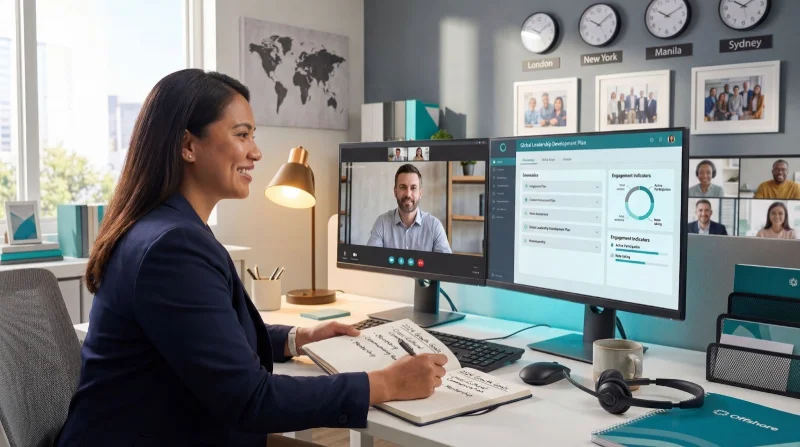
You've finally found the perfect remote employee. The interviews went well, the skills aligned, and the offer was accepted. But here's where most companies stumble: the first 30 days. Generic onboarding kills retention before it starts. Remote employees who receive customized onboarding are 70% more likely to remain with an organization beyond three years, yet most companies still use one-size-fits-all templates designed for in-office teams.
The difference between a thriving remote employee and one who quietly disengages comes down to those critical first weeks. When you customize remote employee onboarding to individual workflows, culture, and development needs, you're not just filling a position. You're building a foundation for measurable performance, faster productivity, and genuine team integration.
This guide reveals what effective remote employee onboarding actually looks like when done right. You'll discover the frameworks that separate successful remote placements from the ones that fail within 90 days, and learn how to structure those crucial first 30 days to drive real results.
Key Takeaways
– Customize onboarding around individual development gaps, not generic checklists, to accelerate time-to-productivity by 40%
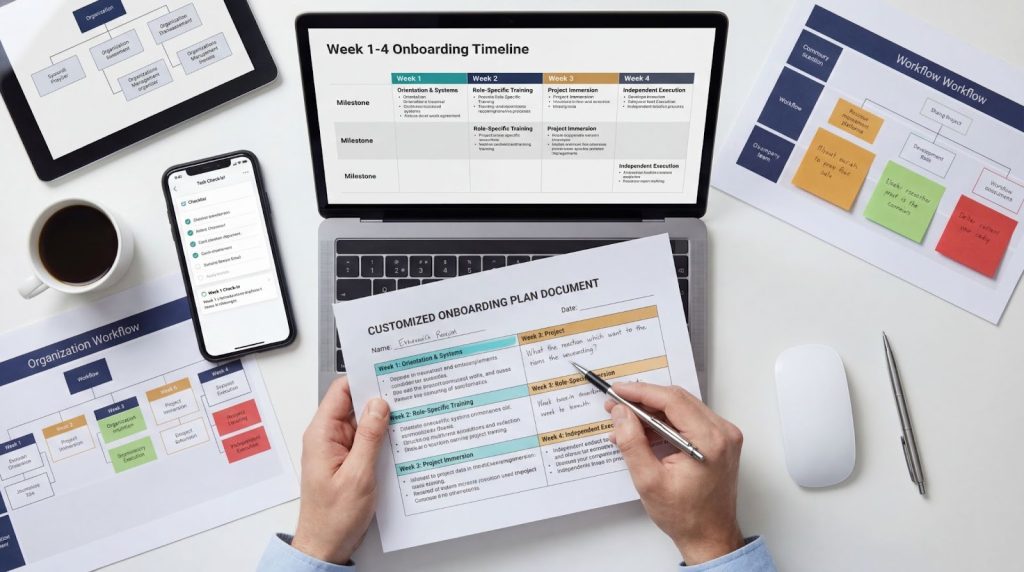
– Structure the first 30 days in three distinct phases: Foundation (Days 1-10), Integration (Days 11-20), and Autonomy (Days 21-30)
– Implement role-specific simulations during Week 2 to identify skill gaps before they become performance issues
– Schedule milestone check-ins at Days 7, 14, 21, and 30 to catch misalignments early when they're easiest to correct
– Pair offshore employees with timezone-compatible buddies to prevent isolation and maintain cultural connection
– Track leading indicators like response time, question quality, and proactive communication, not just task completion
Why Generic Remote Employee Onboarding Fails
The standard approach to remote employee onboarding looks something like this: send login credentials, schedule a welcome call, share the employee handbook, and hope for the best. It's efficient, scalable, and almost guaranteed to underperform.
Here's the problem. Remote employees don't fail because they lack technical skills. They struggle because they don't understand your workflows, can't read your culture through a screen, and have no idea what "good" looks like in your organization. Generic onboarding assumes all employees need the same information in the same sequence. That's rarely true.
The Hidden Costs of One-Size-Fits-All Training
When you use generic training for remote hires, you're essentially asking them to figure out your company on their own. Some will succeed despite your process, not because of it. Most won't.
The real cost shows up around Day 45. That's when you realize your new hire still doesn't know which communication tool to use for what purpose, keeps missing unwritten expectations, and needs constant clarification on tasks that should be routine by now. You've spent weeks training someone who still isn't productive.
Remote employees need context that in-office workers absorb through proximity. They don't overhear how decisions get made, can't observe how colleagues handle challenges, and miss the thousand small cues that communicate your culture. Generic onboarding ignores this reality.
What Remote Teams Actually Need
Remote employee onboarding works when it's built around three elements: clarity, connection, and customization. Clarity means explicit documentation of workflows, communication norms, and decision-making processes that in-office teams take for granted. Connection requires intentional relationship-building that doesn't happen naturally through Slack messages. Customization means identifying each person's specific development needs and making those the focus.
If your new hire has strong strategic thinking but struggles with prioritization, that becomes your onboarding focus. If they excel at execution but need help understanding your cultural values, you structure early experiences around culture immersion. This level of personalization takes more upfront effort. It also cuts time-to-productivity nearly in half.
The Three Phases of Successful Remote Onboarding
The first 30 days break into three distinct phases, each with different goals and success metrics. Treating all four weeks the same creates confusion about what matters when.
Phase 1: Foundation (Days 1-10)
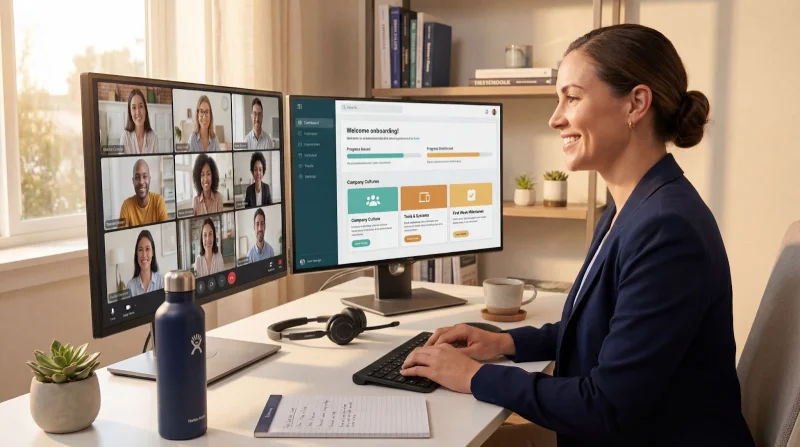
The first ten days establish the basics: systems access, role clarity, and initial confidence. Your new remote employee should finish this phase knowing how to do their job technically, even if they're not yet doing it at full speed.
Start with systems setup on Day 1. That means not just login credentials, but guided walkthroughs of each tool, recorded for reference. Your new hire should complete at least five practice tasks in your actual systems during Week 1, not hypothetical exercises.
Role clarity comes through detailed documentation plus conversation. Written expectations matter, but so does the discussion that brings those expectations to life. Schedule a 90-minute session during Days 2-3 specifically to walk through responsibilities, success metrics, and what done-well looks like for their role.
Phase 2: Integration (Days 11-20)
By Week 2, your remote employee should start doing real work while building relationships across the team. This phase balances independent execution with guided practice.
Introduce complexity gradually. Week 2 tasks should require your new hire to interact with multiple team members, use several systems in combination, and make minor judgment calls. You're testing whether they can apply what they learned in Phase 1 to realistic scenarios.
Here's where job simulations prove invaluable. Around Day 12-14, present a realistic scenario they'll face regularly: a customer request, a project coordination challenge, a data analysis task. Don't just observe whether they complete it. Watch how they approach it. Do they ask clarifying questions? Do they identify the right resources? That reveals gaps your generic training can't uncover.
Phase 3: Autonomy (Days 21-30)
The final ten days transition your remote employee from guided practice to self-directed contribution. They should be handling real responsibilities with decreasing oversight, demonstrating they've internalized your expectations.
Assign projects they own completely during this phase. The goal isn't perfection, it's appropriate independence. Can they identify what they don't know and ask the right questions? Do they recognize when something is urgent versus routine? Are they starting to anticipate needs instead of just responding?
By Day 30, your new hire should be operating at 60-70% productivity, not 100%. That's the realistic benchmark. Full productivity comes by Day 60-90, but Month 1 should prove they're on track to get there.
Customizing Onboarding to Individual Development Needs
The difference between adequate and exceptional remote employee onboarding lies in personalization. You can't customize what you haven't assessed.
Identifying Individual Capability Gaps
Assessment starts during hiring, not after. When you use structured interviews and job simulations during recruitment, you learn exactly where each candidate excels and where they'll need support. Maybe they demonstrated excellent problem-solving but weaker communication clarity. Perhaps they showed strong technical skills but less developed emotional intelligence.
Those insights become your onboarding roadmap. If a candidate displays strategic thinking but needs sharper organizational skills, structure their first 30 days around priority-setting frameworks, time-blocking techniques, and decision matrices. Give them tools and coaching specifically for the gaps you identified.
Don't wait for performance issues to surface. Address development needs proactively during onboarding when the relationship is new and the employee expects learning. It's easier to shape strong habits early than correct weak ones later.
Building Personalized Training Paths
Customized onboarding doesn't mean creating entirely unique experiences for every hire. It means having modular training components you assemble based on individual needs.
Build a library of focused training modules addressing common development areas: communication protocols, priority management, cultural values, technical workflows, industry-specific knowledge. When you assess a new hire's gaps, you select the relevant modules instead of forcing them through irrelevant content.
For example, if you're onboarding a virtual assistant for property management who has strong admin skills but limited real estate knowledge, you'd emphasize modules covering lease terminology, maintenance workflows, and resident communication best practices. You'd skip generic administrative training they don't need.
This approach respects their existing expertise while filling actual gaps. It also accelerates productivity because you're teaching what matters, not everything.
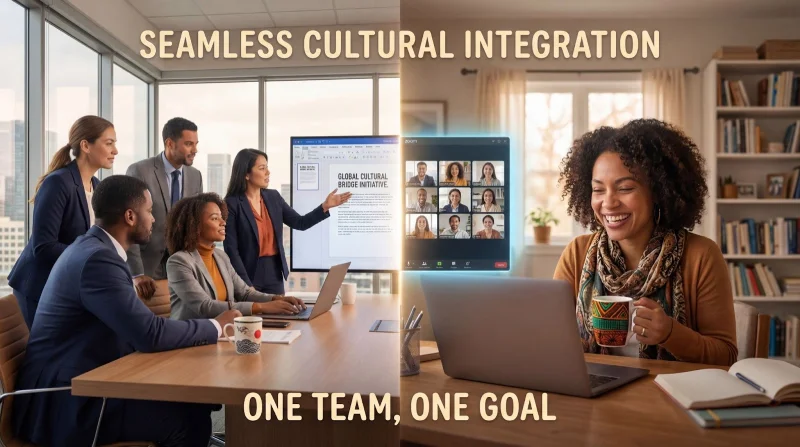
Building Cultural Connection Across Time Zones
Remote employees, especially offshore team members, face a unique challenge: understanding your company culture through limited, asynchronous interaction. Culture doesn't transfer through employee handbooks.
Creating Belonging from Day One
Cultural integration starts with intentional welcome experiences. Before Day 1, send a personalized video from the team, explaining who everyone is and how the new hire will interact with them. Include personality, not just job titles. "This is Sarah, our operations lead. She's obsessed with efficiency and usually has the best restaurant recommendations" tells your new hire how to connect, not just who to report to.
Assign a peer buddy separate from their direct manager. This person answers the "dumb questions" your new hire feels embarrassed asking their boss. Where do people actually take lunch breaks in a remote environment? How quickly are you expected to respond to messages? What's the real dress code for video calls? These unwritten rules determine comfort and belonging.
Schedule informal team interactions during Weeks 1 and 3. Not more meetings, but virtual coffee chats or brief "get to know you" sessions with different team members. Fifteen minutes of casual conversation builds more connection than ten training documents.
Navigating Offshore Employee Onboarding Challenges
Offshore employees need additional cultural context because they're navigating not just your company culture, but cross-cultural communication differences. Be explicit about communication norms that domestic employees might intuit.
Explain your communication hierarchy clearly: When do you expect email versus Slack versus scheduled calls? What's the expected response time for each channel? How do you signal urgency appropriately? These aren't universal, they're organizational, and offshore team members can't guess them.
Address time zone realities upfront. If your offshore employee works outside your core business hours, establish overlap expectations clearly. When do they need to be available synchronously? When can they work async? Who do they contact if they're blocked and you're offline?
Create documentation that assumes zero context. Your domestic employees might understand industry jargon, local business customs, or implied references. Your offshore team doesn't have that background. Write onboarding materials that explain context explicitly, not just procedures.
Measuring Success: Onboarding Metrics That Actually Matter
You can't improve what you don't measure, but most companies track the wrong onboarding metrics. Completion rates for training modules tell you almost nothing about effectiveness.
Leading Indicators of Onboarding Success
Track these metrics during the first 30 days to gauge whether your remote employee onboarding is working:
Response time consistency. Are they responding to messages and requests within the expected timeframe? This reveals whether they understand priority and urgency norms. A new hire who consistently responds quickly to low-priority items but slowly to urgent ones hasn't grasped your culture yet.
Question quality. Count the questions your new hire asks in Weeks 2-4. The number should decrease, but the sophistication should increase. Early questions should be clarifying ("Where do I find X?"). By Week 3, questions should be strategic ("Should we prioritize A or B given constraint C?"). That progression shows they're moving from information-gathering to judgment development.
Proactive communication. Note when your new hire volunteers information without being asked. By Day 20, they should start flagging potential issues before they become problems, suggesting process improvements, or offering help to teammates. That's integration, not just task completion.
The 30-Day Milestone Check-In
Conduct a structured review at Day 30 that goes beyond "how's it going?" Use a framework that assesses four dimensions:
Technical proficiency: Can they complete core responsibilities without constant guidance? Are they 60-70% productive?
Cultural alignment: Do they understand and demonstrate your values? Are they communicating in ways that fit your culture?
Relationship integration: Have they built working relationships with key stakeholders? Do teammates view them as part of the team?
Development trajectory: Are the gaps you identified during hiring narrowing? What evidence shows progress?
This review should produce a specific development plan for Days 31-90, not just a pass/fail evaluation. What does this employee need to reach full productivity? What support will accelerate their growth?
The Pathfinder Talent Solutions Approach: Coaching-Driven Onboarding
At Pathfinder Talent Solutions, remote employee onboarding doesn't end at Day 30. It's where our coaching infrastructure begins to create measurable impact.
We start by using structured hiring methodologies that identify each candidate's specific development needs before placement. Our process combines cognitive assessments, job simulations, and emotional intelligence evaluations to understand not just what someone can do, but where they'll need support to excel in your environment.
That assessment becomes the foundation for customized onboarding. If we place a virtual assistant who shows strong strategic thinking but needs sharper prioritization skills, we make that the training focus. We don't waste their time or yours covering material they've already mastered.
Beyond Placement: The Coaching Engine
Our biweekly one-on-one coaching sessions start during onboarding and continue throughout the placement. These aren't generic check-ins. They're structured development conversations focused on the specific capabilities that drive long-term performance: communication clarity, priority management, critical thinking, ownership mindset.
We track performance indicators in real-time, catching misalignments early when they're easiest to correct. If we notice a new hire struggling with your communication tools, we address it in Week 2, not Month 3. If they're exceeding expectations in one area, we help them leverage that strength across their role.
This approach has produced documented outcomes: 58% increases in quality assurance scores, 79% training completion rates, and 25% of manager time reclaimed through stronger execution and accountability. These aren't testimonials. They're measured results from treating onboarding as the beginning of development, not the end of hiring.
Common Remote Onboarding Mistakes to Avoid
Even with strong intentions, companies make predictable mistakes that undermine remote employee onboarding success.
Mistake 1: Information Overload in Week One
Don't dump your entire knowledge base on new hires during their first week. They can't retain it, and the overwhelm creates anxiety instead of confidence. Introduce information progressively based on when they'll actually need it.
Give them everything required to complete Week 1 tasks. Everything else can wait. Your 47-page employee handbook? Send sections as they become relevant. That complex project management system? Introduce it Week 3 when they're ready to use it.
Mistake 2: Assuming Digital Natives Don't Need Tech Training
Just because someone is comfortable with technology generally doesn't mean they know your specific tools and workflows. Every organization uses Slack differently. Your project management setup is unique to you. Your file organization system isn't intuitive to outsiders.
Walk through your tech stack explicitly, showing not just how tools work, but how you use them. Record these walkthroughs so new hires can reference them later without asking you to repeat yourself.
Mistake 3: Treating Onboarding as One-Way Information Transfer
Onboarding should be a conversation, not a lecture series. Build in regular checkpoints where your new hire shares what they're learning, what's confusing, and what questions they have. Their confusion often reveals gaps in your documentation or processes, not their capabilities.
Ask explicitly: "What's one thing that surprised you about how we work?" and "What's one thing you wish you'd known on Day 1?" Those questions surface insights that improve your onboarding for the next hire.
Frequently Asked Questions About Remote Employee Onboarding
How long should remote employee onboarding take?
Structured onboarding should last 30 days for foundational integration, with continued development support through Day 90. The first month establishes workflows, culture, and initial productivity. Months 2-3 build toward full contribution. Most remote employees reach 60-70% productivity by Day 30 and full productivity by Day 60-90, assuming effective onboarding.
What's different about offshore employee onboarding compared to domestic remote workers?
Offshore employee onboarding requires additional cultural context and explicit communication norms. You can't assume shared understanding of business customs, industry terminology, or implied expectations. Provide more detailed documentation, explain context that seems obvious, and clarify time zone expectations upfront. Assign timezone-compatible peer buddies and schedule overlap hours for synchronous support during the first two weeks.
How do you measure whether remote onboarding is working?
Track leading indicators, not just completion metrics. Monitor response time consistency (are they learning urgency norms?), question quality evolution (are questions becoming more strategic?), and proactive communication (are they volunteering information by Week 3?). Conduct structured check-ins at Days 7, 14, 21, and 30 to catch misalignments early. By Day 30, new hires should demonstrate 60-70% productivity with appropriate independence.
Should onboarding be different for virtual assistants versus other remote roles?
Virtual assistant onboarding best practices emphasize workflow integration and service orientation more heavily than technical roles might. VAs need deep understanding of your communication preferences, priority frameworks, and decision-making authority boundaries. Use real scenarios during Week 2 to test judgment calls: "If X happens and I'm unavailable, what do you do?" Their responses reveal whether they've internalized your expectations.
What's the biggest mistake companies make with remote team onboarding plans?
The biggest mistake is treating onboarding as information delivery instead of skill development. Sending documents and hoping employees figure it out doesn't work remotely. Effective onboarding identifies individual development gaps during hiring, then builds personalized training around those specific needs. It's the difference between generic orientation and strategic capability building. Companies that customize onboarding see 40% faster time-to-productivity and significantly better retention.
Conclusion
The first 30 days determine whether your remote hire becomes a high-performing team contributor or another disappointing placement. Generic onboarding treats all employees the same, ignoring the reality that each person brings different strengths and different development needs. That approach wastes time and undermines retention before the relationship even starts.
Customized remote employee onboarding works because it respects what your new hire already knows while addressing specific gaps. When you structure those critical first weeks around individual development needs, workflow integration, and cultural connection, you accelerate productivity and build genuine team alignment. The companies that invest in onboarding customization see measurable returns: faster ramp-up, stronger performance, and retention that extends years, not months.
Ready to transform how your organization approaches remote employee onboarding? Pathfinder Talent Solutions combines science-based hiring with coaching-driven development to ensure every placement succeeds. Our customized onboarding framework identifies individual capability gaps during assessment, then structures those crucial first 30 days around the specific support each person needs. The result? Remote employees who integrate faster, perform stronger, and stay longer.
Discover how our hospitality-born, coaching-focused approach drives measurable outcomes across property management, healthcare, tech startups, and beyond. Visit Pathfinder Talent Solutions to explore a partnership built on proven methodology, not empty promises.