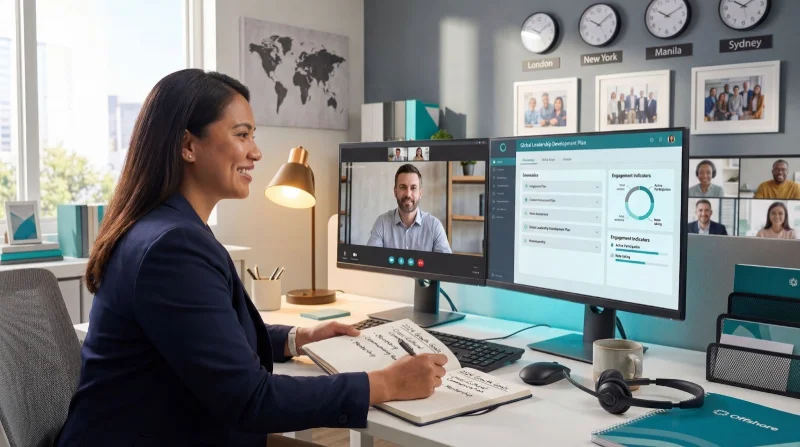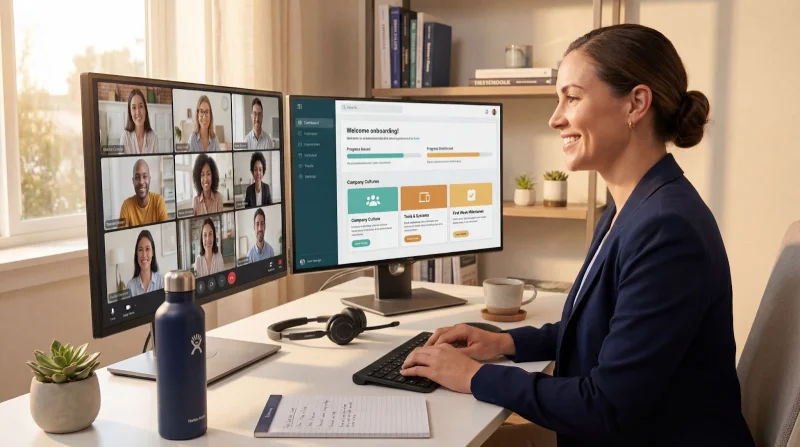
Hiring offshore talent solves the capacity problem, but integration challenges often sabotage performance before the ROI materializes. The best offshore employees don't just execute tasks—they understand your culture, anticipate needs, and operate like core team members. That transformation doesn't happen by accident.
Cultural integration determines whether offshore hiring delivers game-changing leverage or becomes a management burden that drains more time than it saves. Companies that crack this code turn offshore team members into cultural stars who drive performance metrics, strengthen team cohesion, and create measurable business impact. Those who ignore integration watch talented hires plateau, miscommunicate, and eventually churn—wasting recruitment investment and leadership bandwidth.
This guide provides a practical, step-by-step framework for integrating offshore employees into your team culture. You'll discover proven strategies for establishing communication norms, translating cultural values, setting clear expectations, building authentic relationships, and coaching offshore team members to become indispensable contributors. Whether you're making your first offshore hire or optimizing an existing global team, these integration tactics will help you transform geographical distance into strategic advantage.
The difference between offshore hiring that fails and offshore hiring that delivers 25% of your time back, improves quality scores by 58%, and extends operational capacity comes down to how well you integrate people into your culture, not just your org chart.
Key Takeaways
– Establish communication norms in the first week that define response times, meeting protocols, and feedback channels to prevent misalignment
– Translate your cultural values into observable behaviors so offshore employees understand how values show up in daily work, not just mission statements
– Create structured touchpoints during the first 90 days with weekly 1:1s, biweekly team integration sessions, and monthly performance calibrations
– Build relationship capital through informal interactions that go beyond task management—virtual coffee chats, team celebrations, and peer mentoring
– Implement ongoing coaching cycles that address skill development and cultural fluency simultaneously, turning capable hires into strategic partners
– Address cultural friction immediately when it appears rather than hoping misunderstandings resolve themselves—small gaps become chasms without intervention
Understanding Offshore Employee Cultural Integration
Cultural integration for offshore employees means more than teaching someone your tools or processes. It's about helping team members understand the unwritten rules that govern how your organization operates—the values that drive decisions, the communication styles that build trust, and the behaviors that earn respect and advancement.
Most companies confuse cultural integration with orientation. They introduce offshore hires to the team on a Zoom call, share the employee handbook, and expect osmosis to handle the rest. But cultural learning doesn't happen through documentation. It happens through observation, repetition, feedback, and coaching over time.
Here's the truth: offshore employees face integration challenges their domestic counterparts never encounter. They can't overhear hallway conversations that reveal strategic priorities. They miss the body language cues that signal urgency or frustration. They don't grab lunch with colleagues who explain "how things really work around here." Without intentional integration frameworks, offshore team members operate with incomplete cultural information, making decisions and communicating in ways that feel misaligned even when their technical work is flawless.
The companies that excel at offshore integration treat cultural onboarding as seriously as skills training. They recognize that an offshore coordinator who understands your service standards, communication preferences, and problem-solving approach delivers exponentially more value than someone who simply follows task lists. Cultural fluency transforms offshore employees from order-takers into strategic thinkers who anticipate needs, suggest improvements, and operate with the autonomy that creates real leverage.
When integration succeeds, offshore team members don't feel like outsiders working from a different continent. They feel like core team members who happen to work remotely, contributing to culture and performance in ways that make their location irrelevant.
Why Cultural Integration Makes or Breaks Offshore Success
The ROI of offshore hiring lives or dies in the integration phase. You can recruit the most qualified candidate with flawless credentials and impressive work samples, but if that person never understands your culture, they'll underperform, miscommunicate, and eventually leave. The cost isn't just turnover—it's the months of diminished productivity, the leadership time spent managing friction, and the strategic opportunities missed while your team addresses preventable problems.
The Hidden Cost of Poor Integration
Organizations that skip structured cultural integration pay a predictable price. Offshore employees make well-intentioned decisions that violate unspoken norms. They miss context that changes task priorities. They communicate in ways that feel too formal or too casual for your environment. These micro-misalignments accumulate, eroding trust between onshore and offshore team members.
Before long, onshore staff start routing around offshore colleagues rather than collaborating with them. Offshore employees feel isolated and underutilized, leading to disengagement. Managers spend increasing time clarifying expectations and fixing miscommunications. The efficiency gains offshore hiring promised evaporate as coordination costs skyrocket.
Poor integration doesn't just hurt performance—it creates cultural division. Onshore teams develop an "us vs. them" mentality where offshore staff are seen as helpers rather than teammates. This perception becomes self-fulfilling: offshore employees get assigned lower-value work, limiting their learning and contribution potential. Talent that could have evolved into strategic partners instead stays trapped in transactional roles.
The Competitive Advantage of Exceptional Integration
Companies that invest in cultural integration unlock extraordinary outcomes. Offshore employees who deeply understand organizational culture don't just complete assignments—they improve processes, identify blind spots, and take ownership of results. They communicate proactively, anticipate problems, and align their work to strategic priorities without constant supervision.
Consider the measurable impact: offshore coordinators who receive structured cultural integration reclaim 25% of leadership time by operating autonomously. They improve quality scores by 58% because they understand not just what to do, but why it matters. They drive revenue outcomes like 450K pipeline growth because they think strategically, not just tactically. They increase customer satisfaction by 20% because they've internalized service standards and apply them independently.
These outcomes aren't luck—they're the direct result of intentional cultural integration that helps offshore employees think like core team members. When offshore staff understand your values, communication norms, and decision-making frameworks, they become force multipliers who extend your leadership capacity rather than consuming it.
Exceptional integration also drives retention. Offshore employees who feel culturally connected stay longer, reducing turnover costs and preserving institutional knowledge. They become culture carriers who onboard new offshore hires, creating compounding returns on your integration investment.
The companies dominating offshore hiring in 2025 recognize that cultural integration isn't a nice-to-have soft skill initiative. It's a hard business driver that determines whether offshore talent delivers marginal value or transformational impact.
Step 1: Establish Clear Communication Norms From Day One
Communication breakdowns kill offshore relationships faster than skill gaps. Before your offshore employee completes their first assignment, you need crystal-clear agreements about how, when, and why your team communicates.
Define Response Time Expectations
Start by establishing response time standards for different communication channels. If Slack messages require responses within 2 hours during working hours, say so explicitly. If emails can wait 24 hours but project management tool comments need same-day replies, document those expectations. What feels obvious to your existing team needs to be stated clearly for offshore members who can't gauge urgency from office dynamics.
Don't assume your offshore hire will intuit when something is urgent. Create a shared language for priority levels—maybe P1 means "respond immediately," P2 means "by end of your workday," and P3 means "when you have capacity." These frameworks eliminate the anxiety offshore employees feel about whether they're responsive enough while preventing the resentment onshore staff feel when messages go unanswered longer than expected.
Clarify Meeting Protocols and Participation Standards
Spell out how your team runs meetings and what active participation looks like. Should offshore employees have cameras on during team calls? Are they expected to contribute ideas during brainstorming sessions, or observe first and engage later? How should they signal they want to speak—raise hand feature, verbal interruption, or wait for prompting?
These details matter because cultural norms around meeting behavior vary dramatically. In some cultures, jumping into conversations shows engagement; in others, it signals disrespect. In some environments, pushing back on ideas demonstrates critical thinking; in others, it undermines hierarchy. Your offshore employee shouldn't have to guess which norms apply in your culture.
Schedule recurring 1:1 check-ins during the first month at minimum weekly, ideally twice weekly. These dedicated sessions create safe space for offshore employees to ask questions, surface confusion, and get real-time feedback without the pressure of group settings.
Create Feedback Channels That Actually Work
Build multiple pathways for offshore employees to ask questions and raise concerns. A weekly 1:1 with their direct manager provides formal structure. A peer mentor from the existing team offers informal guidance. An open-door policy with leadership creates escalation options for bigger issues.
Make it explicitly safe to say "I don't understand" or "I need more context." Many offshore employees hesitate to ask clarifying questions, fearing they'll appear incompetent. You need to actively reward question-asking in the early weeks, praising offshore team members who surface confusion rather than making assumptions.
Communication norms aren't static—revisit them at 30, 60, and 90 days. Ask your offshore employee what's working and what needs adjustment. The goal isn't perfect communication from day one; it's continuous improvement based on honest feedback and shared commitment to clarity.
Step 2: Translate Cultural Values Into Observable Behaviors
Your company probably has cultural values posted somewhere—integrity, innovation, customer obsession, teamwork. But values stated abstractly mean nothing to offshore employees trying to figure out how to operate in your environment. Cultural integration requires translating values into specific, observable behaviors that demonstrate what those values look like in daily work.
Move Beyond Value Statements to Behavioral Examples
Take the value "customer-first mindset." For your organization, that might mean: responding to customer emails within 4 hours, proactively flagging potential service disruptions before customers notice them, or spending extra time to ensure deliverables exceed expectations rather than just meeting specs.
Share real examples from your team's recent work. Walk through a scenario where someone exemplified your cultural values and explain specifically what they did and why it mattered. These stories create mental models offshore employees can reference when making their own decisions.
Create a "culture guide" that pairs each core value with 3-5 concrete behaviors, both dos and don'ts. If "collaborative" is a value, spell out what collaboration looks like: tagging relevant team members in project updates, asking for input before finalizing deliverables, offering help when colleagues are overloaded. Just as importantly, clarify what collaboration doesn't mean: waiting for permission to make routine decisions, copying 15 people on every email, or scheduling unnecessary meetings.
Teach Decision-Making Frameworks
Cultural values become real when they guide decisions. Help your offshore employee understand how your team weighs trade-offs when values seem to conflict. If both "speed" and "quality" are values, which takes priority when they're in tension? The answer probably depends on context—but that context needs to be explained.
Walk through recent decisions your team faced and narrate the cultural reasoning. "We chose to delay the launch by two days because our value of customer trust meant we couldn't ship something with known bugs, even though speed is usually a priority." These explanations teach offshore employees how to think like your team, not just follow instructions.
Identify Your Unwritten Rules
Every organization has unwritten rules—the informal norms that govern behavior but never appear in documentation. These are the cultural landmines offshore employees stumble over. Surface them explicitly.
Maybe in your culture, people cc their managers on important emails, or they don't. Perhaps your team values casual communication, or professionalism matters. Some teams appreciate proactive problem-solving; others want consultation before action. None of these preferences are wrong, but they're invisible to outsiders until someone violates them.
Sit down with longtime team members and ask: "What does someone need to know to succeed here that we never tell them?" Compile that tribal knowledge and share it with offshore hires during onboarding.
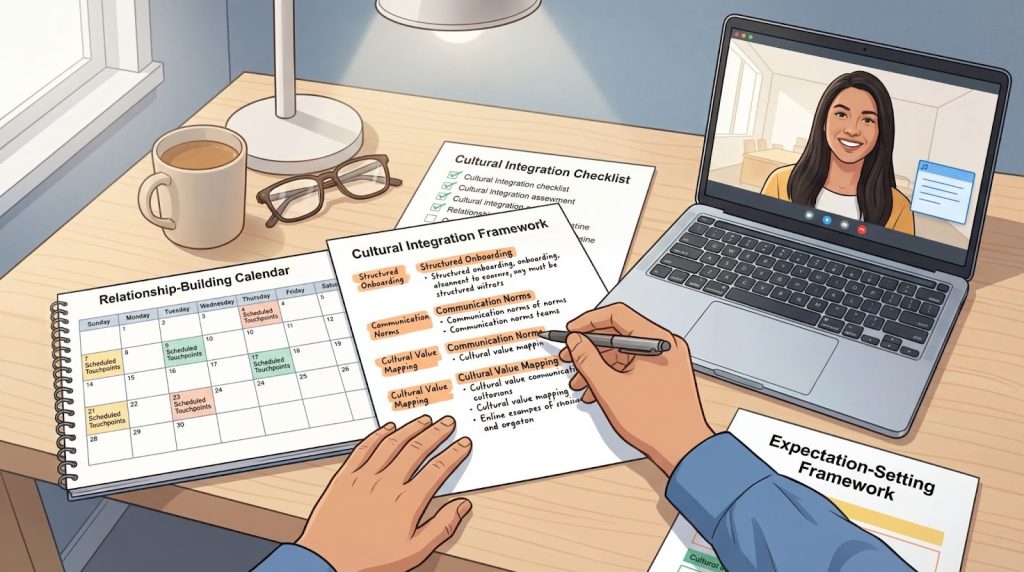
Step 3: Create Structured Integration Touchpoints for the First 90 Days
The first three months determine whether offshore employees become integrated team members or remain perpetual outsiders. Structured touchpoints during this critical window provide the repetition, feedback, and relationship-building required for cultural fluency.
Week 1: Intensive Cultural Immersion
The first week should be communication-heavy, not task-heavy. Schedule your offshore employee for multiple short meetings with different team members—15 to 30-minute sessions where each person shares what they do, how they work, and what they wish they'd known when they started.
Create a "culture buddy" pairing with an existing team member who can answer daily questions, provide real-time feedback, and offer insider perspective on how things really work. This person becomes the offshore employee's first call when they're uncertain.
Conduct a detailed walkthrough of your team's communication tools, explaining not just how they work but how your team uses them. Show recent project threads that exemplify good communication. Point out examples of unclear requests and how to clarify them.
End week one with a structured feedback session: What's clear so far? What's still confusing? What additional information would help?
Weeks 2-4: Increasing Autonomy With Guardrails
During the first month, gradually increase task complexity while maintaining frequent check-ins. Start with clearly scoped assignments that have explicit success criteria. Review completed work together, praising what went well and coaching on improvements—focusing as much on process and communication as on technical output.
Schedule weekly 1:1s (minimum 30 minutes) dedicated to integration topics, not just task management. Ask questions like:
– What cultural norms have you observed that are different from previous work environments?
– What decisions this week were you uncertain about, and how did you navigate them?
– Who on the team have you connected with, and who do you need more interaction with?
These conversations surface integration challenges before they become problems.
Weeks 5-8: Expanding Relationships and Responsibility
By the second month, your offshore employee should be contributing meaningfully to projects. Now the focus shifts to relationship-building across the broader team and developing cultural fluency in nuanced situations.
Introduce biweekly team integration sessions—maybe virtual coffee chats, team retrospectives, or collaborative problem-solving meetings where offshore employees participate as equals, not observers. These informal settings build rapport and allow cultural learning through authentic interaction.
Begin delegating work that requires judgment, not just execution. These assignments test whether your offshore team member has internalized your cultural values and decision-making frameworks. Debrief these projects thoroughly: What went well? What would you do differently next time? How did you decide on your approach?
Weeks 9-12: Cultural Fluency Assessment
At the 90-day mark, conduct a comprehensive integration review. Assess not just performance on tasks, but cultural alignment: Does this person communicate in ways that build trust with the team? Do they demonstrate understanding of organizational values through their decisions? Have they built relationships across the team, or remain siloed?
Use this milestone to adjust ongoing support. Some offshore employees will have achieved strong cultural integration by day 90 and need less intensive coaching. Others will need continued structure and feedback. The goal isn't to declare integration "complete"—it's an ongoing process—but to calibrate support to individual needs.
Step 4: Build Authentic Relationships Beyond Task Management
Cultural integration fails when relationships stay transactional. Offshore employees who only interact with teammates about work deliverables never develop the trust, rapport, and mutual understanding that makes collaboration effortless.
Create Space for Informal Interaction
Intentionally design opportunities for non-work conversation. Start team meetings with personal check-ins where people share weekend plans, recent wins, or something they're learning. Create Slack channels for hobbies, local news, or shared interests where conversation happens without project pressure.
Schedule virtual coffee chats—15-minute casual conversations between offshore employees and different team members with no agenda except getting to know each other. These interactions build social capital that makes work collaboration smoother.
Don't let time zones become an excuse for exclusion. Rotate meeting times occasionally so the burden of odd hours doesn't always fall on offshore team members. Recording key meetings and sharing summaries helps, but nothing replaces live participation in team moments.
Celebrate Wins Together
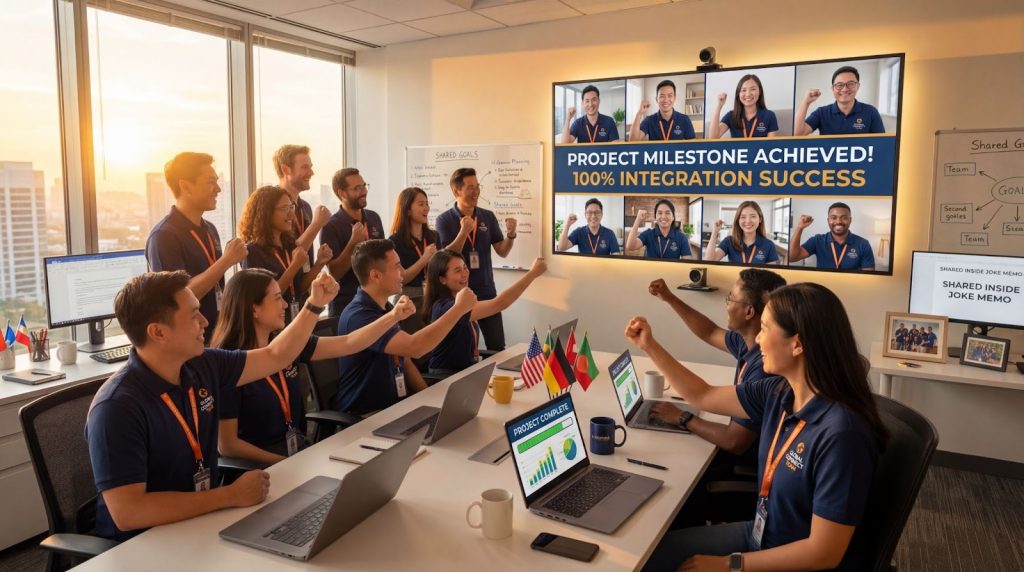
Include offshore employees in team celebrations—project completions, company milestones, work anniversaries. When someone hits a goal, recognize them publicly in team channels. When the company celebrates, find ways to extend that celebration across geographies, even if that means sending gift cards for offshore team members to treat themselves.
Recognition builds belonging. When offshore employees see their contributions acknowledged alongside onshore teammates, they internalize that they're part of one team, not a separate offshore unit.
Implement Peer Mentoring Programs
Pair offshore employees with onshore mentors who can provide cultural guidance, career development advice, and friendship. These relationships work best when they're formalized with light structure: monthly check-ins, clear expectations that the mentor is available for questions, and recognition for mentors who invest in integration.
Peer mentoring creates advocates for offshore team members within the broader organization. Mentors help translate cultural nuances, troubleshoot challenges, and ensure offshore voices get heard in discussions. Over time, these relationships evolve into genuine partnerships that strengthen the entire team.
Embrace Cultural Exchange
Integration doesn't mean offshore employees abandon their own cultural backgrounds to adopt yours. The best global teams create space for cultural exchange where everyone learns from each other.
Invite offshore team members to share perspectives from their cultural context. How do teams in their region approach problem-solving? What communication styles are valued? What holidays and traditions are important? These conversations build mutual respect and often surface insights that improve how your entire team operates.
Cultural integration should feel like building bridges, not demanding assimilation.
Step 5: Implement Ongoing Coaching That Develops Cultural Fluency
Cultural integration isn't a one-time onboarding event—it's an ongoing development process that requires consistent coaching. The offshore employees who become top performers receive regular feedback that develops both technical skills and cultural fluency simultaneously.
Establish Biweekly Coaching Rhythms
Schedule recurring 1:1 coaching sessions every two weeks minimum. These aren't task status meetings—they're development conversations focused on growth, challenges, and alignment. Create a coaching agenda that includes:
Performance feedback on recent work, with specific examples of what went well and what needs improvement. Focus on the "why" behind feedback: "The client loved this deliverable because you anticipated their follow-up questions" helps offshore employees internalize what excellent looks like.
Cultural observations: "I noticed you waited to share your perspective in yesterday's meeting until directly asked. In our culture, we value proactive input, so feel free to jump in when you have ideas." These micro-corrections shape behavior over time.
Development goals: What skills or cultural competencies is the offshore employee working to strengthen? Create a development plan with clear milestones and check progress regularly.
Use Real Situations as Teaching Moments
The most powerful coaching happens in context. When miscommunications occur, use them as learning opportunities rather than just fixing the immediate problem. Walk through what happened, why it created confusion, and how to approach similar situations differently next time.
If an offshore employee sends an email that comes across as too abrupt or too deferential for your culture, show them what effective communication looks like in your environment. Provide templates and examples they can model. Cultural fluency develops through repetition and adjustment.
Create Personalized Development Plans
Every offshore employee has unique strengths and growth areas. Some might have exceptional technical skills but need support developing strategic thinking. Others might have great ideas but need coaching on how to communicate them persuasively in your cultural context.
Customize your coaching to individual development needs. If someone needs stronger prioritization skills, teach your team's prioritization framework explicitly. If they're working on building executive presence, create opportunities to present to leadership with coaching before and after.
The offshore employees who become indispensable aren't necessarily the ones who start with perfect skills—they're the ones who receive consistent coaching that accelerates their growth.
Measure Progress Beyond Task Completion
Evaluate offshore employee success using cultural integration metrics alongside performance metrics. Are they building relationships across the team? Do they communicate proactively when problems arise? Are they contributing ideas and improvements, not just executing assignments? Do they demonstrate understanding of company values through their decisions?
These qualitative indicators reveal whether integration is succeeding. An offshore employee who hits all their task deadlines but remains culturally disconnected hasn't achieved the integration that creates leverage and retention.
Addressing Cultural Friction Before It Becomes Crisis
Even with excellent integration frameworks, cultural friction will emerge. The difference between teams that thrive and teams that fracture comes down to how quickly and effectively they address tension when it appears.
Recognize Early Warning Signs
Cultural misalignment shows up in patterns before it explodes into obvious problems. Watch for signals: offshore employees becoming quieter in meetings, onshore staff starting to exclude offshore colleagues from discussions, communication becoming more formal and guarded, or offshore team members asking fewer questions over time.
These indicators suggest that trust is eroding or confusion is accumulating. Address them immediately through direct but compassionate conversation. "I've noticed you've been less engaged in team meetings lately. What's going on?" often surfaces concerns before they calcify into resentment.
Create Safe Channels for Surfacing Friction
Cultural issues rarely get raised directly because people fear creating conflict or appearing difficult. Build explicit mechanisms for surfacing friction without blame.
Regular pulse checks asking "What's working well with our offshore integration? What needs improvement?" signal that feedback is wanted. Anonymous surveys can help initially, but the goal is building trust where people feel safe raising concerns directly.
When friction emerges, approach it as a systems problem, not a people problem. "We're seeing miscommunication between onshore and offshore team members" invites collaborative problem-solving. "Offshore employees aren't communicating well" creates defensiveness and blame.
Facilitate Direct Resolution With Cultural Coaching
When conflict arises between onshore and offshore team members, resist the temptation to step in as translator or mediator immediately. Instead, coach both parties on how to resolve the tension directly, providing cultural context that helps each person understand the other's perspective.
An onshore manager frustrated that an offshore employee isn't "taking initiative" might need coaching that in the offshore employee's cultural background, waiting for clear direction shows respect, not passivity. The offshore employee might need coaching that in this organizational culture, proactive problem-solving is valued over waiting for explicit instructions.
Direct resolution with cultural framing builds stronger relationships than manager-mediated conflict resolution. It teaches both parties how to navigate cultural differences independently.
Adjust Integration Approaches Based on What You Learn
Every instance of cultural friction provides data about what your integration process is missing. If multiple offshore employees struggle with the same cultural norm, that's a sign you need to make that norm more explicit in onboarding. If a particular communication style consistently creates confusion, that's feedback to clarify expectations earlier.
Cultural integration should be a learning system that improves over time, not a static checklist. The companies that excel at offshore integration treat every challenge as an opportunity to strengthen their frameworks.
Frequently Asked Questions About Offshore Employee Cultural Integration
How long does offshore employee cultural integration typically take?
Basic cultural integration—where an offshore employee understands core values, communication norms, and team dynamics well enough to operate effectively—usually takes 60 to 90 days with structured support. However, deep cultural fluency, where offshore team members anticipate needs, navigate nuanced situations independently, and contribute to culture development, often requires 6 to 12 months. The timeline depends heavily on the complexity of your organizational culture, the individual's prior experience with your industry, and the quality of integration support you provide. Companies that invest in biweekly coaching, structured touchpoints, and relationship-building see faster integration than those who rely on passive osmosis.
What's the biggest mistake companies make with offshore cultural integration?
Assuming integration happens automatically without intentional structure. Most organizations spend significant time recruiting offshore talent, then invest almost nothing in helping those employees understand organizational culture. They introduce the offshore hire on a team call, share the employee handbook, and expect cultural alignment to develop naturally. Without explicit teaching of cultural norms, communication expectations, and unwritten rules, offshore employees operate with incomplete information that leads to misalignment, miscommunication, and underperformance. The fix is treating cultural onboarding as seriously as technical training with dedicated time, structured frameworks, and ongoing coaching.
How do I handle cultural differences that conflict with our company values?
Start by distinguishing between cultural differences and value misalignment. Not all cultural differences represent value conflicts. An offshore employee who communicates more formally than your casual culture isn't violating values—they're operating from different communication norms. Coach them on your communication style expectations. However, if cultural backgrounds lead to behaviors that genuinely conflict with core values, like a hierarchical culture clashing with your flat structure that requires challenging ideas openly, address it directly. Explain why the value matters in your context, provide specific behavioral expectations, and coach extensively. If someone cannot or will not adapt on genuine value issues after coaching, they may not be the right cultural fit regardless of technical skills.
Should offshore employees adapt completely to our culture or should we adapt to theirs?
Effective integration is a bridge, not a one-way street. Offshore employees need to understand and operate within your organizational culture, that's non-negotiable for integration success. But the best global teams also adapt by incorporating valuable perspectives and practices from offshore team members' cultural backgrounds. You might discover that communication approaches from your offshore employees' regions actually improve clarity. Or that their cultural approaches to relationship-building strengthen team cohesion. The goal is creating a unified team culture that honors the organization's core values while embracing diverse perspectives. Offshore employees should feel they're joining a culture, not erasing their identity to conform.
How do I measure whether cultural integration is succeeding?
Look beyond task completion to relationship and behavioral indicators. Successful integration shows up when offshore employees proactively communicate about problems rather than waiting to be asked, contribute ideas and improvements unprompted, build relationships across the team not just with their direct manager, navigate ambiguous situations using sound judgment aligned with company values, and receive peer recognition from onshore teammates. Quantitative signals include retention rates, performance improvement trajectories, time-to-autonomy metrics, and satisfaction scores from both offshore employees and their onshore collaborators. Schedule structured integration reviews at 30, 60, and 90 days to assess these dimensions explicitly rather than assuming integration succeeded because no obvious problems surfaced.
Conclusion
Cultural integration separates offshore hiring that delivers transformational business impact from offshore hiring that becomes an expensive management burden. The technical skills that looked impressive during recruitment mean nothing if offshore employees never understand how to operate within your culture, communicate in ways that build trust, or make decisions aligned with your values.
Companies winning with offshore talent in 2025 recognize that integration isn't a soft-skill nice-to-have—it's the hard business driver that determines whether offshore employees reclaim 25% of your time or consume more bandwidth than they create. It's what separates the offshore coordinators who improve quality scores by 58% from those who plateau at mediocre performance. It's the difference between offshore team members who drive 450K in pipeline growth and those who only execute task lists.
The step-by-step framework outlined here—establishing communication norms from day one, translating values into observable behaviors, creating structured 90-day touchpoints, building authentic relationships, and implementing ongoing coaching—provides the infrastructure cultural integration requires. These aren't theoretical concepts; they're proven strategies that turn geographical distance into strategic advantage.
Start implementing these integration practices with your next offshore hire, or use them to strengthen relationships with existing offshore team members who haven't reached their full potential. The investment you make in cultural integration during the first 90 days will compound for years through improved performance, stronger retention, and offshore employees who become indistinguishable from your core team.
Ready to build offshore teams that integrate seamlessly and perform exceptionally? Pathfinder Talent Solutions combines rigorous, science-based hiring with hospitality-driven cultural integration and ongoing coaching infrastructure that turns offshore employees into strategic partners. Our structured approach addresses the integration challenges most staffing agencies ignore—because we know placement is just the beginning. Explore how our methodology creates offshore teams that elevate your culture and drive measurable results at Pathfinder Talent Solutions.
Cultural integration isn't complicated, but it is intentional. The teams that commit to structured integration frameworks will dominate offshore hiring while their competitors struggle with turnover, miscommunication, and unrealized potential. Your offshore employees have the talent—give them the cultural foundation to unleash it.