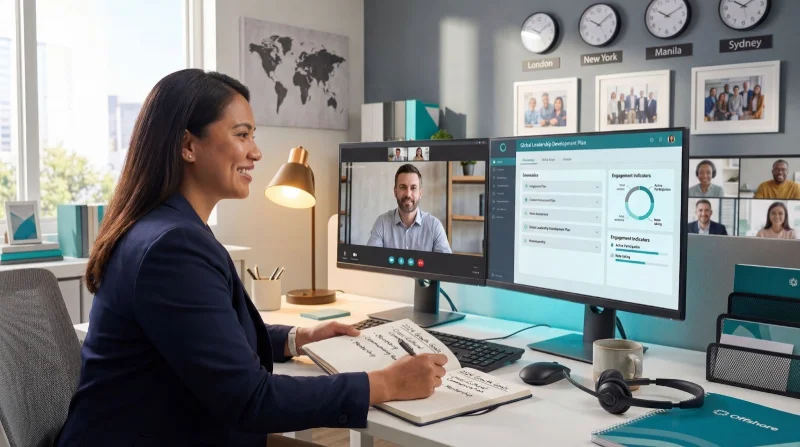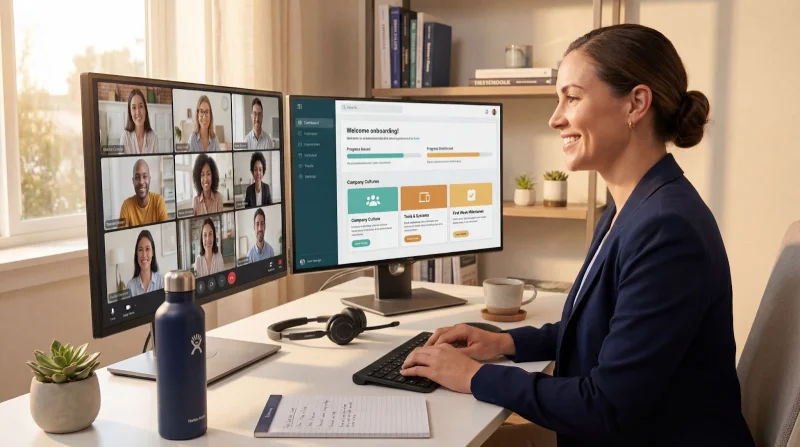
Healthcare practices face a critical challenge: scaling patient care without compromising privacy or breaking the bank. The demand for HIPAA compliant virtual assistants has surged as telehealth expands and administrative burdens multiply, yet many providers hesitate due to legitimate compliance concerns. Can offshore talent truly protect patient data while delivering the operational support your practice desperately needs?
The answer is yes—but only when you implement the right systems, training protocols, and partnerships. This comprehensive guide walks you through everything you need to know about hiring HIPAA compliant virtual assistants and building a healthcare offshore staffing model that protects patient privacy, reduces risk, and scales your practice efficiently. You'll discover the exact compliance frameworks that separate secure offshore partnerships from risky ones, the training requirements that matter most, and the technology controls that keep protected health information (PHI) safe.
Whether you're a multi-location clinic drowning in scheduling chaos, a telehealth provider scaling patient access, or a dental practice seeking billing support, this guide delivers actionable strategies for offshore staffing compliance. We'll explore Business Associate Agreements, access controls, risk assessment protocols, and real-world implementation frameworks that healthcare decision-makers can trust. By the end, you'll understand not just whether offshore healthcare staffing works, but exactly how to make it work for your practice—compliantly, effectively, and profitably.
The Fundamentals of HIPAA-Compliant Healthcare Staffing
Understanding HIPAA compliance starts with recognizing what's actually at stake: protected health information. When you hire a HIPAA compliant virtual assistant, you're entrusting them with patient names, medical records, treatment histories, insurance details, and billing information—all classified as PHI under federal law. The Health Insurance Portability and Accountability Act mandates specific safeguards for anyone who accesses, transmits, or stores this data, and violations carry penalties ranging from $100 to $50,000 per incident.
What Makes a Virtual Assistant HIPAA Compliant?
A truly HIPAA compliant medical virtual assistant operates within three critical frameworks. First, they must have formal HIPAA training that covers the Privacy Rule, Security Rule, breach recognition, and secure data handling procedures. This isn't optional—it's a legal requirement under 45 CFR §164.530, and requesting proof of certification before onboarding should be non-negotiable.
Second, your practice must establish a Business Associate Agreement (BAA) before the virtual assistant touches any PHI. This legally binding contract outlines permitted uses of patient data, required security protocols, and breach reporting obligations. Without a signed BAA, you're exposing your practice to compliance violations regardless of how careful your assistant might be.
Third, technology and security controls must meet HIPAA technical safeguards standards. Your healthcare offshore staffing partner should mandate encrypted email, secure file-sharing platforms, two-factor authentication, devices with updated antivirus software, and private work environments that prevent unauthorized PHI exposure. Many offshore providers now operate within monitored virtual environments with access controls specifically designed for healthcare compliance.
The Offshore Advantage for Healthcare Practices
Healthcare practices turn to offshore talent for three compelling reasons: cost efficiency, 24/7 coverage capability, and access to specialized skill sets. A telehealth coordinator hiring strategy that incorporates offshore professionals can reduce staffing costs by 40-60% compared to domestic equivalents while maintaining—or even improving—service quality through structured training and ongoing coaching.
Offshore professionals trained in U.S. healthcare standards can handle patient scheduling, insurance verification, medical billing, EHR documentation, and appointment reminders—all the administrative tasks that pull your clinical staff away from patient care. When properly trained in HIPAA protocols and integrated into your workflows, these team members become operational anchors that free your providers to focus on what matters most: delivering excellent care.
The key distinction between compliant and risky offshore staffing lies in the training infrastructure, technology controls, and accountability systems your partner provides. Agencies that simply source cheap labor overseas create compliance nightmares. Partners that implement HIPAA-specific onboarding, secure technology environments, and ongoing compliance auditing deliver measurable value without the risk.
Advanced Strategies for Secure Healthcare Offshore Implementation
Building Your Compliance Framework
Implementing HIPAA training offshore staff successfully requires a systematic approach that goes far beyond generic orientation. Start by conducting a thorough risk assessment of your current data handling procedures—identify every touchpoint where PHI moves through your system, from patient intake to billing to records requests. This audit reveals exactly which roles can be delegated offshore and which must remain in-house due to regulatory or workflow constraints.
Next, develop role-specific training protocols that address your practice's unique compliance needs. A virtual assistant handling telehealth scheduling needs different training than one processing insurance claims or managing patient follow-up communications. Effective medical practice virtual assistant onboarding includes your specific EHR system, your communication protocols, your documentation standards, and your breach response procedures—not just generic HIPAA rules.
Your compliance framework should also establish clear access hierarchies. Not every virtual assistant needs access to complete medical histories—implement least-privilege principles where staff can only view the PHI necessary for their specific responsibilities. This minimizes exposure if a security incident occurs and demonstrates due diligence in your compliance efforts.
Technology Infrastructure That Protects Patient Data
Secure healthcare staffing compliance depends on technology infrastructure that meets HIPAA's technical safeguards. Your offshore partners should operate through secure, monitored virtual environments with encrypted communications, not personal devices connected to home Wi-Fi networks. Look for providers that mandate VPN access, session logging, automatic timeout protocols, and remote device wiping capabilities in case of lost or stolen equipment.
Two-factor authentication should be standard for every system your virtual assistants access—EHRs, scheduling platforms, billing software, and communication tools. Password management policies must enforce complexity requirements and regular rotation schedules. File sharing should occur exclusively through HIPAA-compliant platforms with end-to-end encryption and audit trails that track who accessed what information and when.
Perhaps most importantly, your patient data security offshore strategy should include continuous monitoring and regular compliance audits. Leading offshore healthcare staffing partners conduct quarterly security reviews, penetration testing, and compliance assessments to identify vulnerabilities before they become breaches. This proactive approach transforms compliance from a checkbox exercise into an ongoing risk management discipline that protects your practice and your patients.
Tools & Resources for Healthcare Offshore Staffing Success
Essential HIPAA-Compliant Technology Stack
Building a secure offshore healthcare team requires the right technology foundation. Start with a HIPAA-compliant communication platform—tools like Zoom for Healthcare, Doxy.me, or Microsoft Teams with appropriate configurations enable secure video consultations and team collaboration without PHI exposure risks. Your virtual assistants need encrypted email services like ProtonMail or Virtru, not standard Gmail accounts, for any correspondence containing patient information.
For document management and file sharing, implement HIPAA-compliant solutions such as Box Healthcare, Google Workspace with BAA, or secure portals integrated directly into your EHR system. These platforms provide encryption at rest and in transit, detailed access logs, and administrative controls that standard cloud storage services cannot match. Task management tools like Asana Healthcare Edition or Monday.com with signed BAAs help coordinate offshore team workflows while maintaining compliance audit trails.
Your telehealth coordinator hiring process should verify that candidates understand not just how to use these tools, but why specific security protocols matter. Training should cover recognizing phishing attempts, identifying unsecured networks, responding to potential breaches, and following your escalation procedures when questions arise. Technology alone doesn't create compliance—people using technology correctly do.
Vetting Offshore Healthcare Staffing Partners
Not all offshore staffing agencies understand healthcare compliance, and choosing the wrong partner can expose your practice to significant liability. When evaluating potential HIPAA compliant virtual assistant providers, start by requesting their compliance documentation—look for current HIPAA training certifications, evidence of Business Associate Agreement protocols, and documentation of security infrastructure.
Ask specific questions about their training methodology: How do they customize onboarding for healthcare roles? What ongoing compliance education do they provide? How do they assess and improve virtual assistant performance over time? Partners with structured hiring frameworks—like cognitive assessments, job simulation interviews, and emotional intelligence evaluations—demonstrate a commitment to quality that generic staffing agencies lack.
Investigate their technology infrastructure and security protocols. Do they provide managed devices or allow personal equipment? How do they monitor access and detect potential security incidents? What happens if a virtual assistant's employment ends—how quickly can they revoke system access? The best offshore healthcare partners treat security as an ongoing discipline, not a one-time setup.
Finally, examine their track record with healthcare clients. Request case studies that demonstrate measurable outcomes—not just testimonials, but quantified improvements in scheduling efficiency, billing accuracy, patient satisfaction, or provider time reclaimed. Healthcare practices that have successfully implemented offshore talent typically see 25-40% of administrative time returned to clinical activities when partnering with compliance-focused agencies.
Real-World Examples of HIPAA-Compliant Offshore Success
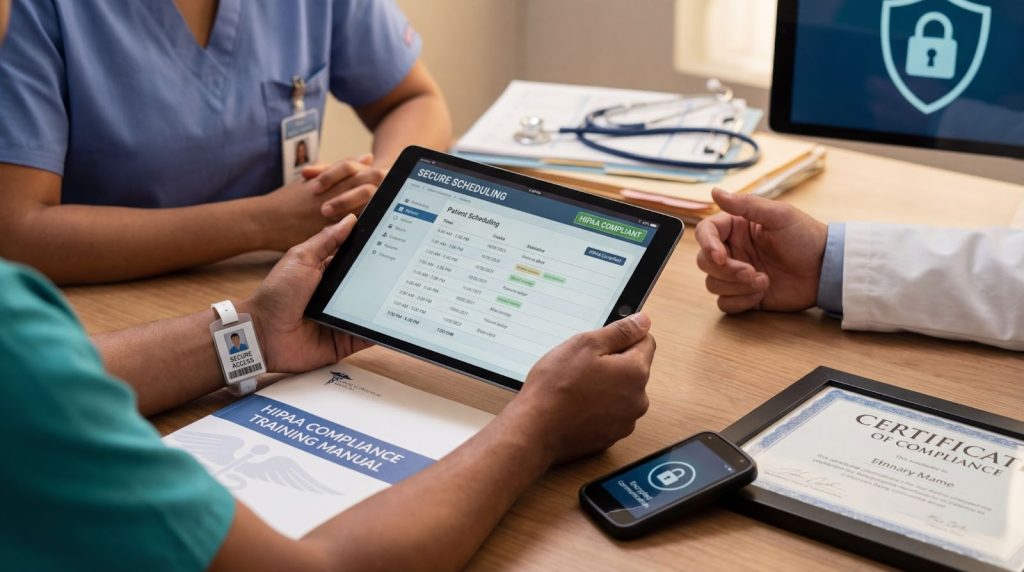
How Multi-Location Clinics Scale Patient Access Compliantly
Telehealth expansion creates operational bottlenecks that offshore coordinators can resolve without compromising patient privacy. Consider a multi-location mental health practice that implemented HIPAA-trained offshore scheduling coordinators to manage appointment volume across eight clinics. By establishing secure EHR access protocols, encrypted communication channels, and role-specific training on their documentation standards, the practice reduced scheduling wait times by 60% while maintaining full HIPAA compliance.
The key to their success was treating compliance as a system, not an afterthought. Each offshore coordinator completed 40 hours of healthcare-specific training covering their EHR platform, insurance verification procedures, appointment protocols, and breach response procedures before interacting with patients. Biweekly coaching sessions reinforced best practices and addressed questions as workflows evolved. The result: improved patient access, reduced no-show rates, and freed clinical staff to focus on care delivery rather than phone management.
Dental Practices Optimizing Billing While Protecting PHI
Insurance verification and claims processing represent high-value opportunities for medical practice virtual assistant deployment. A dental chain with 15 locations partnered with an offshore staffing agency to handle billing coordination, claim submissions, and payment posting—functions that consumed hours of daily staff time. By implementing monitored virtual environments, encrypted data transmission, and audit-ready documentation protocols, they maintained HIPAA compliance while reducing billing cycle time by 45%.
Their compliance framework included strict access controls—offshore billing coordinators could view only the specific patient accounts they were actively processing, not the entire patient database. Monthly compliance audits reviewed access logs, verified encryption protocols remained active, and confirmed training requirements stayed current. This layered approach to patient data security offshore delivered operational efficiency without regulatory risk.
Hospitality-Grade Service Meets Healthcare Compliance
When healthcare staffing adopts service-excellence principles, patient experience improves alongside operational efficiency. A hospice care provider implemented offshore patient coordinators trained in both HIPAA protocols and empathy-driven communication—recognizing that technical compliance matters less than nothing if patients feel their care is impersonal or rushed.
Their offshore partners received specialized training in grief-sensitive communication, cultural competency, and the emotional intelligence required for end-of-life care coordination. By combining HIPAA-compliant systems with hospitality-inspired service training, the organization achieved 97% patient satisfaction scores while reducing administrative costs by 38%. The lesson: compliance and compassion aren't competing priorities—they're complementary when your staffing partner understands both.

Conclusion
Hiring a HIPAA compliant virtual assistant isn't about choosing between operational efficiency and patient privacy—it's about implementing the frameworks that deliver both. Healthcare practices that succeed with offshore staffing share common characteristics: they partner with compliance-focused agencies, establish clear security protocols, invest in role-specific training, and treat data protection as an ongoing discipline rather than a one-time checkbox.
The offshore healthcare staffing landscape has matured significantly, with providers now offering HIPAA-trained coordinators, secure technology infrastructure, and accountability systems that meet federal requirements. By following the fundamentals outlined in this guide—Business Associate Agreements, access controls, encrypted communications, ongoing training, and regular compliance audits—your practice can scale patient access, reduce administrative burden, and protect sensitive information simultaneously.
Ready to explore HIPAA-compliant offshore staffing for your healthcare practice?
Pathfinder Talent Solutions specializes in placing healthcare coordinators who combine technical compliance expertise with service-driven patient care. Our science-based hiring methodology, customized onboarding, and ongoing coaching infrastructure ensure your offshore team members deliver measurable results while protecting patient privacy from day one. Schedule a consultation to discover how our hospitality-born, compliance-focused approach transforms healthcare staffing.